

The Comedy to Drama Stretch with ‘The Audacity’ Co-Star Rob Corddry
Rob Corddry discusses his career and finding his comedic voice, he highlights the importance of good collaborators, and shares insights on crafting his character alongside Jonathan Glatzer for ‘The Audacity’.
The Audacity is the story of Silicon Valley as it is: ridiculous and terrifying. Since no one tries to stop them, the tech overlords will stop at nothing to control what you see, buy, vote for, believe. AI and data are their tools as they pursue humanity into a corner. But they, too, are human, to their frustration, and face the same problems of love, family, ambition, and greed as the rest of us. Only a billion times more than us. A manic tech CEO and his ethics-damaged therapist guide us through the Valley's madness and failings.
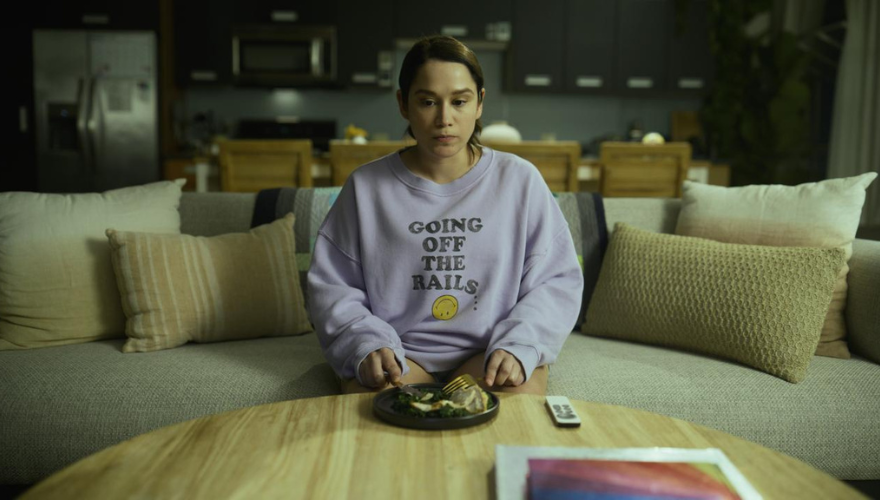
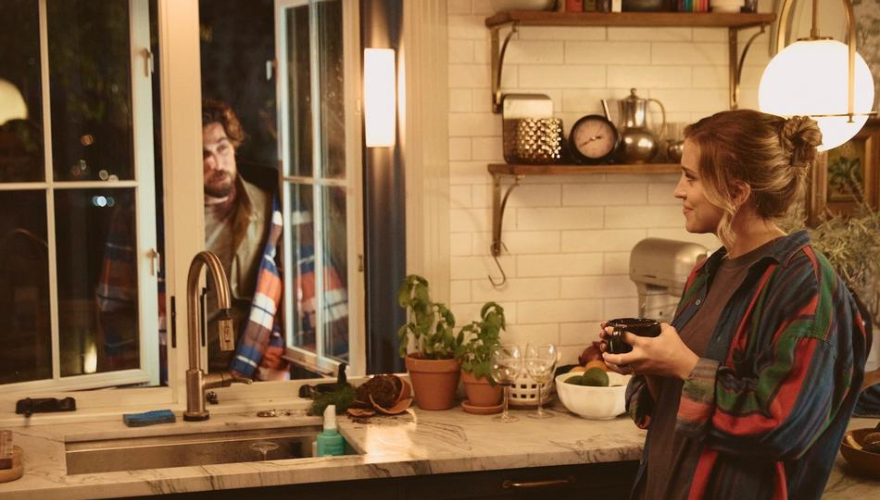
There’s something weirdly satisfying when watching a TV series or movie where there are characters you love to hate, and the underdogs (but are they really?) that you side with. And that’s what you get with Jonathan Glatzer’s (Succession) new AMC series, The Audacity. While there are plenty of questionable characters in the new comedy-drama series, one of the underdogs, Tom Ruffage, is wonderfully played by veteran comedic actor and writer Rob Corddry.
Another satisfying feeling is watching an actor stretch and challenge themselves from the “norm”. While we watched (and laugh/cried) Rob on his show Childrens Hospital, and were on the ride for Hot Tub Machine – Rob was seemingly ready for something outside of his typical wheelhouse.
In this conversation, Rob Corddry discusses his career and finding his comedic voice, he highlights the importance of good collaborators, and shares insights to developing his character alongside Jonathan Glatzer for The Audacity.
This interview has been edited for content and clarity.
Sadie Dean: You've had a very nice long varied career. You've also had your hand shaping the comedy TV landscape with your show, like Childrens Hospital. How did this initially all start out for you? When and how did you find your comedic voice?
Rob Corddry: Well, I guess being from Boston helps, because everybody from Boston thinks they're funny. And their comedy is usually sarcastic and or profane. And so, I happened to come along at a time when, like with Hot Tub Time Machine, R -rated comedies were back. They always go away, and then they always come back - I think we're at a period right now where they've gone away. I just stepped right into that. That was easy for me, I guess.
It was things like The Daily Show that were hard, because while it was one of the greatest jobs I've ever had, it was also one of the hardest. I was surrounded by people smarter than I was and I think funnier. I've never had practice with reading the news and then... 'sending it through the joke pipe,' as Stephen Colbert would say.
But then Childrens Hospital, that's an easy answer. Childrens, I just ripped off The State. [laughs] I was really influenced in college by The State MTV show and all those guys, and David Waine ended up producing it with me.
It's a real blast to be able to, like, screw continuity and all the rules and just set up a joke machine gun. I don't know, however, if that kind of comedy will or can ever be mainstream, which is sad to me, but it's just the truth. I'll keep trying though!
Sadie: Please do. But I do agree, it comes in waves. Those R-rated comedies will come back.
Rob: Yeah, we have to figure out how to navigate our... I don't want to say policing of language, because it's not all bad, you know, but it sometimes goes a little too far, I think. And remind people that you can joke about absolutely anything, as long as the joke is really good. That's the rub.
Sadie: That's the rub. You’ve collaborated with a lot of great folks in your career, one of them being Thom Harp who I had the privilege of speaking with – what attracts you to them and their projects, especially what’s on the page?
Rob: Yeah, that's a good question. Basing my MO in this business is developed into a very simple adage, 'just do cool stuff with people who aren't dicks.' And then you're happy, and you can play and be funny or be real, or whatever you want to be. You just feel comfortable with these people.
I guess it's also – it’s pretty dumb sounding answer [laughs] to that question - which is, you don't have to force it into your mouth. It just fits. And sometimes like, say, on a show like Ballers, which was a lot of fun, and I liked it a lot, it was a lot of work, in that I had to do a lot of sort of writing on the side. I improvised a lot of that because the dialogue was hard. It didn't fit. It was a little clunky. It felt a little unrealistic to me, at least. It's usually the best shows are the ones with great people that I love and or will come to love, and the words just feel right at the basic level, like dialogue level.
Sadie: With your comedic sensibilities – say there’s a joke written on the page – do you go through a script and markup or make note of what you can punch up, what should be dropped, or maybe moved to another scene to make a comedic beat stronger?
Rob: Sometimes when you're doing a big comedy, when there's certain jokes... in Hot Tub, it became the back and forth, 'you look like, blah, blah, blah,' and you could just tell that that is going to be something we're going to riff on. So, I will definitely try and come up with, some quote-unquote improvisations beforehand. [laughs] I have no problem with that.
And then sometimes if a line is troubling me for whatever reason, the joke is not quite there or the words just aren't quite there, there's a lot of freedom these days in the business to just do your thing with it for the most part. There's not a lot of Aaron Sorkins out there policing every 'and' or 'but'.
Then again, there are times, like The Audacity, for instance, this show is probably the most well written show I've ever done. It's still astounding to me how it all works out as a whole and how somebody can write something like that. But that I didn't need anything.
And sure, here and there, something would occur to me on set, and I might add it. And some things got in, maybe, I don't remember, but mostly there's certain things that just doesn't need it. So, stay out of the kitchen in a sense. [laughs]
Sadie: [laughs] Right, there's enough chefs in there. Speaking of The Audacity – great show, love your character. Besides your character Tom and Orson, wonderfully played by Everett [Blunck] – they’re the most possibly redeemable, likable characters in that you're like, OK, I could stick with this, because everyone else is just absolutely terrible.
Rob: [laughs] Isn't that funny, though? Like everybody is so irredeemable that you can relate to the kid with IBS who takes steroids and gets all weirdly bro on his stepfather, and the guy who has PTSD and a war injury and has seen a lot and is over it and hates everything, [laughs] that's the redeemable gauge. But it's true. I think one of the great things about this show is that you got to stay on your toes, because no one is incorruptible.
Sadie: Yeah, I feel like while watching this show it’s like you're playing Clue. Anyone is or could be guilty of something, and you're just trying find what's that way in.
Rob: Yeah, it's so easy to get implicated in something in Silicon Valley. You could, at one point, be helping veterans, and then the next day screwing single moms over and stealing their money.
Sadie: Outside of the great writing of this show, what attracted you to this role? It’s definitely outside of the type of characters you’ve played in the past. And it was really great to see you stretching and challenging yourself with a role like this.
Rob: I didn't realize how funny the show was until I saw it, because I was not thinking of it that way. This was a tragedy, [laughs] in my reads, and that's what I was playing. I mean, what didn't attract me to this show? I met with Jonathan [Glatzer] after reading it and getting a little obsessed with it, like one of those feelings I had only a few times before, like with The Daily Show, like I can do this, I know I can do this. I have to prove to other people that I can do this. And I got along famously with Jonathan and he's a very collaborative guy.
I guess it was the stretch that kind of attracted me, in a way. I had a lot of time to put a lot of work into the character. There was two months between casting and filming. So that was like an embarrassment of riches in order to fill out my what became a 27-page character bio [laughs] which only my acting teacher would applaud.
Sadie: [laughs] Job well done! Yeah, did you was that, I'm curious, like with him being injured, was that something that you added to that character, that little flourish, or just like that little slight limp that he has, or was that written into it originally?
Rob: Yeah, it happened sort of organically. Jonathan had mentioned he [Tom] has PTSD. And then I went back and thought, 'Well, from what?' I didn't know at the time that Jonathan had ideas about that. But I thought, well, he's probably been injured or in the first Gulf War.
So, I had to do a lot of research about the first Gulf War too, because we were sold a different story. We were told that it was just in and out, easy peasy, airplanes, boom and we were good. But it was really like people were taken prisoner and there was a lot of injuries and deaths, and some of the deaths on the American side, like the Americans perpetrated were horrific, like practically criminal and I immediately said, 'Well, Tom was part of that.' He was in a tank or an armored vehicle, basically just running people over who had been half buried in the sand by an earth mover, you know, which is what happened. That would give anybody trauma.
But the injury came a little bit later. I was talking to Jonathan and I said, 'I think he's been injured somehow, too.' And Jonathan was like, 'Yes, do you think he might have a limp?' And I was like, 'Yes! I do.' [laughs] Not knowing exactly, remembering how that all went down, I would give credit to Jonathan in the end, I think it was ultimately his idea.
Sadie: There’s something though, that just works from a thematic and story standpoint of what this guy is trying to accomplish - his mission – and it’s just barely limping along. It’s pathetic in a way, yet you feel so sad for what he's trying to accomplish. And again, I think that's what makes him redeemable in a way.
Rob: He looks like what he is: the oldest man there, he is from a different world altogether, he's hung over all the time, and has this limp. He appears frail, which was what I was sort of going for. It's hard to watch in a way, [laughs] I was like, 'Eww! I look like an old man,' but that was my plan. [laughs]
Sadie: [laughs] Any advice for writers, directors, multi-hyphenates, who are writing comedies?
Rob: I would say try and find a community of like-minded people who you can bounce ideas off of and potentially partner with. I think that's always valuable. And I think, especially like through Childrens, I found a great producing partner in John Stern, and he's been instrumental in my life going forward, just producing. If I ever started writing something, I know that I have someone who knows how to sell things. So that's also pretty valuable.
But I would just say, surround yourself with the right people. Get rid of your ego. And don't worry about being the smartest or funniest one in the room. Like, be the dumbest. [laughs] Dare to be the dumbest in the room, and you will only learn.
Catch new episodes of The Audacity on AMC and streaming on AMC+.