

Chaos, Comedy, and Conviction: SXSW 2026 Roundtable with 6 Writer-Filmmakers
Will Ropp, Peter Warren, Brian Tetsuro Ivie, Chelsea Devantez, Jonas Cuaron, and Dalia Rooni on debut storytelling, holding emotional truth, and why this was the moment to tell their stories.
SXSW 2026 was full of films that remind you why you fell in love with cinema in the first place. Films that were funny, heartbreaking, strange, and alive. Films that felt personal in the best possible way, made by people who had something urgent to say and found exactly the right form to say it.
I had the privilege of sitting down with 6 of my favorite filmmakers from the festival: Will Ropp (Brian), Peter Warren (Kill Me), Brian Tetsuro Ivie (Anima), Chelsea Devantez (Basic), Jonás Cuarón (Campeón Gabacho), and Dalia Rooni (Writer, Same Same But Different). Most of them were making their narrative feature debut. Every single one of them entertained me, surprised me, made me laugh, made me feel something I had not expected to feel, and in one way or another, made me want to get up and make a movie.
What follows is a roundtable drawn from those individual conversations. Six different films, six different voices, and yet a thread that runs unmistakably through all of them: a commitment to emotional honesty, a willingness to live in the mess, and a belief that the stories only you can tell are the ones most worth telling.
These interviews have been edited for flow and clarity.
WILL ROPP | Brian
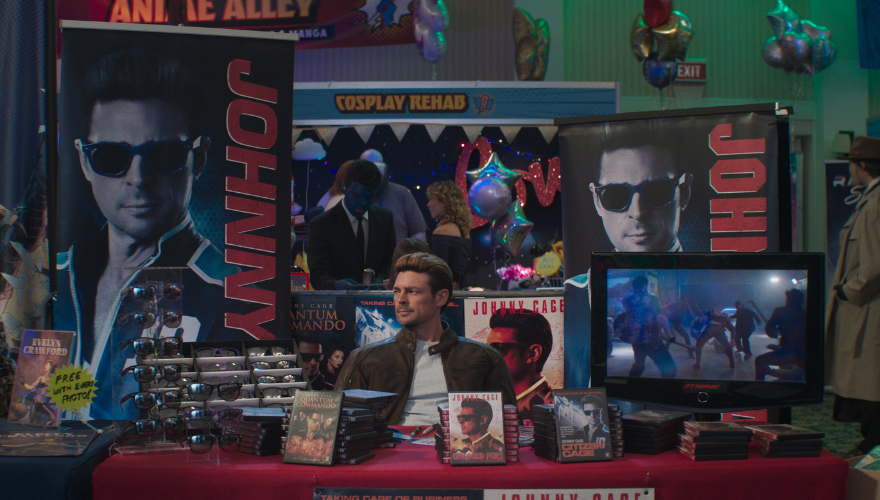
Rahul Menon: Brian was one of the funniest films I have seen in a long time, and easily the funniest at this festival. Its humor often sits right on the edge of discomfort, yet it never feels cruel. How did you approach balancing awkwardness, comedy, and genuine empathy for Brian's struggles?
Will Ropp: I feel like comedy and tragedy sit right on this very fine line, and it’s very easy to teeter into one or the other. That’s kind of how I treated this film. There could be a moment that’s tragic, but you can always find the comedy in it. I feel like in real life, anytime anything tragic happens, no matter how bad, at some point there’s gonna be a comedic quip or release. I think it’s just in human nature to try and not make it as painful.
Rahul Menon: Brian is a very personal story and clearly close to your heart. What do you hope audiences take away from Brian's journey, and did making this film change the way you think about comedy, coming-of-age stories, or yourself as a filmmaker?
Will Ropp: I just hope that people have a good time, and that it hits on some emotional level. I especially hope that younger audiences realize that it's OK to not be OK, that adolescence is really just about figuring it out, and that it's all going to be OK one day.
As a filmmaker, the biggest thing I learned is that it's not impossible to make a feature film. I had built it up in my head as this Mount Everest-type thing, but anybody can do it. That's not to say it's easy. But you shouldn't build it up as this mythical, unobtainable thing, because that mindset can make you feel defeated and ultimately doesn't help the process.
PETER WARREN | Kill Me
Rahul Menon: Kill Me blends comedy, mystery, and thriller in a unique way. What drew you to this story, and how did you decide on the tone that balances suspense with humor?
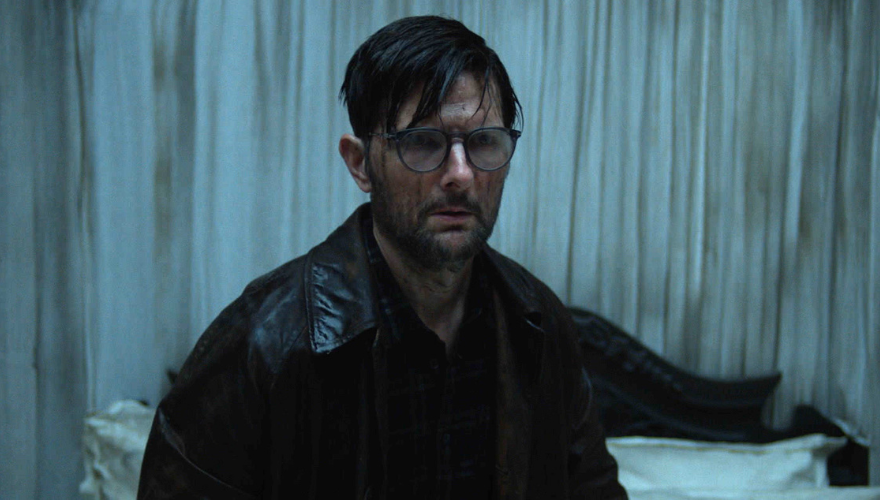
Peter Warren: I was drawn to two things: reinventing the murder mystery, and using a genre story to drive an honest conversation around mental health. I asked myself what it would mean if the body was the detective, and that became Kill Me. It never occurred to me that the film wouldn't have a deeply diverse tone. The sheer premise is sad, funny, and scary all at the same time. Depression is dark and serious, but it's also kind of dumb and annoying and funny, because your own brain is trying to kill you. It's like stepping on a rake inside your own skull a thousand times a day. My favorite stories make you feel all sorts of things. Rollercoasters have highs and lows for a reason. That's what makes them thrilling.
Rahul Menon: I really enjoyed the ambiguous ending. How important was it for you to leave certain mysteries unresolved, and what do you hope audiences take away from that choice?
Peter Warren: It was vitally important to me that the movie was fearlessly honest about mental illness. And that meant not wrapping things up in a neat bow. Depression isn't something you cure. It's something you treat. Some people may struggle with the ending, because who doesn't want to catch the killer red-handed? But to me, it was vastly more important for the audience to go on the ride with Jimmy as intimately as possible, and that meant experiencing the same things he does: a mounting sense of suspicion, an overwhelming conviction, a gut-punch reminder that you can't always trust your own thoughts, no matter how much they were making sense to you.
What connects Brian and Kill Me, beyond their shared love of tonal tightropes, is something more personal. Both films are rooted in the anxiety of being human, in the particular texture of a mind working against itself. Will Ropp draws from his own OCD and panic disorder. Peter Warren turns the murder mystery inside out to talk honestly about depression. In both cases, comedy is not a deflection. It is the most direct route to the truth.
BRIAN TETSURO IVIE | Anima
Rahul Menon: Anima blends science fiction, comedy, and intimate human drama in a way that feels both inventive and deeply grounded. What inspired you to tell this story, and how did the idea of preserving consciousness in a cloud system evolve into this particular road trip narrative?
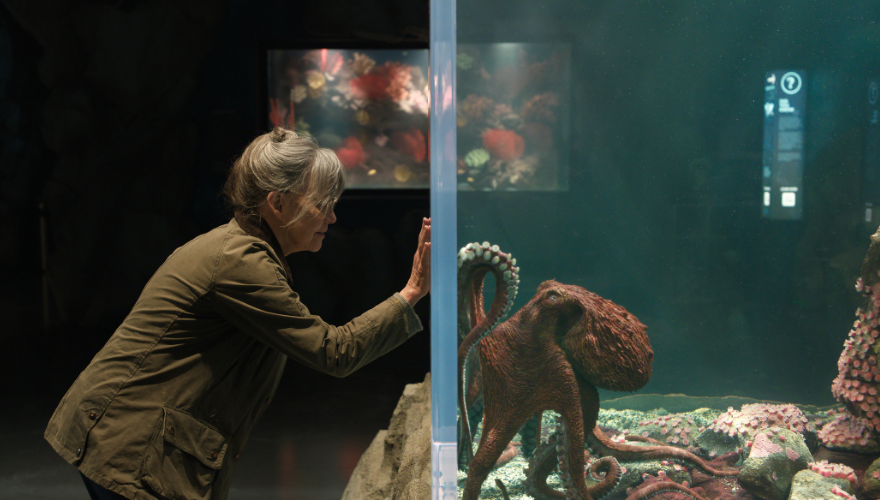
Brian Tetsuro Ivie: It actually started with an old story known as the parable of the rich fool. A very wealthy farmer is blessed with an abundant crop he cannot store. He decides to tear down his storehouses and build larger ones, only to die the very night he completes them. I had this in my mind when I read about experimental brain-uploading tech and wondered what kind of person would opt in. They would have to be rich.
As for the road movie, a lot of credit goes to Brev Moss for breaking the story with me. But ultimately the road film and this Japanese car just felt like the perfect container for existential conversations between two lost souls, and for all of the music I knew I wanted to be in the picture.
Rahul Menon: The film is patient in a way that feels increasingly rare, especially in science fiction. As a writer, editor, and director, how did you hold that restraint, and was there ever pressure to push the story into more conventional dramatic territory?
Brian Tetsuro Ivie: I started in documentaries, so I think that comes from my work as an observer of real people. Being patient and fully present involves a lot of discipline outside of the work itself. I rarely ever have my phone on set. There was naturally pressure to speed up the scenes or make the film more commercial, but I took my cues from the soundtrack I was building simultaneously, which I knew was going to be much more folk than rock. I just trusted that there would be an audience on the other side that would get what I was trying to do. Richard Linklater talked about that when making Before Sunrise. Tom McCarthy's work is also a lovely example.
CHELSEA DEVANTEZ | Basic
Rahul Menon: You came up as a television writer, a comedian, a memoirist, and a podcast host before stepping into narrative feature filmmaking. How did all of those different creative muscles inform the way you wrote and directed Basic, and is there something the feature film form gives you that those other spaces do not?
Chelsea Devantez: It's funny because all of those things happened while I've been trying to make this feature film. It was a seven-year journey. Because a film can take so long to make when you don't come from connections within the industry, I had to find ways to tell jokes and stories while I was trying to become a filmmaker.
One thing I am deeply grateful for is that I had to spend so much time owning where I come from in art forms that require you to just be yourself: memoir, podcasting. I had never wanted to be myself. I wanted to create fiction. But having been forced to face myself and articulate who I am to an audience made my artistic point of view so much stronger, and honing your point of view is essential to being a filmmaker.
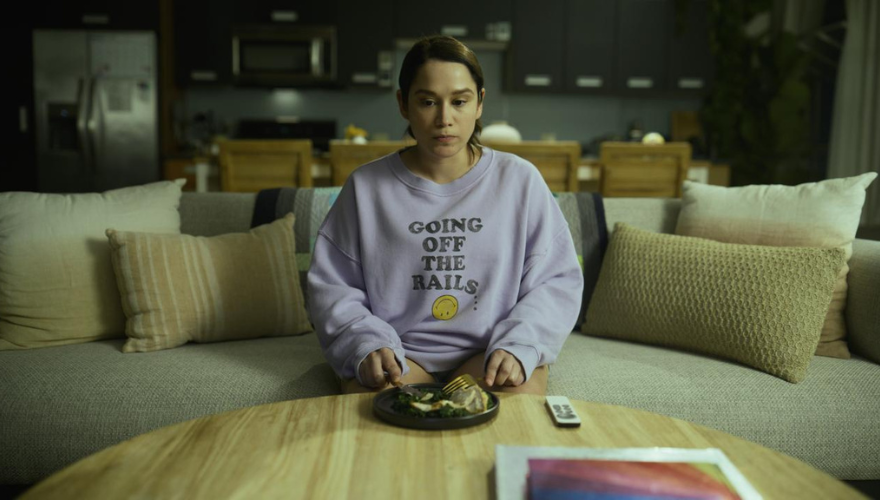
Rahul Menon: Basic is at its core a comedy about the stories we tell ourselves when we are heartbroken and a little unhinged. How much of Gloria's particular brand of spiraling came from your own experience, and how do you write comedy that is rooted in real emotional chaos without losing the humor?
Chelsea Devantez: Oh yes, I was definitely a Gloria spiraling in my phone, and I really hated it. But at my core, I am a joke writer. I performed at the Second City for many years, and my first TV jobs were in late night comedy where you write fifty jokes a day. So when I took this painful, very real conundrum and filtered it through my joke brain, it showed me so many answers and absurdity I hadn't been able to see when I was in it. Writing jokes about painful and emotional events might be my favorite thing to do, because it can lead you not only to great stories, but to a better emotional place in your own life.
Brian Tetsuro Ivie and Chelsea Devantez are working in entirely different registers, one quiet and contemplative, the other sharp and comedic, but they are asking the same question underneath it all: what does it cost to ignore the things that actually matter? Anima builds its answer slowly, over a road trip and a dying man's reckoning. Basic builds its answer through jokes and spiral-texting and the slow, humbling business of facing yourself. Both arrive somewhere honest.
JONÁS CUARÓN | Campeón Gabacho
Rahul Menon: Liborio carries the film almost like a fable, an immigrant story told with surreal and poetic strokes rather than pure social realism. How early did you know that was the register you wanted, and what drew you to Aura Xilonen's novel as the source material?
Jonás Cuarón: I fell in love with Campeón Gabacho when I read Aura's novel. She wrote it when she was eighteen and invented a whole new language for it, which she called ingleñol: a mixture of English, Spanish, and completely made-up words that perfectly convey what it is to be an immigrant caught between two cultures, two worlds. I was inspired by the lyrical quality of this language and the youthful essence of the book, and decided I wanted to make a movie full of energy, very dynamic, with an imaginative visual style. In the same way Aura invented a whole new language, I wanted to push myself to play with cinematic form and make something that felt fresh and inventive.
Rahul Menon: Campeón Gabacho arrives at a moment when stories about immigrants and belonging carry an enormous weight in the cultural conversation. Was that weight something you felt in the making of the film, and how do you think about the responsibility of telling this particular story right now?
Jonás Cuarón: What I find very inspiring about this story is the idea of community. Liborio finds his place and strength through the community he builds along the way. It is the realization that he is not fighting alone that gives him purpose. I think that is a very uplifting and important message for today. I believe the issue with the discourse on immigration is that it turns immigrants into a concept and erases their humanity. This movie is, at its heart, a coming-of-age story about a teenager trying to define himself. It brings us into the mind of a young immigrant and shows us that he also has dreams, insecurities, and falls in love.
DALIA ROONI | Same Same But Different
Rahul Menon: Same Same But Different feels deeply personal, almost lived-in from the very first scene. What was the moment in your own life that made you realize this story needed to be written, and why did comedy feel like the right vehicle to tell it?
Dalia Rooni: This story was inspired by a real weekend that I now see as the turning point of my life. I was invited to a spontaneous wedding on Cape Cod, where my free-spirited friend married a man she had only been dating for a short time. That weekend, in a sprawling summer house on a stretch of beach, everything seemed to shift. I watched my friends fall deeply in love. I formed friendships that would last a lifetime. And I came face to face with profound realizations about who I was and who I wanted to become. As for the comedy, I tried it as a drama and it didn't work. It was flat and preachy. So my long-time collaborator, director Lauren Noll, implored me to write it in my voice. And my voice has always used comedy to deal with discomfort.
Rahul Menon: You have spoken about frustration with the lack of roles that reflected your experience. As both writer and actor, how empowering was it to create the space you were not being offered, and what did you discover about yourself in that process?
Dalia Rooni: It was incredibly empowering. I had this realization: I will never not have the roles I want. Worst-case scenario, I know how to create them myself. The biggest discovery was realizing that I can do this. I came into the process with a lot of doubt. I had fewer acting credits than many of the cast, and nothing I had written before had been produced. And then I had this epiphany: I don't have to be perfect. Don't I extend that same grace to other actors on their first film? I didn't have to be perfect. I just had to show up over and over again.
Jonás Cuarón and Dalia Rooni are both telling immigrant stories, and both doing it through a lens of community rather than isolation. Campeón Gabacho finds its power in Liborio's realization that he is not fighting alone. Same Same But Different finds its warmth in a house full of people who became real friends. Both films push back against the habit of reducing immigrant experience to a single narrative. Both insist on the full, three-dimensional, funny, heartbreaking, contradictory truth of it.
Six films. Six voices. Six entirely different ways of answering the same essential question: what does it look like when you tell the only story you could have told?
What made SXSW 2026 feel so alive was exactly this: a room full of filmmakers who had not arrived with something safe or calculated. They arrived with something necessary. Will Ropp, Peter Warren, Brian Tetsuro Ivie, Chelsea Devantez, Jonas Cuaron, and Dalia Rooni are all different artists, working in different forms, reaching for different emotional frequencies. And yet every single one of them reminded me that the most powerful thing a writer or filmmaker can do is show up with the truth, trust the audience with the mess, and refuse to tie it all up too neatly. Cinema is better for having all six of them in it.