

SXSW 2026 Favorites: Shorts, Episodes and Pilots
7 Films That Prove the Smallest Canvases Often Hold the Biggest Ideas
SXSW 2026 did not just deliver great narrative features and documentaries. It also brought one of the most electric lineups of shorts, episodes, and pilots you will find anywhere. I got to check out several of them at this year's festival, and what struck me most was the range: innovative, moving, thrilling, romantic, and wildly creative are just some of the words I would reach for. This is where a single scene, a single image, or a single well-timed joke can announce a filmmaker with complete authority. The short film and pilot selections at SXSW carry a distinct electricity, and this year was no different.
In My Blood
Written & Directed by Alex Bendo
When Ambition Becomes Its Own Kind of Monster
Winner: Independent TV Pilot Competition
There is a quiet confidence in In My Blood that hooks you almost immediately. It is not loud or flashy in the way many pilots try to announce themselves. Instead, it settles into your bloodstream slowly, tightening its grip scene by scene. From the very first moments, there is a creeping sense that something is off. Not in an obvious way, but in that instinctive, hard to shake feeling that something is about to go wrong.
Written and directed by Alex Bendo, the pilot follows Jack, a talented but inconsistent minor league baseball player struggling under the weight of expectation. His father looms large in his life, not just as a figure of authority but as an internal voice that dictates his sense of worth. That pressure becomes the emotional spine of the story, grounding what could have easily spiraled into pure genre spectacle. Bendo, drawing from his own experiences growing up during baseball's steroid era, taps into a very real cultural moment where heroes fell and reputations crumbled. That history informs Jack's journey in a way that feels both personal and unsettlingly universal. This is not just a story about sports. It is about the dangerous lengths people go to in order to meet expectations, both external and self-imposed.
What elevates In My Blood is how seamlessly it blends human drama with genre elements. The use of performance enhancing drugs is not merely a plot device. It is a gateway into something far more disturbing. As Jack begins to change, physically and psychologically, the show leans into darker, almost monstrous territory. Yet it never loses sight of the character at its center. The horror here is intimate. It is internal. And that makes it land harder.
Bendo, who comes from an editing background, approaches the storytelling with a clear sense of rhythm. The narrative lingers when it needs to, allowing discomfort to build, then shifts abruptly, catching you off guard. Sound design emerges as one of the pilot's most effective tools, placing the audience inside Jack's head as reality begins to blur. Visually, Jack is consistently framed within confined spaces: batting cages, narrow corridors, tight locker rooms. There is a physical claustrophobia to these images that mirrors his internal pressure. Daniel Diemer brings a compelling presence to the role, and the camera's tendency to stay uncomfortably close only heightens that intensity. You are not just watching his transformation. You are pressed up against it.
What lingers most after watching In My Blood is its mood. That dark, haunting undercurrent that runs through every scene. This is a pilot that understands restraint, trusts its audience, and is unafraid to get uncomfortable. If this opening chapter is any indication, In My Blood is setting up something as psychologically gripping as it is viscerally disturbing. And it is one that is going to be very hard to shake.
Are We Still Married?
Written & Directed by Kit Steinkellner
A Vampire Story That Chooses Love Over Fear, and Means It
High concept stories often live or die by how quickly they get to the hook. Are We Still Married?, written and directed by Kit Steinkellner, has a hook that lands instantly and then quietly reshapes itself into something far more intimate than expected. A husband returns home after being bitten by a bat, now a vampire, and asks his wife to invite him back inside. She hesitates. That hesitation becomes the entire story.
What follows is a single night, a conversation stretched across a physical divide. Laura remains inside the house while Jack waits outside, bound by rules that feel almost secondary to the emotional reality at play. The brilliance of the premise is not in the supernatural mechanics, but in how those mechanics expose something deeply human: trust, doubt, love, and the quiet terror of not knowing if the person you love is still the same person.
Steinkellner has spoken about how the idea originated from a real moment in her own marriage, when her husband was bitten by a bat and a joke about vampirism led to an unexpectedly honest answer. That honesty becomes the foundation of the film. This is a story built on emotional stakes first, with the genre elements serving as a lens rather than the point.
The decision to keep the camera anchored inside the house with Laura pays off in ways both subtle and profound. It aligns the audience entirely with her uncertainty. We see Jack as she does, through windows, doorways, and distance. The house itself becomes an active presence, not just a setting but a boundary that shapes every interaction. There is a careful attention to staging that keeps the film visually alive despite its contained structure. Each new position within the house offers a slightly different emotional temperature, and you can feel the intention behind never repeating the same visual beat.
What surprised me most is how naturally the film blends tones. There is humor here, often disarming, rooted in the familiarity of a long-term relationship. There is also a quiet sense of dread, not in a traditional horror sense, but in the emotional unknown. And then there is romance, not grand or sweeping, but present in the small moments of recognition between two people who know each other deeply.
I loved the whole sweet vibe of the film, and really appreciated where it ultimately lands. Rather than hinging on a sharp twist or a dark reveal, the film chooses something far more sincere. It leans into love. It allows its characters to fight for each other rather than against the premise. Steinkellner has described wanting her characters to win the battle of this one night, even if the larger future remains uncertain, and that intention comes through with complete clarity.
Taylor Misiak and Dustin Milligan ground the film beautifully. There is an ease between them that makes the relationship feel entirely lived in, their conversations shifting between lightness and vulnerability without ever feeling artificial.
At its core, this is a story about love under pressure. Not the kind that explodes, but the kind that lingers, questions, and ultimately chooses to stay.
Son of a Bikram
Directed by Johnny Rey Diaz, Written by Ash T & Johnny Rey Diaz
When Hero Worship Goes Off the Rails
Special Jury Recognition: Independent TV Pilot Competition
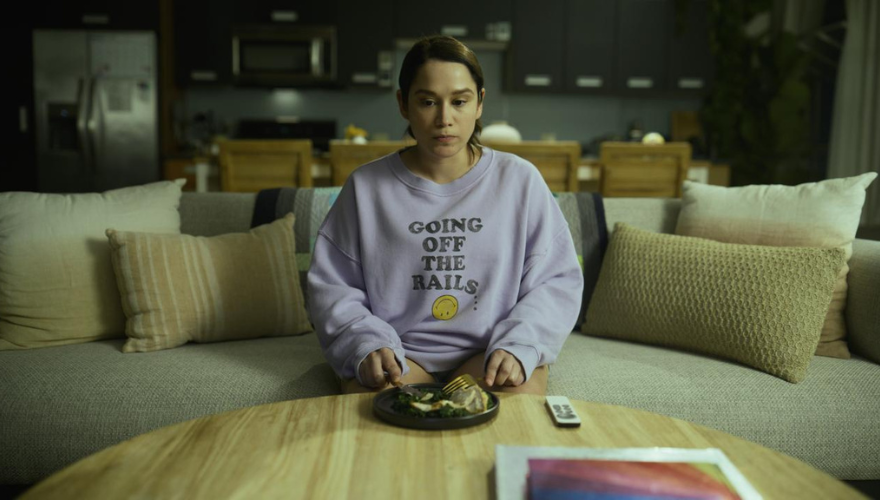
There is a wild confidence to Son of a Bikram that announces itself within minutes. It is zany, hilarious, and just a little unhinged in the best way. Directed by Johnny Rey Diaz, and written by Ash T & Johnny Rey Diaz, the pilot follows Raag, a young man whose life takes a sharp turn when his longtime mentor Bikram is exposed as someone deeply, irredeemably flawed. Diaz approaches the premise with a tonal boldness that keeps the narrative constantly off balance, resulting in a world that feels surreal yet emotionally grounded in a very real cultural and personal identity crisis.
This is a story about what happens when the people we build up in our heads fail to live up to that image, and the writing understands the absurdity of that situation without losing sight of the emotional fallout. Diaz brings real sauce as a director, a sense of control and playfulness that elevates the material. The pacing is tight, the character work is distinct, and every choice feels intentional. It is hard not to see why the pilot earned Special Jury recognition. It leaves you laughing, slightly unsettled, and very ready for more.
Eructation
Directed by Victoria Trow
A Loud, Proud Ode to an Unexpected Obsession
Winner: Special Jury Award (Documentary Short)
It is easy to raise an eyebrow at a film titled Eructation. Victoria Trow's short documentary quickly flips that expectation, delivering something far more thoughtful, playful, and quietly subversive than its premise suggests. Framed as a mock documentary, the film follows Kaylee, a woman with a very specific goal: to break the world record for the loudest female burp.
The humor lands early and often, driven by dry line delivery and a tone that never strains for laughs. What makes Eructation stand out is its craft. Cut exceptionally tight, with not a moment wasted, the film features a memorable use of scale that turns a small physical presence into a moment of pure cinematic impact. The sound design does much of the heavy lifting, both technical and comedic, inviting the audience into a strangely fascinating sonic world.
Beyond the humor, there is a layer of satire that lingers. The film gently questions what society chooses to value and why certain pursuits are dismissed while others are celebrated, with a subtle commentary on gender woven quietly throughout. You may come in laughing at the premise. You leave impressed by how much it has to say.
Souvenir
Directed by Renée Marie Petropoulos
A Tense, Beautifully Crafted Portrait of Adolescent Love
Winner: Narrative Short Competition
Renée Marie Petropoulos’ Souvenir is a quietly devastating short that captures the fragility and intensity of young love with complete precision. Set against a sun-soaked family vacation, the film follows Keira as she navigates intimacy and trust with her girlfriend Zoe while parental oblivion lingers nearby. Every frame feels meticulously composed, the cinematography amplifying every anxious glance and unspoken worry through shadows and light that build a sense of looming unease throughout.
The central conflict emerges not from overt confrontation but from subtle betrayals, the camera and phone becoming silent witnesses to boundaries being tested. Once the true stakes reveal themselves, the tension snowballs, landing with a gut punch that resonates far beyond the film's brief runtime. Petropoulos balances dark undertones with an honesty that never feels exploitative, treating Keira and Zoe's relationship with genuine sensitivity. Raw performances, exquisite cinematography, and a grip that never loosens: Souvenir announces a filmmaker whose work is quietly but firmly compelling.
Birth Is for P*ssies
Directed by Hannah Shealy & Celine Sutter
Labor, Laughter, and Lessons in a Rookie Doula's World
Winner: Independent TV Pilot Competition Audience Award
Hannah Shealy and Celine Sutter's pilot is a refreshingly candid, hilarious, and deeply human piece of television. The story follows a rookie doula, played by Shealy herself, thrown into her first birth with a mother she has never met. What might have been a niche subject becomes universally relatable, blending humor, tension, and empathy in every scene. Shealy's decade of firsthand experience as a doula shines through her performance, capturing the anxiety, excitement, and awkward triumphs of a role where stakes are immense and outcomes deeply personal.
Shealy and Sutter bring a grounded sensibility to the direction, ensuring the narrative never veers into gimmickry. The result is playful without being frivolous, messy without being chaotic. Out of all the pilots I watched at this year's festival, this one feels most ready to thrive as a full series. With its mix of comedy, heart, and real-world insight, it is a project that absolutely deserves attention.
Dua Ji
Written & Directed by YuHan Tsai
Grief, Tradition, and the Quiet Power of Resistance
Yu-Han Tsai's Dua Ji is a quietly potent short that lingers long after the credits roll. The film follows A-Hsien, played by Kuei-Mei Yang, as she navigates her mother's funeral in a rural Taiwanese town, in a world where grief is circumscribed by patriarchal ritual and a daughter's emotions must be carefully contained.
The film opens with A-Hsien moving alone through a dimly lit house, methodically checking the lights. It is a simple scene, yet immediately profound in how it establishes her isolation and the silent labor expected of her. Tsai's approach is less about melodrama and more about the tension between duty and desire, expectation and autonomy. The cinematography builds a sense of internal pressure through quiet corridors and measured gestures, without a single overt statement. A-Hsien's silent resistance becomes the film's compelling focal point, a subtle rebellion against both familial hierarchy and societal norms. Tsai's personal experience informs every frame, lending authenticity without requiring explicit critique.
Contemplative, emotionally precise, and deeply felt. Dua Ji rewards careful attention and stays with you long after its brief runtime.