

Messy Hearts, Honest Silences: A Conversation with Writer and Filmmaker Joe Swanberg
Writer and filmmaker Joe Swanberg on returning to features, the alchemy of improvisation, and why relationships will always be unfinished business.
There is a particular kind of filmmaker who thrives in the space where structure loosens and human behavior takes over. Where scenes feel discovered rather than dictated. Joe Swanberg has spent more than twenty years building his career in exactly that space, and watching him work is a reminder that the most affecting cinema is rarely the kind that announces itself.
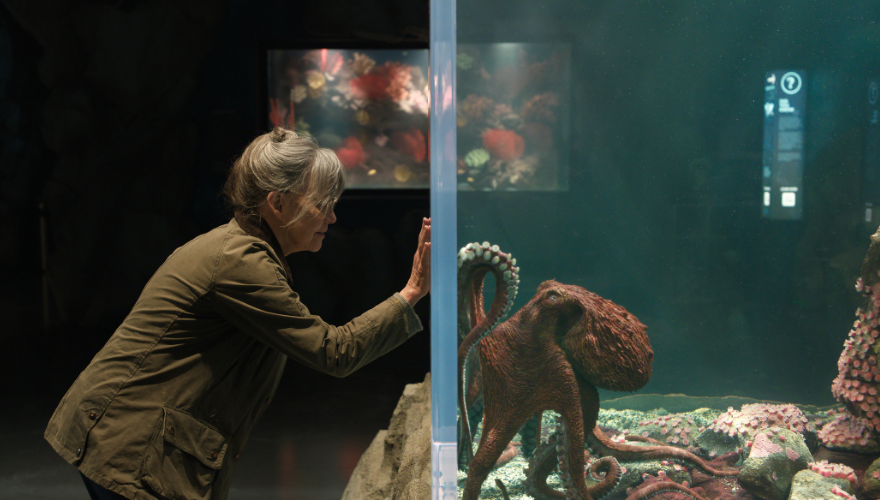
After almost seven years away from features, Swanberg returns with The Sun Never Sets, shot on 35mm and set against the quietly arresting landscapes of Alaska. What he has made is one of his most complete and emotionally cohesive films to date. A deceptively simple love triangle on the surface, but underneath it, a film deeply interested in the gap between what people want and what they can actually bring themselves to say. Dakota Fanning, Jake Johnson, and Cory Michael Smith navigate that gap with the kind of specificity and warmth that makes the whole thing feel uncomfortably, irresistibly real.
The Sun Never Sets had its World Premiere at SXSW 2026, and it was one of the most quietly affecting experiences I had at the festival. I had the chance to speak with Swanberg about the film, his collaborators, and the creative instincts that have carried him through more than two decades of independent filmmaking. What emerged was a portrait of an artist who has not just returned, but returned with intention.
This interview has been edited for flow and clarity.
Rahul Menon: Seven years is a long time between features, especially for a filmmaker who built his career on prolific, almost restless output. What pulled you back, and why did this particular story feel like the right door back in?
Joe Swanberg: I was producing for younger filmmakers the past few years, which was very inspiring and made me excited to direct again. And the opportunity to collaborate with Jake Johnson is always exciting no matter what the project is. But I had something to say, which is probably why this one pushed forward. The story is personal, and I had enough time and space to recharge my batteries and get excited about the process again. Once Jake connected with my personal experience and started helping shape it into a narrative, we were off to the races.
Rahul Menon: You have described this as your most tautly constructed film yet, which is a striking thing to say about a filmmaker whose voice has always thrived in looseness and spontaneity. How did you hold onto that improvisational spirit while also pushing yourself toward something more architecturally rigorous?
Joe Swanberg: For Win It All, Jake and I wrote a full script with dialogue and we still ended up improvising almost the entire film on set. My instinct is to use the script, or treatment, or outline, as a way to understand and break the story, and as a tool to help budget and schedule. But on set I am always interested in the actors as the focal point. If they like the dialogue I have written, great. If they have ideas or want to change things, that is great too. And if we want to throw the script away completely and try a different version of the scene, I am always going to be open to that. I just want the performances to be great and to be narratively coherent, and there are many ways to get there.
Rahul Menon: Alaska is essentially a character in this film, and choosing to shoot on 35mm there signals a real commitment to scale and texture. What did the landscape demand of you as a director, and how did shooting on location shape the emotional register of the story?
Joe Swanberg: Once we were on the ground in Alaska I definitely moved several scenes that were set indoors to outdoor locations. I realized that the people who live in Anchorage spend a lot of time outside when the weather is good, because you are forced to spend a lot of time inside when it is bad. My instinct is often to set scenes in bars, restaurants, apartments, but we had a great opportunity to use parks, hiking trails, and patios instead. I also went to Anchorage twice before the shoot to scout and get to know the place, and people were so helpful and willing to share locations, equipment, and information to help make the film feel authentic.
Knowing that much of the dialogue in The Sun Never Sets is improvised reframes how you experience it. Conversations do not feel constructed. They feel like people thinking out loud, circling what they mean before landing on it, or sometimes never landing at all. The Alaskan landscape, shot on 35mm, carries that same quality. There is a roughness to the imagery that matches the emotional messiness of the characters.
Rahul Menon: Your collaborations with Jake Johnson have this wonderful quality of feeling genuinely lived-in, like two people who have been laughing together long before the camera rolled. How do you keep that energy generative rather than comfortable?
Joe Swanberg: Jake and I naturally like to challenge ourselves and try new things, so I have never been too worried about us getting lazy. We both love this job and feel lucky to be doing it, so we try to make sure the work is front and center and that we are not just making something fun for ourselves. We want to connect and give people an experience.
Jake is a better writer than I am, so I lean on him a lot during conception and pre-production. We have complementary strengths on set and keep each other laughing and invested. I love editing and post-production, and I do my fair share of the writing in the editing room while Jake shifts into the mode of watching cuts and playing the audience. It is a great partnership that feels balanced, fun, and respectful, and we have earned a lot of trust in each other over four films.
Rahul Menon: Dakota Fanning carries the film and Wendy as a genuinely complex figure, someone who believes she is happy until the story forces her to interrogate that belief. How did you develop that character together, and what did Dakota bring to Wendy that surprised you?
Joe Swanberg: Dakota jumped in immediately and started sharing aspects of her life and herself that she could bring to the character. That is the dream for me, that I can work with an actor and utilize some personal things, fictionalize other things, and land in a hybrid space with the character. She knew my films, even the early mumblecore ones, so we had a head start in terms of process and sensibilities.
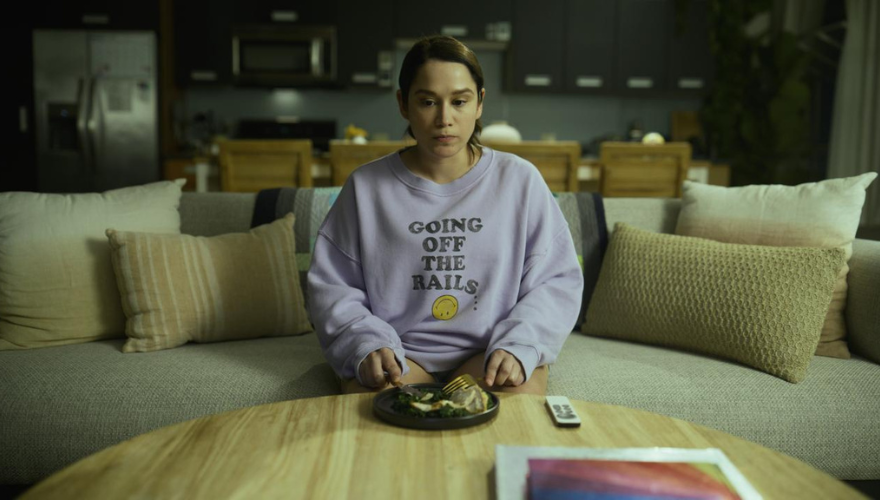
The moments that most excited me were the moments of silence when Dakota is watching Jake and Cory. I love dialogue for what it literally says and also what it does not say or accidentally reveals, but there are several powerful moments in this film where we just live on Dakota's face, and those are highlights for me. Her eyes are so expressive that those silent close-ups say as much as any dialogue possibly could.
Rahul Menon: The emotional core of this film is a triangle, but it sounds less like a love triangle in the conventional sense and more like three people trying to figure out what they actually want from life and from each other. How do you write that kind of ambiguity without letting the film drift into resolution-less uncertainty?
Joe Swanberg: Having Jake Johnson as a creative partner helps enormously. The films I have made with him do the best job creating narrative thrust while embracing the ambiguity. He will just call me out when we get too close to resolution-less uncertainty and guide us back to story. I am fascinated by character and have less strength with narrative, so we make a good team. On this one, we also shared the outline with friends and worked it on the page before we got to set. Sam Jarvis especially helped us crack some things and gave us great notes that made the film better.
That word, honesty, keeps surfacing in this conversation, and it is the right word for what Swanberg's cinema is actually about. Not just romantic honesty. Emotional honesty. The kind that is hardest to locate in yourself. Swanberg is not interested in grand subversion. He stays in the mess. He resists clean resolutions. He allows contradictions to exist without forcing them into something tidy. That is exactly why the film works.
Rahul Menon: You have always been interested in the unglamorous, unresolved texture of relationships, the way people love each other without knowing what form that love should take. After more than twenty features exploring that territory, what is still genuinely surprising or unresolved for you about the way people connect?
Joe Swanberg: I think it will remain endlessly fascinating because in my own relationships, it is like whack-a-mole. As soon as you resolve one issue, another surfaces. What I hope to do is document how these things change as we age. I was making movies about people in their twenties when I was in my twenties, then thirties in my thirties, and now I am starting to look at characters in their forties, and the issues and shapes of relationships change. I am still surprised by the difficulty people have being honest with each other. In my lifetime I have seen no real movement toward more open communication, and even with all the therapy and podcasts and books, most people are still afraid to be honest with their partners about what they really want. I see a lot of conflict avoidance.
Rahul Menon: You came up making films with Greta Gerwig, Ti West, and Adam Wingard. How has your understanding of what collaboration actually means evolved from where it started?
Joe Swanberg: Early on, when it was apparent to me that Greta was brilliant, collaboration was really about trying to spotlight that brilliance. How can I make something with her where she will shine. I remember doing a scene with her in Nights and Weekends, acting with her on camera, and I felt like a starstruck fan. She was telling this anecdote that was so perfect and I had to snap out of it in real time and get back into the scene.
With Adam and Ti, I felt almost like a pupil. Their filmmaking at the time was so much more advanced than mine. I recognized talented, ambitious, kindred spirits, and we made the most of our resources. In many ways that is still the kind of collaboration I am looking for. I want to vibe with people on the same frequency, but I also want to be challenged, to grow, and that requires working with people who are better than me and force me to keep up.
Rahul Menon: For writers and directors trying to find that balance between structure and openness, what is the most honest thing you can say about how you actually work on set when the outline meets the reality of a location and a cast?
Joe Swanberg: I get to be the first audience. I am the first person to see the take, and I have to be honest with myself about whether it is OK, good, great, or needs work. Everything stems from that. Do we move on or do we do another? That is my whole day, every day on set. I do not think people love this advice, but the most honest thing I can say is that you just have to do it a lot to get better at it. I am still learning how to do this twenty years in. I look to Clint Eastwood, Spike Lee, Soderbergh, Altman, Godard, these really prolific, genre-hopping directors, for inspiration. You just grind, try to be brave and adventurous, and over the course of a career, if you hit it a few times, nobody cares about the misses.
There is something quietly instructive about watching a filmmaker describe his process with this level of candor. No mystification. No grand methodology. Just the honest acknowledgment that experience is the only real teacher, and that every day on set is an experiment. It is the same spirit you feel watching the film.
Rahul Menon: This is your tenth feature at SXSW, which is a genuinely remarkable relationship with a festival. What does SXSW mean to you as a filmmaker, and does bringing a film there still feel different from anywhere else?
Joe Swanberg: I can say with certainty that I would not have the life or career I have without SXSW. When Matt Dentler programmed my first feature in 2005, he not only put my filmmaking on the map, but he invited me to a festival where I met Ti West, David Lowery, the Duplass brothers, Andrew Bujalski, and many others all in the same week, and my whole life changed. Then Janet Pierson took over and became a totally integral part of my life and work. She gave Drinking Buddies a prime slot in 2013, and nothing had a bigger impact on my career than that screening. My career is easily bifurcated into everything before that premiere and everything after. I walked into The Paramount that night with one kind of career and walked out with another. So to be back there now with my favorite film I have ever made, beginning this new chapter in Austin, it means everything to me.
There is a moment in The Sun Never Sets where the film simply rests on a face. No dialogue. No score nudging you toward a feeling. Just Dakota Fanning looking at two men who both mean something to her, and the audience left to do the work of interpreting what that means. It is a small moment, but it contains everything Swanberg cares about as a filmmaker.
What struck me most across his answers is how tightly his creative philosophy mirrors the emotional world of his films. He talks about collaboration the way his characters talk about love: as something that requires trust, ongoing effort, and a willingness to be surprised. He talks about the difficulty of honesty on set the same way he talks about the difficulty of honesty in relationships. The work and the life, for Swanberg, are genuinely continuous.
The Sun Never Sets does not resolve its triangle neatly. It does not hand you a verdict on who Wendy should choose or what the right answer looks like. What it does instead is something rarer and more generous. It sits with her in the uncertainty, and trusts that the uncertainty itself is the point.
Twenty years in, with a cast that could not be more accomplished and a landscape that could not be more cinematic, Swanberg is still asking the same essential question: what do people actually want from each other? If this film is any indication, he is not done asking. And honestly? Neither are we.