

The Interpretive Artist: A Conversation with Actor and Writer Devin Kawaoka
Devin Kawaoka discusses how his acting background influences his writing, what inspires his writing and his current TV pilot, and exploring the interconnectedness of emotions.
The art of the pivot. Knowing when it’s your time to take a chance on yourself and a different medium. It may sound and feel daunting, but when you know it’s time and take action – you tend to look back and think, “Why didn’t I do this sooner?”
The art of writing a TV pilot. That’s a whole ‘nother ball park (and countless articles here on Script on the how-to from industry pros). But the process – the journey to the destination is also an artform within itself (and a whole lot of cheerleading for yourself). The joy of world building, meeting new characters, and going on that fictional journey to then breaking story, episodes, a season or more – that’s where the fun is. And then comes the business side of things – professional feedback, prepping the pitch to then pitching, digesting more notes, more rewrites – all with the high hopes of making that coveted sale.
Connection to the material and audiences. That’s when things are cooking. And when you’re in the early stages of writing those first drafts, sending them to your close circle for constructive feedback – you dearly hope they connect to your story, your characters, your world and most of all, your voice on the page.
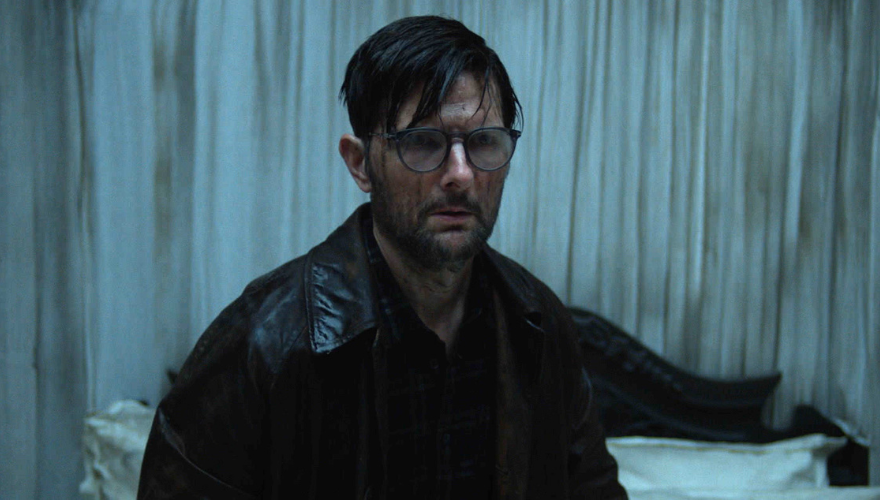
This is where Devin Kawaoka comes in. You may know him from TV roles such as Kai Tanaka-Reed in Chicago Med, and currently as Charlie on Shrinking. Devin is now pivoting art forms, or more so perhaps embracing another – turning energized focus on writing, to tell his stories.
In this conversation, Devin emphasizes the influence of his acting background on his approach to writing – in this case – the art of interpretation. He discusses why he has leaned more heavily into the TV lane, what inspires his writing and his current TV pilot, and how he aims to explore the interconnectedness of emotions.
This interview has been edited for content and clarity.
Sadie Dean: Excited to dive into your writing and acting career. So, when did that moment hit that you wanted to tackle writing?
Devin Kawaoka: It's funny, when I was in high school... I never imagined I would be doing what I'm doing now, which is basically writing, but also acting is a lot of English class - you're reading things and interpreting and coming up with so many things - and I was not a good reader when I was in high school, so the fact that I ended up in basically an English profession is wild to me.
There's something about tapping into the thing that means a lot to you, something that is formative, something that really defines you as a person, that really became something that I not only liked writing for myself, but I really liked helping other people write, and encouraging them through that process.
And that was always sort of tied into my acting too, right? Because acting is this interpretive work where you're taking other people's words and you're basically saying, OK, these are the given circumstances you've given me: I'm in this house, I'm in this state, I'm in this city. This is my mom. My mom has cancer. There's all these givens. And then you sort of pull from your life and interpret it through what you know.
Being someone who's done that for years now, I became really aware of all the stories that I wanted to tell and were in my work, in terms of as I'm standing in front of a camera, I'm thinking them, but they're never being said. They're not in the purview of the show that we're watching. And I was always coming up with ideas of things that really moved me and things that I wanted to write about, and things that were inspired by my own life…
I feel like there's always been this storyteller in me that's been writing stories around other people's words and creating my own thing. It's always been deep inside me. So then when I started to actually put pen to paper… it came so easily. And I think also from the study of understanding people's scripts... Every audition I get, I'm constantly looking at a new script, new material, looking at the structure, what's the event of the scene, what's the conflict? Because you have to identify those things as an actor. It became really easy... it felt natural to have all those things in my writing as well.
Sadie: I've been such an advocate for other writers to take acting classes, because I feel like actors already have that deep insight to clocking in on empathy and finding what the emotional importance is on the page. The ability to tap into that as an actor I feel like is a gift to translate over to writing. It’s hard to do it, but once you get in the heart of it…
Devin: Yeah... one of the struggles I've had in moving into writing was really outlining the entirety of the story. Because once I have the outline, it feels so easy to get it out. I just let the characters speak to each other and the scene happens. And it feels organic. But that beginning, that organizational step of making sure that I knew where I was going, I found super important, which is not necessarily something that actors always have to focus on because we're so in the moment of that thing. And while we are arcing something over the course of a movie or a television season... in fact you don't want to know what's coming next.
Sadie: Right. And now with your writing, you're in charge of everybody – their thoughts, their journey, all of it. What was the decision factor for you to write your story as a TV pilot versus a feature?
Devin: I like television, because I like to build worlds. I like the idea of a longer format of storytelling. I like the potential of that longer journey. Of course, I think writing a feature has that as well… I like the idea of leaving something open ended - where do we go next? What is the next thing? And maybe that's just the actor in me that always likes a question rather than an answer at the end. Though, I'm sure there's some screenwriters out there that are like ‘there's always a question, there's no answer!’ [laughs] But there's something about television that has that automatic twist at the end, that automatic thing that keeps you wanting to come back to the next episode or the next season.
And also, I think, as an interpretive artist, that's the format that I fall in the most in love with. My favorite television show is Six Feet Under and I think I just fell in love with the idea of being able to live with people for a long time, for the characters to become my family over the course of five seasons, and at the end - which I think that series finale is arguably one of the best ever written - that I remember at the end, I was just sobbing for an hour and a half when it was over, because I would never see my family again. And that to me, feels really impactful. And I feel that way about being on Shrinking. I noticed that when people talk to me about how much they love the show, when they come up to me on the street, they talk about us as if we're their friends, and how important it is that we've been with them during tough times. So, I think that's why television is really where I've started.
Sadie: While writing your pilot, and going over many, many, many iterations of it – when did you know it was time for pencils down, and share it with others for feedback?
Devin: First off, from what I understand from the process of any sort of written project, it seems especially for someone who's in the earlier stages of their career in this, there's always going to be rewrites, there's always going to be notes. So, it feels like, to me, what is most important is that when I read it, I feel my voice is really clear, and that when someone reads this story, that they will know more about me when it is done as an artist than they did when they started. So, it's it turns into an introduction of what it is that I'm going to make in my life… this story is the thing. It's more about the entirety of what I will create. And the starting point of that.
And then to share that voice with people and have people respond, 'It's very this,' and I'm like, 'Yeah, that's where I'm going. That's what I want to pop.' And I think it's more about the storyteller now, the POV of that story, the way we're looking at it... This is why we love diverse voices, right? Because we've, in some way, we need to be challenged to tell stories in new ways, from new perspectives all the time, because there are only limited amounts of stories.
One of the things that I found really fulfilling about going on and writing is that a lot of times, as an interpretive artist, you're only in charge of your story and what you're creating. And what was so fun in writing something where I got to be every character, where I got to speak as them, that I was able to sort of flush out things that I wouldn't be able to flush out when I'm just in charge of my own little world.
I feel like that is sort of when I feel like that argument is the clearest, that conflict, that tension, that world is the clearest is when I feel like it's fingers down. Share this with people. It's ready for someone to see the entirety of what I'm thinking about in this moment in time.
Sadie: Which is such a wonderful feeling and also the scariest feeling at the same time once you do share it with people – hopefully close confidents – you want them to love it but also be brutally honest with their feedback.
Devin: And one of the things that's been fascinating about sharing it is I've been sharing it with different types of artists, and the feedback I get is so different. Like, if I share it with actors, I get very different feedback than when I share it with writers. And then, the next step is to share it with an executive and be like, what does that brain think like? What do you see when you read this? What does it mean to you? The intersection of capitalism and art is always such a fascinating one, and I'm excited for that part of my journey.
Sadie: As an actor, you’ve worked with a lot of great storytellers, specifically now on the show Shrinking and working with Bill Lawrence, Jason Segel and Brett Goldstein. They’re writing such emotionally grounded pieces. Being part of that ecosystem, having that opportunity now as a writer to learn from the best – what are nuggets of writerly wisdom are you holding onto and applying to your own work?
Devin: Bill Lawrence is a genius, is an icon, and is obviously an incredible creator. [Three] shows [currently] on television right now… it's just incredible. And they’re all so filled with humor and love and compassion, and he's really figured out how to do that. And I think that that is something that I've noticed about the way that he builds worlds, is that he starts with like a good hang, and then he lets the story sort of develop.
And also, he's one of the best directors I've ever worked with. When he directs, he's incredibly smart. He's a genius at making things even funnier than they already read on the page. He really knows how to collaborate in a room with the people who are there in an encouraging way. The way in which he understands the dynamic. He said to me once about Charlie and Brian, I play Charlie and Michael Urie plays Brian on the show, he said that the dynamic is always the same. That Brian is always sort of anxious, sort of going into all these sort of narcissistic areas of his life in his mind, and Charlie's there to soothe him, love him, make everything OK. And that was such a great lesson, just being on the show and in a mind into what he was thinking, but also as a character, being like, OK, everyone has to play their side of the scene. They can't play both sides.
And in order for a scene to stand up... say it's like a temple - if one side of the temple is breaking towards the other side of the temple, it'll never stand up. It has to be supportive in order for the temple to stay standing. So, you have to have two opposing views.
I'd say the other thing that I've learned is that there's so much care and time put into the written word that actors then go and interpret... and they come back with all these great ideas. One of the things that I've thought about in terms of while I've been writing, I'm like, I have been working on this page for so long, I actually just want it to be this thing and not all the million ideas that you came in with, because I have a bigger picture that I'm talking about. So, in some ways, I've gone away. I've written. I've stolen from what Bill and Brett are all offering, and Jason. And then I'm also learning about my acting through writing, in ways in which I can be a better interpretive artist while I'm doing that job.
Sadie: I know we can't go into details about your pilot at this moment, and hopefully we will once it’s sold and produced – we’ll dive in deeper – but I know that as an actor you’ve worked with different genres and shows that have been put through different distribution outlets – how has that business side of things worked its way into what you’re writing now?
Devin: One of the things that I've really learned from working with Bill is that the key to the heart to the drama is through laughter. So, I'm definitely writing a dark comedy... it is funny, and it has to be funny. I think that funny is the way through to people's ideas and to really present change. When people laugh, they're able to hear and see more. They're not sort of in a defended place where they're like, 'I don't want to feel.’
I stuck with the half hour. Obviously, I'm a little bit more in the like streaming area, so it's like 30 to 40 pages trying to get closer to 30... sticking in that realm, knowing that I'm building out a world and that there will be edits in the future.
And I think also as an actor, one of the things that I love about the human condition is how close joy and sorrow are to each other. I think that is a big part of what I'm exploring in this pilot is how close sadness and lust and joy and anger all are together, and that you can be one in a given moment, and then something can happen, and then something else happens to you that is just as dysregulating and surprising. Something I'm modeling this after or thinking about is I'm thinking about Dying for Sex.
Sadie: Ooof.
Devin: I mean, beautiful, right?
Sadie: Destroyed me.
Devin: Oh my god. Yes, destroyed... destroyed, dead. [laughs]
Sadie: [laughs] If that's what you're writing, Devin, if you're writing another one of those shows that's gonna destroy us, yes, I'm all for it, but...
Devin: [laughs] But leaning a little bit towards romantic comedy. I really am longing for that 90s Julia Roberts where love is possible. And it's not taken too seriously, but it has an importance - so sort of combining those two things, which I know sounds crazy, but that's what I'm looking at - romantic comedy with that sort of sorrow.
But I will say commenting on the thing that my next project is going to be a network procedural, [laughs] because I also love network television. I think that network television, I know it's fallen out of fashion as of late, in terms of where we see things going, though we see streamers producing things that are like network on their platforms.
I think about this thing Bill Lawrence said in an interview where he thinks that network television is where careers are made. You can take risks in network television that now in streaming is hard to do because they have to cast four movie stars in everything that they cast in order to make a dent. Whereas on network television, you could work with a new artist, a new actor, a new writer, a new director, and find a new audience, especially if they go back to the old pilot season, which NBC is doing this year - they could really find some amazing, amazing storytelling. I'm still betting on network television, even though it feels like that might be a hard bet.
Sadie: They're cozy and can be dependable. Some of it's not great, but it's going to be different. It's gonna be fun, and like you said, it's a risk. Why not?
Devin: Think about that Grey's Anatomy pilot, think about the Cheers pilot, think about these things that are just, they're iconic, and you didn't know who any of those people were. And yet it started decades of not just beautiful storytelling and a family to come home to every week, but also so much money for the Hollywood economy. And I just think that we should be thinking like that, as we're trying to save Hollywood.
Sadie: Yes, yes, yes. So, no pressure. Now that you have this writer hat on, do you see yourself as rebranding yourself as a writer-actor? What are your reps advising?
Devin: It's sticking with the same brand that I've developed as an actor, and moving it into a fuller spectrum of what is possible. That I don't always have to be in front of the camera in terms to tell these stories that I'm interested in telling, and also that people might know me better as an interpretive artist, as a performer, through what they read or see of my storytelling.
I think it's like going further into Asian stories in terms of, like, Doctor Kai Tanaka-Reed, is this half Asian, really neurotic surgeon who has a ego and a god complex and like, that's part of me, and that continues into my written work, just as much as the loving queer husband on Shrinking and who loves to be a father, that's also a part of me. And so those things are further explored in my work, along with other things that haven't quite made it in front of the camera yet.
Sadie: Alright, so you have the pilot, you’ve mapped out the season, you have a series bible… is the hope for you to also act in this? Was this something you’ve written yourself into as well?
Devin: The answer to that is yes, though that was not how it started. The character started with what I was passionate about in terms of storytelling. I feel like one of the things I love about the script is that when people read it, they go, 'Wait, are you playing this character, or are you playing this character?' They actually don't know which character I'm playing, which, to me, feels exciting.
My goal is not to write a vehicle for myself, though, clearly, I would like to be a part of that storytelling, because I know it the best, but my goal is actually to get the stories that I want to tell out. So however best I can tell those stories, whether it's with my body or someone else's, whether I'm in this role or that role, that stuff is sort of less important to me. What's most important is that my point of view as an actor, what's important to me is what I want to say about the world and what I think needs to be shared, that that actually gets to a larger audience.
You can catch Devin on Shrinking, new epsiodes now streaming on AppleTV+.