
Seen, Heard, and Unsilenced: SXSW 2026 Documentary Filmmakers Roundtable
Ayden Mayeri, Sara Robin, Miriam Shor, and Juliane Dressner on the courage it takes to tell the truth, the cost of silence, and why documentary filmmaking demands both vulnerability and conviction.
Documentary filmmaking asks something different of everyone it touches. It asks subjects to open their lives at the most difficult, most complicated, most unresolved moments. It asks filmmakers to hold that openness without flinching, to shape it into something that speaks beyond the room it was filmed in. And it asks audiences to sit with discomfort long enough for it to become understanding.
At SXSW 2026, three documentaries stopped me in my tracks, each for entirely different reasons, and yet each dealing with a version of the same essential question: what happens to a story when no one is listening? Or worse, when someone is actively working to make sure it is never told?
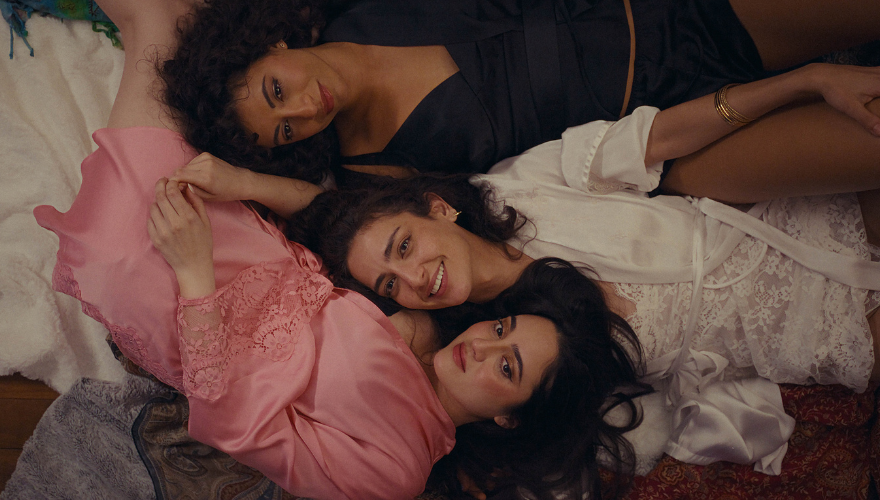
Ayden Mayeri's Summer 2000: The X-Cetra Story is about four preteens who made music for no one, and discovered two decades later that the world had finally caught up. Sara Robin's Your Attention Please is about the slow, systematic theft of our ability to be present, to focus, and to connect. And Miriam Shor and Juliane Dressner's My NDA is about three people who signed contracts that turned their own experiences into secrets they were legally forbidden to speak.
What follows is a roundtable drawn from three conversations that stayed with me long after the festival ended.
These interviews have been edited for flow and clarity.
AYDEN MAYERI | Summer 2000: The X-Cetra Story
Rahul Menon: There is something almost paradoxical about the position you were in making this film: you are the director, but you are also a subject, a participant, and in many ways the memory itself. How did you hold those two roles together, and were there moments where being Ayden the filmmaker and Ayden the former band member pulled in completely different directions?
Ayden Mayeri: There were definitely challenging moments. At first, I had a hard time switching between logistics and being present with X-Cetra. But it really helped that my co-producer Barry Rothbart and I were in it together. I knew he had things under control when I was in front of the camera. I also worked with my therapist to visualize myself switching back and forth between the different roles with ease, basically giving myself permission to not be everything at the same time.
Rahul Menon: The film has a tonal quality that feels genuinely hard to engineer: warm, funny, and quietly melancholy, all without any of those registers undercutting the others. How did you find that balance in the editing room when you were also emotionally entangled in the material you were shaping?
Ayden Mayeri: Thank God for our editors, Phil Rosonova and Audrey Leach. Barry, Phil, Audrey, and I were a team, crafting the story in the edit. What I have learned making a doc is that with a scripted film you write the script, shoot it, and edit it. With a documentary, you shoot it, then you write it in the edit. And yes, it was hard to watch myself. I kept trying to cut my parts down, and one day in the editing room they confronted me: hey, we need to show your arc, you are part of this story too. Which led to some great discoveries, like me reading from my junior high diary. That was a late addition.
Rahul Menon: X-Cetra's story is really about something wonderful being seen after years of invisibility, and about what recognition feels like when it arrives on a timeline nobody planned for. Having lived that experience rather than just documented it, what does it teach you about the relationship between creative work, patience, and the moments when the world finally catches up?
Ayden Mayeri: It has taught me a lot about creativity for the sake of creativity, and how important it is to make that a priority. Because it ultimately does not matter if anybody likes what you make, as long as you feel connected to yourself and your art. Incredible things can happen from that place. Like a record deal twenty years later.
SARA ROBIN | Your Attention Please
Rahul Menon: Your documentary tackles some of the most urgent questions of our time about technology, attention, and human connection. What initially drew you to this topic and inspired you to tell these stories now?
Sara Robin: I had been thinking about the impact of social media since it first entered my life in 2009. But it became really acute a decade later. In 2019, I discovered that I could no longer make it through a single page in a book without reaching for my phone. I used to love reading. Losing that was a wake-up call. I wanted to regain my ability to sit still, to focus, to be present. But as I spoke with parents, teachers, and young people about my initial film idea, I quickly realized that individual solutions would only get us so far. This was not just about one person's screen time. It is about human connection, our agency, our well-being. And those larger issues demand collective solutions.
Rahul Menon: Watching the film, I was struck by how it made me want to take action locally, whether joining movements or finding community spaces like Offline Club. How did you balance showing the scale of the problem with inspiring hope and agency for viewers?
Sara Robin: I think one of the illusions we live under these days is that local community actions do not matter. Local communities are where our lived reality is shaped. Our everyday habits make up the totality of our life. And lawmakers tend to follow the signal of culture, not vice versa. So shaping culture toward healthier digital habits is incredibly powerful. I think we forget too easily how fragile big tech companies actually are. They need us more than we need them. That is why they use all these tactics to keep us engaged longer. Regardless of the scale of an issue, local action is what matters most, and we wanted to really highlight that power in Your Attention Please.
Rahul Menon: Your background spans both documentary and science fiction, and your sci-fi short Switch also explores the intersection of human relationships and technology. How has your experience in narrative and speculative storytelling informed your approach to a documentary like this?
Sara Robin: Science fiction is essentially the ability to project a current set of structures into the future to heighten it, and clarify what is at stake. The ability to understand the trajectory of current incentives underpinning our technology platforms is the same as the creative imagination that constitutes science fiction. What caught my eye when I first encountered Facebook in 2009 was that we suddenly expressed friendship as a number. We turned love into a currency. It seemed innocuous, but it was going to hollow out how we relate to each other and ourselves. I think it was because of my habit of imagining future worlds that this stood out so clearly to me. Back then, nobody wanted to hear criticisms of these exciting new technologies. And so for a while I was writing science fiction about digital surveillance and artificial love instead, because that offered a platform to discuss these issues in a way that was more approachable.
What strikes me across both of these films is how differently they diagnose the same wound. Ayden Mayeri made something in the absence of an audience and found, twenty years on, that the work had survived exactly because it was never performed for anyone. Sara Robin's film is about the systematic dismantling of that same interiority, the quiet space in which attention, creativity, and presence actually live. One film is about recovering a voice. The other is about understanding who has been stealing it.
MIRIAM SHOR AND JULIANE DRESSNER | My NDA
Rahul Menon: The film is built around a striking paradox. It explores the weaponization of non-disclosure agreements while many of the people affected by them are legally prohibited from even acknowledging their existence. When you first began developing the project, what convinced you that this was a story that could be told cinematically, despite those limitations?
Miriam Shor and Juliane Dressner: From the very beginning, we knew this had to be a film, and not a text story or a podcast, because we wanted to show what no one ever gets to see: how it feels to be silenced by an NDA. My NDA is about the grievous impact of NDAs on real people. It reveals how NDAs are weaponized to prohibit people from speaking about wrenching experiences, rather than to protect trade secrets. We decided that the most powerful way to tell this story was through an observational film that would follow people who deeply regretted that they had signed NDAs. The three primary participants go through the process of weighing the risks of breaking the NDAs and eventually go public with their stories.
Rahul Menon: Knowing the enormous personal risks your participants were taking by speaking about their experiences, how did you navigate the ethical responsibility of protecting them while also allowing their stories to be told with honesty and clarity?
Miriam Shor and Juliane Dressner: We had to make this film in secret. With the support of the Reporters Committee for Freedom of the Press, we developed strategies to protect the participants, the production, and the footage. We developed a special appearance release for this film that states that if the participants decide not to break their NDAs, they will not appear in the film. And that happened. We filmed with people who ultimately could not appear in the film. One person who was sued after breaking their NDA decided they could only participate anonymously. We could no longer tell that person's full story. But we learned a great deal documenting the experiences of people who could not be in the film. It hugely contributed to our understanding of the human cost of NDAs.
Rahul Menon: What makes the documentary so unsettling is not only the legal power of NDAs, but the emotional toll they take on people who are forced to live with silence, isolation, and even a sense of complicity. As you spent time with the subjects of the film, what did you come to understand about the psychological impact of these agreements that might surprise audiences?
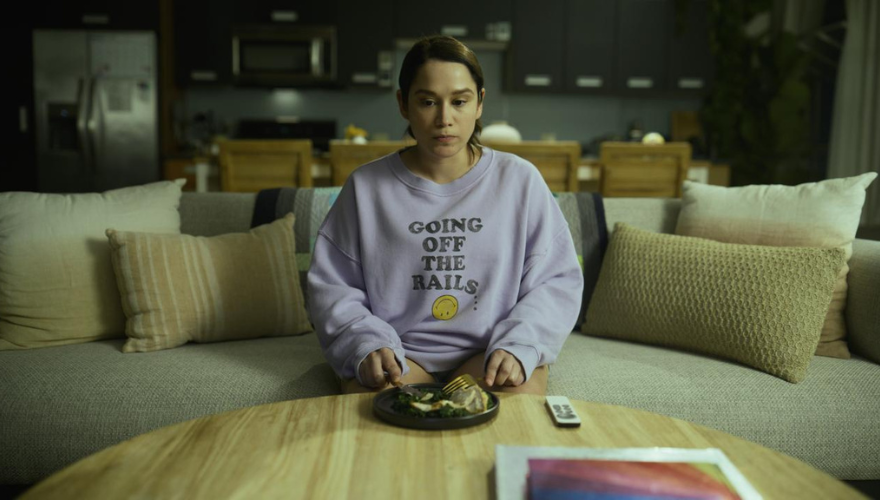
Miriam Shor and Juliane Dressner: The three main participants in My NDA have NDAs that conceal very different kinds of wrongdoing. But in the film, we see that the emotional impact on each of them is disturbingly similar. Ashley Kostial explains that being silenced by an NDA feels like having a bomb strapped on you. You do not know if it is real. You do not know if they are ever going to detonate it. Lachlan Cartwright says it is psychological warfare. In a self-recorded video diary, Ashley describes how hard it is to find a new job because she cannot explain in interviews why she left her last position. She describes it as an ongoing punishment. Some of the repercussions were surprising. Ashley felt she had to postpone marriage to protect her fiance's finances, in case she is sued for breaking her NDA. The participants decide to break their NDAs despite the risks, because they cannot bear to continue to feel complicit in a cover-up, even though they were the victims.
Rahul Menon: At its core, My NDA feels like a film about courage. It documents people choosing to speak even when the consequences are uncertain. As filmmakers reflecting on this journey now, what do you hope audiences take away from these stories about accountability, community, and the power of breaking silence?
Miriam Shor and Juliane Dressner: The first rule of NDAs is: do not talk about NDAs. We want to break that rule and spark a conversation about how these contracts are being abused and who benefits from silence. NDAs are undoubtedly an important tool to protect intellectual property and trade secrets, but we hope My NDA will shed light on the impact of the destructive mission creep of these secrecy contracts, which are now also being used to cover up all kinds of bad behavior and unlawful activity. Each of the participants in My NDA had a striking impact because they broke their silence. We hope that viewers will be as inspired by their courage and conviction as we were, and that My NDA will be a reminder of just how powerful one person's voice can be.
My NDA is the kind of documentary that changes the texture of how you move through the world after you see it. You leave thinking differently about the documents you sign, the silence you accept, the stories people around you are not able to tell. Miriam Shor and Juliane Dressner have made something genuinely important, and they have done it with remarkable craft and care for the human beings at the center of it. What the film understands, and what all three of these documentaries understand, is that silence is never neutral. It always belongs to someone.
Documentary filmmaking, at its best, is an act of witness. It says: this happened, these people existed, these stories deserve to be heard. What Ayden Mayeri, Sara Robin, Miriam Shor, and Juliane Dressner each brought to SXSW 2026 was that rare thing: a film that earns the trust of everyone in it, and then uses that trust to tell the truth.
The act of speaking, of being seen and heard on your own terms, is one of the most radical and necessary things a person can do. And these filmmakers made sure we got to witness it.