

SXSW 2026 Favorites
6 Films That Unsettled, Made Me Laugh, and Broke My Heart in One Festival Week
From jolting scares to gut laughs and moments that linger long after the credits, SXSW 2026 was a masterclass in cinematic chaos and connection. Over seven jam-packed days, I discovered films that dared to shock, charm, and break my heart while reminding me why we fall in love with movies. Here are 6 standouts that captured the festival's wild and unpredictable spirit.
Brian (2026)
Directed by Will Ropp
Written by Mike Scollins
Going into Brian, I knew one thing: it came from Mike Scollins, one of the writers at Late Night with Seth Meyers, and I have always loved his sense of humor. There was genuine hype walking in. Somehow, Brian not only meets that expectation. It comfortably exceeds it.
On the surface, this plays like a familiar coming of age setup. An awkward high school student, struggling to find his place, makes a questionable decision that sends his life into chaos. In this case, Brian runs for class president with the hope of getting closer to his teacher. It sounds absurd, and at times it is, but what the film does with that premise is what makes it special.
Because beneath the humor and painfully relatable social missteps is something far more grounded. This is a story about insecurity, identity, and the exhausting pressure of constantly feeling measured against everyone around you. It understands that high school is not just about fitting in. It is about surviving your own thoughts.
Ben Wang is the film's beating heart, and he is exceptional. Brian is not exaggerated awkward for the sake of comedy. He is the kind of awkward that comes from overthinking every interaction, from saying the wrong thing at exactly the wrong moment, from wanting to be understood and failing in real time. It is a performance that feels lived in rather than performed, and what makes it remarkable is how compassionate the film is toward him. Brian makes mistakes. He spirals. He embarrasses himself in ways that are hard to watch because they feel so familiar. But the film never reduces him to a punchline. It gives him room to grow, to stumble, and to learn without ever losing sight of his humanity.
Director Will Ropp handles the tonal shifts with impressive control. The balance between the sharp, often dark humor and the heavier emotional beats never feels forced, and the rhythm across the film feels entirely natural. Randall Park and Edi Patterson, playing a couple who bounce off each other with chaotic energy, are worth the price of admission alone. Their scenes feel loose, playful, and completely alive.
There is also a quiet thread about mental health running through the film that is handled with genuine care. It is woven into Brian's experience in a way that feels honest and relatable, never forced into spectacle.
The humor lands, the characters resonate, and the film builds toward an emotional payoff that feels earned. Even the end credit outtakes are a highlight. As soon as the film ended, it immediately became one of my favorite screenings of the festival.
Brian is one of those rare films that feels both deeply personal and widely relatable. It is funny, messy, uncomfortable, and surprisingly heartfelt. More than anything, it reminds you that sometimes the most awkward version of yourself is also the most honest one.
It is the kind of film that feels personal and universal at the same time, and I am not going to be shutting up about this one anytime soon.
Crash Land (2026)
Written & Directed by Dempsey Bryk
At first glance, Crash Land looks like a chaotic salute to the Jackass era. A group of friends in a small town spend their days pulling off reckless stunts and documenting it all with the kind of enthusiasm that usually ends in bruises. Give it a little time, though, and something else begins to emerge. Beneath the surface level antics is a film that quietly reveals itself as an ode to stunt performers, to the act of filmmaking itself, and to that deeply human need to create something that lasts.
Directed by Dempsey Bryk in an impressive debut, the film follows Lance, Clay, and Darby as they decide to finally make a real movie. It is a simple goal that carries unexpected weight, especially as they begin to confront emotions they have spent most of their lives avoiding. Love, loss, and the creeping realization that growing up is not optional all find their way into this otherwise chaotic world.
The humor is unapologetically ridiculous, often veering into territory that feels like a spiritual cousin to Hot Rod with a touch of Napoleon Dynamite and a bit of Letterkenny in its rhythm. What makes it work is the sincerity underneath all that noise. Being dumb together becomes its own kind of language, a way of saying everything too difficult to articulate out loud.
Gabriel LaBelle continues to prove himself as one of the most exciting young actors working right now, bringing both comedic timing and real emotional depth to his performance. Finn Wolfhard leans into a more offbeat energy that works surprisingly well within this world, and the ensemble chemistry feels effortless throughout. Bryk's direction leans into that authenticity, never over-polishing material that earns its roughness.
What is surprising is how much emotional weight Crash Land carries. A lingering sense of grief runs through the story, giving context to the characters' behavior and their sudden desire to create something meaningful. By the end, it feels like both a tribute and a farewell: a celebration of the friendships that define us, and a recognition that change is inevitable.
Messy, funny, occasionally heartbreaking, and unexpectedly sincere. Somehow, it sticks the landing.
Anima (2026)
Written & Directed by Brian Tetsuro Ivie
There is a quiet confidence to Anima that reveals itself the same way its story does: gradually, without announcement, and with a patience that feels almost countercultural right now. Written and directed by Brian Tetsuro Ivie, this is a road trip film in the most intimate sense, less interested in where its characters are going than in what they are carrying when they arrive.
Beck, a young woman with her own unresolved history, is tasked with driving Paul, an aging and wealthy man, to a facility where his consciousness will be uploaded and preserved. Ivie told me during our conversation that the idea originated from the parable of the rich fool, the story of a man who builds larger storehouses for his abundance and dies the very night he finishes them. That parable sits at the moral center of the film. Preservation is not the same as meaning. Control over what we leave behind may be the most expensive illusion we purchase.
Ivie comes from documentary filmmaking and that lineage is visible throughout. He observes rather than dramatizes. He told me that he rarely rehearsed because he often used the first take, and you can feel that discipline in every scene. Sydney Chandler brings a restless, searching quality to Beck that makes her fascinating even when the script keeps her close to the chest. Takehiro Hira delivers something more internalized and quietly devastating as Paul, a man attempting to correct the shape of his life before it is fixed permanently. There is a scene between the two in a bedroom that is among the year's best: just two people talking, but weighted with everything the film has built toward.
Shot on celluloid through Ivie's company Kebrado, Anima has a tactile warmth that digital photography simply cannot replicate. Ivie described the difference to me as the distinction between standing beneath the skyscrapers of Manhattan and standing in the middle of Central Park. That miracle quality is in every frame. The soundtrack, built from folk music and Japanese indie influences that Ivie curated alongside the script rather than after it, lingers the same way the film does.
Ivie said something in our conversation that stayed with me. The poet David Whyte wrote that you can only really see people moving at the same velocity as you. Anima asks you to slow down, and what you see when you do is something genuinely moving.
Kill Me (2026)
Written & Directed by Peter Warren
There is something immediately arresting about a film that opens with a man waking up in a bathtub, unsure whether he tried to end his own life or whether someone else beat him to it. That uncertainty is the engine of Kill Me, and it is a premise as bold as it is dangerous.
Written and Directed by first-time filmmaker Peter Warren, the film leans into its contradictions with confidence. It is a darkly comedic murder mystery that constantly blurs the line between internal struggle and external threat. Jimmy, played by Charlie Day, is both detective and possible victim, chasing answers that may not want to be found. Warren described wanting to reinvent the whodunnit by asking what it would mean if the body was the detective. That idea sits at the film's core, giving it a strange and genuinely compelling identity. You are not just watching Jimmy solve a mystery. You are watching him interrogate himself.
Charlie Day delivers what is easily one of his best performances to date. His signature chaotic humor is fully intact, but there is a deeper, more vulnerable layer here that elevates the material. He can pivot from absurd comedy to something quietly devastating within the same scene. It is the kind of performance that keeps the film grounded even when the narrative threatens to spiral.
Kill Me rides a very fine line throughout. At any given moment it feels like it could either collapse under the weight of its tonal ambition or pull off something genuinely special. For the most part it succeeds. The blend of humor, tension, and psychological unease creates a rhythm that keeps you engaged. Warren approaches mental health with a refreshing honesty, never packaging it neatly or reducing it to a single idea. As he explained, depression is not something you cure but something you live with, and the film reflects that messiness.
The third act feels less assured than what precedes it, and a late narrative shift pulls you slightly out of the experience. But when the film works, it really works. This is a debut that takes genuine risks, and that willingness to sit in discomfort is what makes it linger.
Plantman & Blondie: A Dress Up Gang Film (2026)
Directed by Robb Boardman
Written by Robb Boardman, Cory Loykasek, Donny Divanian, Frankie Quinones
I am new to the eccentric worlds the Dress Up Gang have been building over the years, and Plantman & Blondie feels like being dropped into one mid-sentence. It is strange, a little chaotic, and immediately disarming in its sincerity.
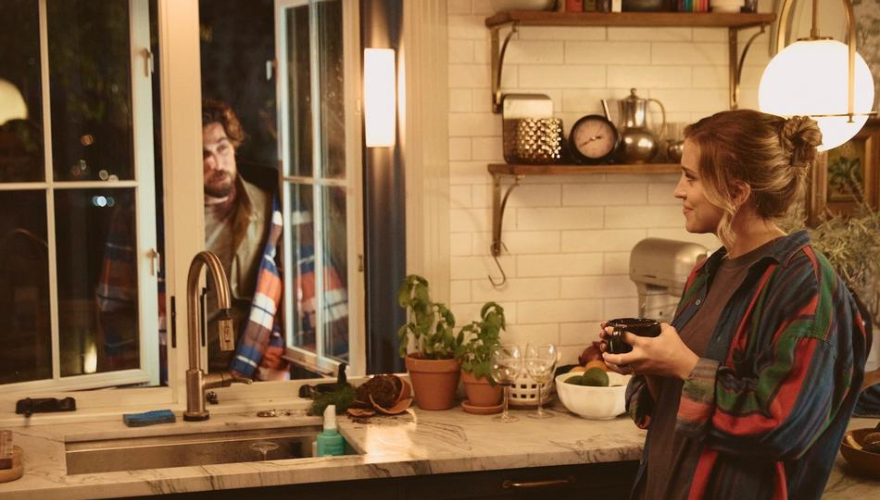
A lonely man working from home crosses paths with a mysterious vigilante gardener committed to rescuing neglected houseplants across Los Angeles. What follows is part hangout comedy, part low-stakes caper, and part quiet reflection on modern isolation. Cory Loykasek brings an understated charm to the central role, and his dynamic with Kirk Fox adds a warmth that grounds the film's more absurdist impulses. Donny Divanian commits fully to the Plantman persona in a way that makes the film find its rhythm precisely when it needs to.
The plants are an obvious metaphor, but an effective one. Growth requires attention, patience, and care, and so do people. By the end, it leaves you with something simple but meaningful: a reminder to show up, to connect, and maybe to take care of something outside yourself.
Basic (2026)
Written & Directed by Chelsea Devantez
I walked into Basic at its world premiere knowing almost nothing beyond the presence of Leighton Meester and Ashley Park. That lack of context works in the film's favor. It unfolds with a playful unpredictability that keeps you slightly off balance in the best way.
Ashley Park and Leighton Meester are excellent as two women locked in a rivalry shaped entirely by perception, each having constructed an elaborate version of the other through social media. Park brings restless, slightly chaotic energy to the anxiety of wanting to measure up, while Meester offers a more grounded presence that slowly reveals its own cracks. Chelsea Devantez, expanding on her earlier short, demonstrates a clear and confident voice. The film leans into absurdist set pieces and imagined scenarios in ways anchored in emotional truth, and the cinematography by Veronica Bouza gives the film a polished, idyllic sheen that quietly doubles as storytelling.
What ultimately surprised me most is how gentle Basic feels by the end. After setting up what could have been a cynical exploration of jealousy and competition, it shifts into something more reflective. The versions of people we build in our minds are rarely the full picture, and sometimes the simplest conversations cut through the noise.
Six films, six wildly different worlds. And yet something connects them. Brian and Crash Land both understand that growing up does not follow a schedule. Kill Me and Basic locate their comedy in the stories we tell ourselves rather than the reality we inhabit. Anima and Plantman & Blondie ask quietly whether connection is something we can manufacture or only stumble into when we finally slow down. What unites all six is a belief that the messiest, most honest version of a story is usually the most worth telling. SXSW 2026, for all its brevity, made that case beautifully.