

Keeping a True Story Authentic, Even as Fiction: Laïla Marrakchi Discusses ‘Strawberries’
Filmmaker Laïla Marrakchi discusses the necessary timeline to complete the script, her filmmaking journey, and what she hopes audiences take away from the film.
Back in 2005, Laïla Marrakchi’s feature debut Marock premiered at the Cannes Film Festival, nominated for the Un Certain Regard award. Twenty-one years later, her third film, Strawberries (La Más Dulce) just premiered at Cannes (May 12-23). What does this full circle moment mean to her? “It was really moving yesterday to show the film to the audience. The actresses and crew were there. It was amazing.”
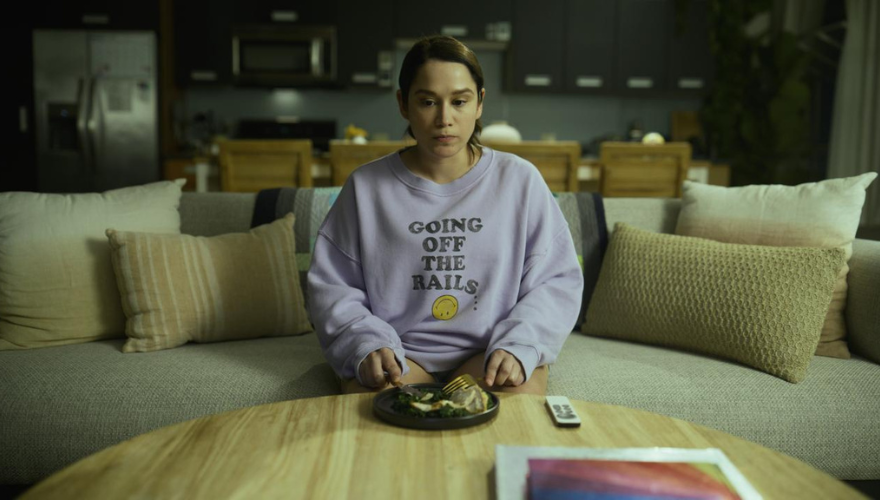
Strawberries revolves around two women, Hasna (Nisrin Erradi) and Meriem (Hajar Graigaa), who bond while working in the strawberry fields in Spain. Trying to persevere over harassment, abuse, and exploitation is at the nexus of their friendship.
Marock, which Laïla wrote solo, was a very personal story for her. Strawberries was new territory and she appreciated writing it with Delphine Agut (Souleymane’s Story, Inshallah a Boy), so much so that she now prefers writing with someone. “I think it’s more interesting to write with someone. You can do ping pong. You can [go] back and forth, share thoughts and information. The beginning of this film is a situation that’s new to me. I needed someone to help me build that world.”
Her sophomore feature, Rock the Casbah (2013), didn’t go to Cannes but received accolades at the Toronto International Film Festival, Washington DC Film Fest, and the Dubai International Film Festival. All of her films have female leads. This is the first one that doesn’t have a comedic component.
Strawberry Fields
Spain’s GECCO program recruits women from Morocco to work in their strawberry fields. This labor that doesn’t have enough oversight has been going on since 2021. It can provide more income for widows or divorcees, but it also puts the women in vulnerable positions. Most of the strawberry picking takes place in the Huelva region of Andalucia and the women go there with no clue about what they’re getting into. Their desperate positions make them targets for exploitation. They’re isolated and subject to being sexually assaulted, not paid for overtime, and getting paid egregiously late.
It took six years for Laïla and Delphine to complete this story because they wanted to make sure it was right. During their research they came across numerous stories of female strawberry pickers being abused, assaulted, and exploited.
“All the people I met had heavy, complicated stories. It was exhausting. It’s difficult to leave your country. These women come to Spain for three months. They don’t speak the language. They’ve left their families, including their children, behind,” Laïla told Script magazine.
Laïla and Delphine were able to make the story as authentic as possible by digging deep when researching and observing.
Laïla Marrakchii: The actresses also brought a lot of authenticity to the roles.
Sonya Alexander: What else did you do during those six years?
Laïla: I worked on three television shows. Damien Chazelle’s The Eddy, Carême, and L'Opéra.
Sonya: How did you find your position of observation in this story?
Laïla: In the beginning of the process, the story was supposed to be from the point of view of the Spanish lawyer. Then I changed it because I didn’t feel I could tell it through this point of view. I decided to tell it from the point of view of Hasna. Also, I had to talk to my Director of Photography Tristan Galand about finding distance in the story. The first part of the film is more like a documentary. Just observing and following the main character. When the Spanish lawyer appears in the middle of the film, the film becomes more fictional. It becomes more about the lawyer’s investigation.
Sonya: If you were Hasna, what would you do?
Laïla: I’m kind of like Hasna. I talked about that with Nisrin, the actress who plays Hasna. Hasna’s strong. She’s afraid of emotion. She’s fighting. She’s sometimes selfish. [laughs] I know each of my characters well.
Sonya: What was the casting process for this?
Laïla: At first I wanted to use unknown actresses but after the film is done, that becomes complicated. I changed my mind and decided to use real actresses and I’m happy that I did.
Sonya: What do you want people to take away from this film?
Laïla: My main goal is for these women to be viewed differently. They are strong, they are loving, they are messy. Usually when we show these women, they are victims, they are poor. They’re a certain cliché. I want to show them as human.
Sonya: What else are you working on?
Laïla: I just finished this film last week…! I’m still doing some post-production on it. It premiered yesterday at Cannes. When I saw Delphine yesterday, I told her I have some new ideas. I might begin a new project this summer.
إنتاج سينمائي (Filmmaking)
Sonya: How did you first get into filmmaking?
Laïla: I’m a cinephile. I grew up in Morocco and for me cinema was a window to the world. I spent a lot of time watching movies when I was a child and teenager. My uncle was a distributor of films in Morocco. There were a lot of 35mm screenings at his place. I felt cinema was my place, but I didn’t have the tools. Nobody around me was a director or filmmaker. I could be a producer or distributor, but didn’t think I could be a filmmaker. When I came to Paris, France, I decided to go to cinema school but I wasn’t confident. I didn’t know any Arab filmmakers. It was a journey to become a filmmaker. Step by step it became possible for me.
Sonya: Do you prefer writing or directing?
Laïla: Directing. I love working on set, with my crew and actresses. Writing is a long process for me and it’s difficult. I like it, but it’s not my favorite thing.
Sonya: What do you want your next story to be about?
Laïla: A love story maybe. Also, it may be set in France since I’ve lived here a long time and I’ve never done one set here.
Sonya: What would you consider a perfect day for you on the set? That could be for this film or just in general.
Laïla: There are no perfect days! ]laughs] There are always problems that you need to resolve. You can be creative solving problems though. When you have constraints, you can be more creative. It’s magical sometimes when you do a scene and you get it in one take. After that, you might do another take because you want to do better, but you never find what you had before. It was perfect that first time.
Strawberries premiered on May 18, 2026 at Cannes. It also stars Fatima Atiff, Itsaso Arana, and Fran Cantos.

Sonya Alexander started off her career training to be a talent agent. She eventually realized she was meant to be on the creative end and has been writing ever since. As a freelance writer she’s written screenplays, covered film, television, music and video games and done academic writing. She’s also been a script reader for over twenty years. She's a member of the African American Film Critics Association and currently resides in Los Angeles.