

SXSW 2026 Documentary Favorites
6 Documentaries That Asked Hard Questions, Found Unexpected Beauty, and Refused to Look Away
What often gets overlooked is the insane amount of extraordinary documentary filmmaking that comes out of SXSW every single year, and 2026 is no different. The festival remains one of the richest hunting grounds for nonfiction cinema that is willing to go somewhere genuinely uncomfortable. This year's documentary slate ran the full gamut: from the intimate and personal to the systemic and urgent, from joyful acts of creative reclamation to unflinching examinations of silence, shame, and the cost of being seen. If the narrative films at this year's festival were defined by tonal risk, the documentaries were defined by something rarer: courage.
Summer 2000: The X-Cetra Story (2026)
Directed by Ayden Mayeri
Winner: DOCUMENTARY FEATURE COMPETITION
Kind of totally obsessed with this one. And yes, that probably has something to do with being a millennial. But what Ayden Mayeri accomplishes with Summer 2000: The X-Cetra Story goes far beyond nostalgia. It is at once a time capsule and a deeply felt reflection on creativity, friendship, and the strange passage of time that turns our most personal memories into something distant, almost mythic.
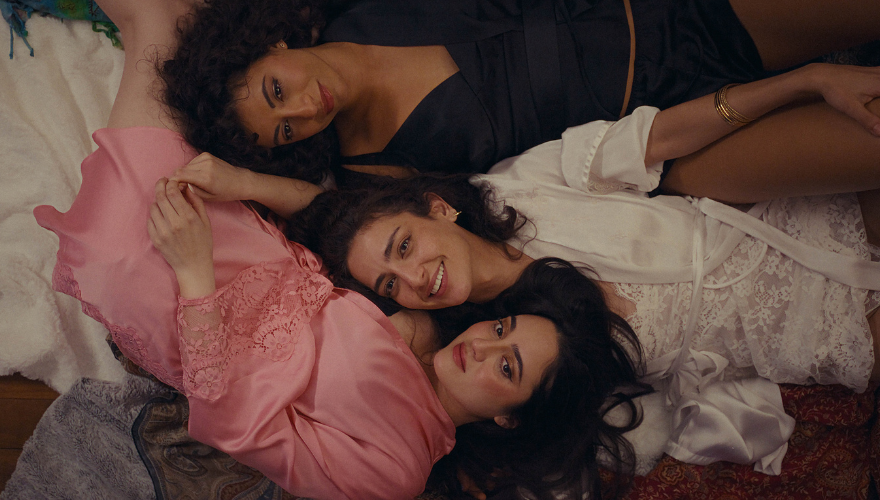
The premise alone feels like something out of fiction. Four preteen friends record an album at the height of early 2000s pop obsession, burn it onto CD-R discs, and then forget about it entirely as life takes over. Two decades later, that same album resurfaces online, slowly building a cult following before catching the attention of record labels and media. What follows is not just a reunion but a reckoning with who these women were and who they have become.
Mayeri, who directs and appears in the film, walks a delicate line that could easily have tipped into self-indulgence. Instead, she brings a surprising level of restraint and honesty to the process. The group makes a pact early on to be as real as possible, resisting the urge to present a polished version of themselves. Old VHS footage blends with present-day handheld intimacy, creating a visual dialogue between past and present that feels both organic and considered.
What makes the film resonate is its refusal to treat this reunion as purely celebratory. Reconnection comes with its own complications. Old dynamics resurface, unresolved feelings linger, and the passage of time is impossible to ignore. Mayeri does not shy away from these moments. She leans into them, allowing the film to hold both joy and discomfort without forcing resolution.
There is also a larger idea at play about creative work itself. Mayeri spoke about how the album was originally made without any audience in mind, which gives it a purity that is difficult to replicate. That sense carries through the film. It becomes less about the unlikely success of the album and more about what it represents: creativity for its own sake, and the idea that making something honest has value entirely beyond recognition.
By the end, Summer 2000 leaves you with a feeling that is difficult to shake. Not quite nostalgia, not quite melancholy, but something in between. A recognition of time lost and something quietly, unexpectedly regained.
Adam's Apple (2026)
Directed by Amy K. Jenkins
In a cultural moment where trans lives are too often flattened into headlines or reduced to talking points, Adam's Apple arrives with a rare kind of intimacy and clarity. Directed by Amy K. Jenkins and shaped in collaboration with her son Adam Sieswerda, the film unfolds less like a conventional documentary and more like a living archive. Built from years of home footage, reflections, and creative assembly, it invites us into a family learning, stumbling, and growing together in real time.
What makes the film immediately striking is its perspective. This is not a story told from the outside looking in. It is a shared act of storytelling between a mother and her child, one that allows both voices to coexist, overlap, and at times stand alone. That duality gives the film its emotional texture. Representation in documentary film for trans men is jarringly limited, and Adam's Apple is deeply aware of that absence. There is a quiet relief in simply watching Adam exist on screen, not as a symbol or an argument, but as a person. Curious, awkward, funny, and still figuring things out.
One of the most affecting choices Jenkins makes is how she pairs present-day moments with footage from earlier years. Small gestures, familiar habits, and echoes of childhood reappear in ways that quietly reinforce a central idea: the body may change, but the person within it remains. It is a simple observation, yet one that lands with profound emotional weight when seen through a mother's lens.
At its core, Adam's Apple is about acceptance, but not in a simplified or idealized sense. It captures the work involved in understanding, the questions that do not have easy answers, and the effort required to support someone you love as they define themselves on their own terms. What emerges is a portrait of a family learning how to love better, more honestly, and with fewer conditions.
Profoundly moving and quietly powerful, this is one of the most memorable films to come out of SXSW this year. It is a reminder that sometimes the most radical thing a documentary can do is simply let someone be seen, fully and without compromise.
My NDA (2026)
Directed by Miriam Shor and Juliane Dressner
Something is unsettling about My NDA, and it is not because of what it shows, but because of what it reveals has been hiding in plain sight. Directed by Miriam Shor and Juliane Dressner, this is not a story about a single broken system. It is about a structure so normalized that most people rarely question it until they find themselves trapped inside it.
The documentary follows three individuals who made a decision most people never have to consider: they signed non-disclosure agreements and then chose to break them. That premise alone gives the film a tension that feels closer to a thriller than a traditional documentary. Every moment carries weight because the risks are not theoretical. They are financial, legal, and deeply personal.
Early on, the film establishes how common these agreements are, framed as routine, almost procedural, something people sign without a second thought. That familiarity is precisely what makes the film so effective. As it unfolds, what once felt standard begins to look like a system built to maintain control. The filmmakers spoke about wanting to show what it actually feels like to be silenced, and that intention comes through clearly. Much of the film is captured in intimate, close-quarters moments, filmed with minimal intrusion. We sit in rooms with the participants as they speak with lawyers, weigh consequences, and prepare to go public.
The stories themselves are where the film finds its power. Each subject comes from a different world, yet their experiences intersect in revealing ways. Whether the details involve discrimination, abuse, or corporate protection, the mechanism remains the same: silence is enforced, and that silence benefits someone else. One participant describes it as an ongoing punishment, a feeling that echoes across each story.
What lingers most is the psychological toll. These agreements do not just restrict speech. They reshape lives. Careers stall, relationships strain, and a quiet sense of complicity takes root. My NDA takes something that feels abstract and grounds it entirely in lived experience, leaving you with a question that is difficult to shake: how many stories remain buried because silence was the price of survival?
Not an easy watch. A necessary one.
The Ascent (2026)
Directed by Edward Drake, Scott Veltri, and Francis Cronin
At first glance, The Ascent seems to fit neatly into the familiar framework of an inspirational documentary. A determined subject, an impossible goal, and a journey defined by perseverance. But what unfolds is far more layered and, at times, unexpectedly unsettling. Directed by Edward Drake, Scott Veltri, and Francis Cronin, the film follows Mandy Horvath, a bilateral amputee attempting to climb Mount Kilimanjaro using only her hands. That alone would be enough to command attention. What gives the film its real weight is everything surrounding that climb.
Mandy is, quite simply, a force. The physical demands of what she sets out to do are staggering, and the film does not shy away from showing the toll it takes. Every movement feels earned. Every stretch of terrain becomes a test of endurance that most people would never even consider attempting. It is the kind of effort that makes you instinctively lean forward in your seat. Super inspiring does not quite cover it. Mandy is a beast in the most sincere sense of the word.
Yet the film quickly reveals that this is not just about physical resilience. Interwoven with the climb is the story of how Mandy lost her legs, an event that remains clouded in uncertainty. What begins as a survival narrative gradually takes on the tone of something closer to a true crime investigation. That shift gives the film an added layer of tension. It is not just about reaching the summit, but about confronting a past that refuses to fully come into focus.
This dual structure is where The Ascent finds its identity. It moves between the immediacy of the climb and the lingering questions surrounding that night, creating a rhythm that is sometimes uneven but always engaging. The filmmaking itself is not particularly innovative, but it is effective. The focus remains squarely on Mandy, and that is exactly where it should be.
What makes the film resonate is how it resists turning Mandy into a simple symbol. She is not presented as a polished figure of motivation. Instead, she comes across as raw, complicated, and at times guarded. There is a clear sense that her relationship with trust has been fractured, and that tension carries through both the physical journey and the emotional one. It adds depth to what could have easily been a more straightforward narrative.
The climb itself is gripping. The terrain is unforgiving, the conditions harsh, and the physical strain constant. But it is the emotional undercurrent that elevates the experience. This is not just about proving something to the world. It feels like an attempt to reclaim control, to push forward despite uncertainty, and to find some form of resolution even if answers remain out of reach.
There are moments where the structure feels slightly engineered, with transitions between timelines arriving a bit too neatly. But Mandy’s presence keeps the film grounded. She disrupts any sense of predictability simply by being who she is.
By the end, The Ascent becomes more than a story of endurance. It is about living with unanswered questions and choosing to move forward anyway. It is harrowing and uplifting in equal measure, a portrait of resilience that refuses to simplify the reality behind it.
An incredibly compelling documentary, and one that lingers long after the climb is over.
Your Attention Please (2026)
Directed by Sara Robin
There is a quiet but persistent unease that runs through Your Attention Please, a documentary that understands something many of us feel but rarely articulate. We are not just using technology. We are being used by it. Directed by Sara Robin, this moving and troubling piece confronts the systems shaping our behavior with both urgency and restraint. It earns its voice through deeply human stories rather than empty alarm.
The film centers on what is often called the attention economy, a system where our time, focus, and emotional responses are monetized at scale. Social media platforms are presented here not as neutral tools but as carefully engineered ecosystems designed to keep users engaged for as long as possible, often at the expense of mental health, particularly among teenagers. Robin does not reduce this to abstract theory. She grounds it in lived experience.
One of the most affecting throughlines follows Kristin Bride, a mother seeking accountability after a devastating personal loss tied to online harassment. Her story is presented with care and emotional clarity, never veering into exploitation, yet impossible to shake. Alongside this grief sits a genuine sense of resistance, embodied by a young programmer named Trisha Prabhu who is building tools to combat cyberbullying. Technology, the film suggests, is not inherently harmful. It is the intention behind its design that determines its impact.
Robin occasionally leans into nostalgic reflections of a pre-social media world, and while those moments can feel slightly idealized, they serve a purpose. They remind us that the current state of digital life is not inevitable. It is constructed, which means it can be reshaped.
What ultimately lingers is the film's insistence on responsibility, not just from corporations or lawmakers, but from us as participants in this ecosystem. Your Attention Please does not offer easy solutions. It asks something far more uncomfortable: are we willing to change, or have we already given too much away?
A mighty call to action. One that feels impossible to ignore.
Manhood (2026)
Directed by Daniel Lombroso
It takes a certain kind of documentary to begin with a premise that sounds almost absurd and then slowly reshape itself into something deeply human. Manhood, directed by Daniel Lombroso, does exactly that. What initially presents itself as a look into the business of male enhancement evolves into a far more layered exploration of insecurity, loneliness, and the fragile expectations placed on modern masculinity.
The film follows three subjects: a Dallas entrepreneur attempting to normalize enhancement procedures, an online performer navigating image and identity, and a father trying to reclaim a sense of self. Each serves as an entry point into a conversation that is rarely this candid. Lombroso consistently resists the urge to mock. Instead, he observes with a non-judgmental lens that allows each story to unfold on its own terms, and that restraint is both the film's greatest strength and its occasional limitation. The critique of how society pushes men in this direction comes through more as observation than argument, raising questions rather than offering conclusions.
But that honesty is ultimately more valuable. There are moments that feel almost surreal, not because they are exaggerated, but because they are so plainly real. Watching these men navigate their anxieties reveals a quiet crisis shaped by cultural messaging, peer pressure, and a deeply ingrained fear of inadequacy. It becomes clear that this is not about physical change so much as a search for validation that too often leads nowhere meaningful.
What lingers most is not the shock of the subject but the recognition of its roots: the need to feel enough, and the pressure to perform a version of masculinity that is both outdated and relentlessly reinforced. In that sense, Manhood becomes less about the procedures themselves and more about the systems that make them seem necessary.
It is not an easy watch, and it is not meant to be. But it starts conversations many would rather avoid, and in doing so, reveals just how much those conversations are needed.
Each one of these documentaries is, at its core, about the gap between the version of ourselves we present and the truth we carry underneath. A childhood album rediscovered. A son stepping into himself. A climb of perseverance. Workers silenced by fine print. Teenagers shaped by algorithms. Men unable to say what they actually need.
SXSW has always been a festival that trusts nonfiction cinema to go where other formats will not, and this year's documentary slate made that case quietly and forcefully. These were not films that shouted for attention. They earned it, one honest, uncomfortable, deeply human moment at a time. That is the kind of filmmaking worth traveling to Austin for.