

When the Body Becomes the Dialogue: A Conversation with Stunt Choreographer and Action Director Don Lee
Stunt choreographer and action director Don Lee on emotional storytelling, honoring the lineage of a dangerous craft, and the long-overdue Oscar recognition for stunt design.
There is a particular kind of filmmaking that audiences rarely stop to think about, and that is precisely the point. When a fight scene lands perfectly, when a chase sequence pulls your breath into your chest, when a stunt performer hits the pavement and your body flinches in recognition, you are not thinking about the months of planning, the safety infrastructure, the choreographic vocabulary, or the emotional architecture underneath all of it. You are just feeling it. That is the craft at its most invisible. And invisibility, in this context, is the highest possible compliment.
For decades, that invisibility also meant professional erasure. Stunt performers and coordinators built the kinetic soul of Hollywood’s most iconic moments, and then watched those moments get celebrated in categories where their names were never called. That changes at the 100th Academy Awards, when the Academy introduces the category of Achievement in Stunt Design. It is a long-overdue reckoning, and for the people who have spent careers doing this work, it carries weight that is both personal and generational.
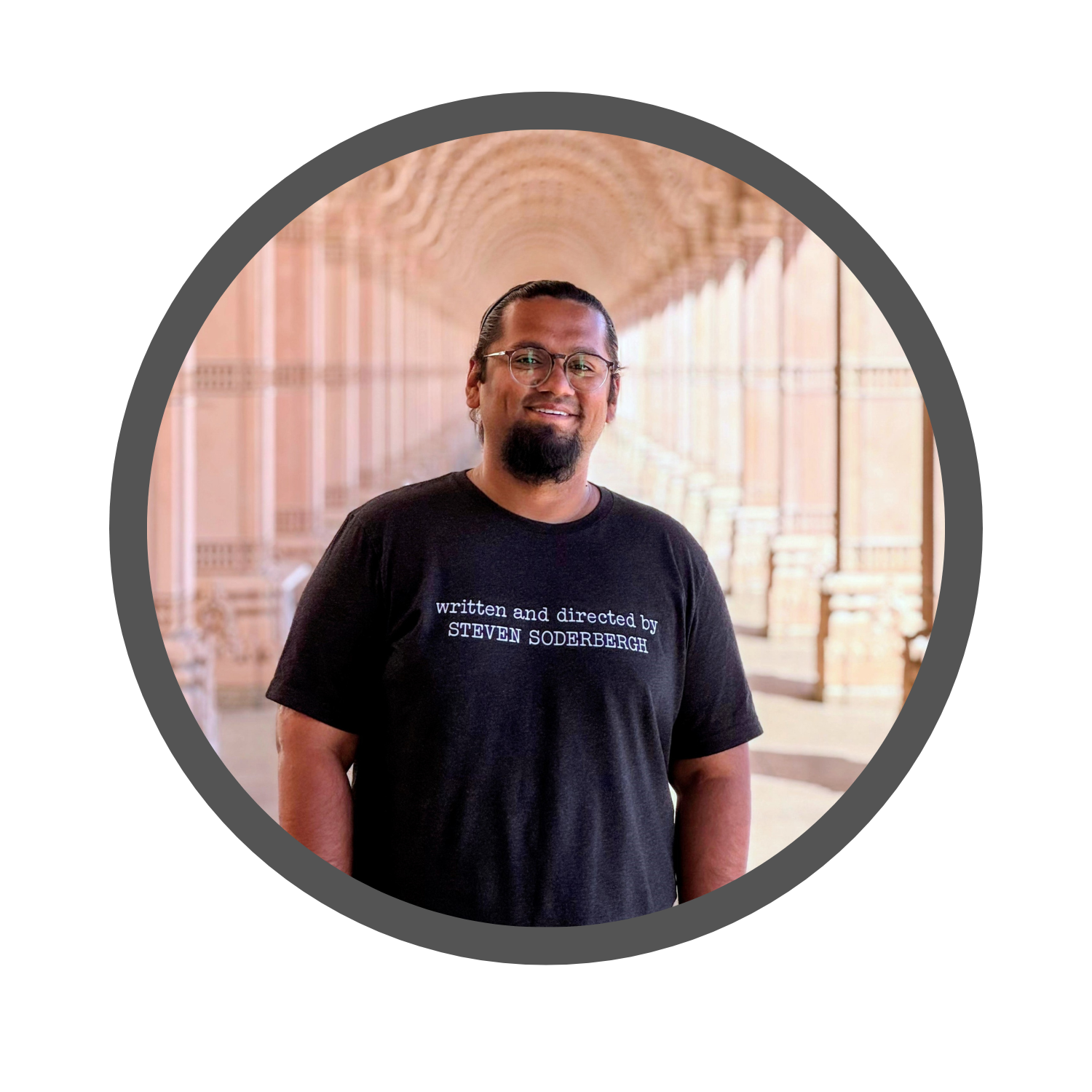
Don Lee has spent more than twenty-five years inside that world. He grew up in San Diego, came up through the martial arts tournament circuit, and found his way into the industry in the most characteristically direct way possible: after losing a competition at fourteen, he walked straight up to the producers and asked why he didn’t win. They had no real answer, but they pointed him toward stunts.
He has since coordinated action on productions spanning studio blockbusters to prestige television, from Pirates of the Caribbean and Transformers to G.I. Joe, 12 Strong, and Tulsa King. In India, he spent nine months as the lone American action director/second unit director on the Disney Hotstar war epic 1962: The War in the Hills. And on Cobra Kai, he brought a philosophy of emotional choreography to one of Netflix’s most beloved action-driven series, logging over thirteen thousand beats of choreography across three seasons and even performing alongside Ralph Macchio in the show’s Miyagi dream sequence.
What makes Don Lee interesting to talk to is not just the resume. It is the way he thinks about the work. He talks about action the way a novelist talks about sentence structure: as a system that exists entirely in service of emotional truth. He talks about lineage with reverence and specificity, with a sense that understanding where something came from is inseparable from understanding where it is going. He talks about independent filmmakers with genuine warmth, and about safety with the firmness of someone who has seen what happens when it becomes negotiable.
We spoke about the Oscar moment, about Cobra Kai and Casino Royale, about India and independent film and the art of reading a script for its emotional pulse. The conversation moved the way good action scenes move: with forward momentum, with surprise, and with something real underneath it all.
This interview has been edited for flow and clarity.
Rahul Menon: The Academy introducing Achievement in Stunt Design at the 100th Oscars feels like a long-overdue reckoning. What does that moment mean to you personally, and do you think the industry’s perception of stunt work is genuinely shifting, or is this still just the beginning of a larger conversation?
Don Lee: It is a complicated feeling, honestly. There has always been a mystique about being a stuntman. You are the unsung hero. Nobody knows your name outside of the community, and within the community, that is where the bragging rights live. I love that mystique. What I hope more than anything is that the Academy uses this moment to honor the people who built the platform we all stand on. Hal Needham. Mic Rogers. Debbie Evans. The silent era performers. If they open the category with a proper tribute to those generations, that would be the most incredible thing I could imagine. Because the younger generation in stunts right now - many of them do not know those names. There is a real disconnect between understanding the lineage of this craft and just chasing followers on Instagram.
The double-edged sword is this: now that there is a trophy, some people will push the envelope dangerously to get noticed. I have already seen it. We have the Taurus Awards, the Emmy stunt nominations, and now an Oscar. That creates a competitive pressure that could get someone killed if an unqualified person talks their way into a job they cannot safely execute. If this award is done right, it should begin by celebrating the lineage. Let that set the floor for everything that follows.
Rahul Menon: When a script lands in your hands, are you reading it first as a technician scouting logistics, or as a storyteller hunting for emotional beats? And what do you see on the page that a director or writer might not even know to look for?
Don Lee: I always read it for the story first. I do not break it down as a technician on the first pass, because then I would be looking at it like a puzzle to solve rather than a story to feel. I want to engulf myself in the way the writer wrote this. I want to understand what it took to get this script into my hands. How many years went into this? That appreciation shapes how I understand what the director really wants, and then how I ask the right questions.
On the second read I will make notes, but my first question every time I go into a production meeting is: what are three films that inspire the feel of this? Because then we are talking the same language. You tell me you want The Bourne Identity? Great, you want shaky cam. I can facilitate that. But I will also shoot a second previs that leans into tighter framing and more emotional proximity and show you what that feels like. Now we are collaborating. That is when it gets exciting.
Not a problem to be solved, but a story to be felt. In an industry that often treats action as spectacle first and story second, that instinct to go to the emotional register before the technical one says everything about why his work lands the way it does.
Rahul Menon: Your work on Cobra Kai is a great entry point here, because those fights feel less like choreography and more like arguments expressed through bodies. How do you translate emotional conflict into physical language, and how did that approach shape something as layered as the Mr. Miyagi dream sequence?
Don Lee: I call it emotional dialogue. It all starts with lineage and story. The show has twenty years of history behind every character. When Robby and Miguel fight, they know each other’s game completely. It is like playing Street Fighter as Ryu and Ken. You know each other’s specials. So how do you make that chess match feel personal and urgent? You go back to where they are emotionally in that moment. What is Robby carrying into this scene? What is Miguel carrying? And then whatever that emotional reality is, that is what drives the choice of movement.
I was brought on for seasons four, five, and six. For season six, we logged 13,768 beats of choreography. Those actors were learning anywhere from 35 to 115-beat sequences with a day and a half to absorb them, on top of two pages of dialogue.
As for the Miyagi dream sequence, wearing the makeup, the prosthetics, doing dialogue with Ralph in a scene that connected back to the original film, it was one of the most surreal and meaningful experiences of my career. I had no idea I was going to end up saying lines with Ralph that day. But we had built such a solid relationship from season four into that moment, and it just felt like the most natural, surreal thing in the world.
Rahul Menon: Safety is something you are known for championing, but a high-energy set with limited time can push against that. What does a genuinely safety-forward set look like in practice, not just as a policy, but as a culture?
Don Lee: We always say it: safety is no accident. It has to be in the planning. If it is not prepped correctly, we do not do it. After twenty-plus years, you develop a judge of character for when you can push forward and when you need to stop. For the big gags, fire burns, car hits, high falls, there is no compromise. Either you postpone or you do not do it.
Most experienced producers will never put you in a position where safety is questioned, because they understand the cost. Not just the human cost, but the production cost of a wasted day. But I will tell you this: the culture of safety on a set comes from the top. When the coordinator takes it seriously, the whole unit takes it seriously. And when they do not, you feel it before anything even goes wrong.
Safety is not a separate conversation from the creative one. The planning that protects his performers is the same planning that makes the sequences work. Structure and safety are the same thing on a well-run set.
Rahul Menon: A lot of indie directors assume they simply cannot afford someone with your experience. What is the biggest misconception they have, and when is the right moment to bring a stunt coordinator into the conversation?
Don Lee: The biggest misconception is that a stunt coordinator is only there to execute what is on the page. The real value is in problem-solving what is on the page so that it works within your constraints. Mic Rogers taught me something I carry everywhere. On Abraham Lincoln: Vampire Hunter, a sequence that was going to cost two million dollars got made for eighty thousand because Mic asked one question: what does the camera actually see? He built a wooden hillside on a back lot with gravel and mud and shot straight up. Nobody knew the difference.
With independent filmmakers, I love to ask that same question. If you have a chase sequence and the location is killing your budget, can we do a car hit in a controlled environment and shoot the foot chase somewhere else? Can we use smoke, lighting, creative framing to build the geography you need? Bring a stunt coordinator in early. Not after the budget is locked. Early. Because the conversation we have before a frame is shot is worth far more than the one we have when you are already in trouble on the day.
Rahul Menon: When you are functioning not just as a coordinator but as an action director, keeping tone, performance, and narrative all aligned, how does your role shift? And when a director’s vision bumps up against what is physically possible, how do you have that conversation without closing the door on their ambition?
Don Lee: I never present a problem without having a solution with me. That is the rule. I remember one director who really wanted to see a performer swing from a bar and come up into a front flip. But when your momentum is going that direction, you rotate into a back flip. It is just physics. So I said, 'OK, what if she still does the back flip and lands in a different way? What can we do that still gives you the feeling you want?' Once I framed it that way, it opened everything up. The conversation shifted from what we could not do to what we could actually build together.
My job as a coordinator is to always be fourteen steps ahead of what can possibly go wrong and also what can go right in those wrong situations. That computes in my head constantly. I spend sixteen hours a day doing this every single day. But that same instinct is what lets me walk into a production meeting and say: here is your scene, here is what is physically possible, and here is how we make it feel like exactly what you imagined, even if we get there a different way.
Rahul Menon: The path from stunt professional to director has become increasingly visible. Why do you think people who come up through stunts often make such instinctive action filmmakers?
Don Lee: Look at Chad Stahelski and Dave Leitch. Look at their lineage. Who did they come up with? Who did they learn from? They worked alongside A-list directors for years before they stepped behind the camera themselves. It is like martial arts. If you study kung fu, karate, and jiu-jitsu, you become something that a practitioner of only one style can never be.
For me, I spent a year and a half with Gore Verbinski on Pirates of the Caribbean 2 and 3, and I made myself the smallest person on set. I would take a knee during blocking. Everybody is standing, nobody looks down. I absorbed how he lit scenes, how he called shots, how he handled magic hour.
Then Michael Bay, Spielberg, JJ Abrams, Justin Lin, Mike Gunther - I got something from all of them. Working with Sylvester Stallone on Tulsa King was another reminder. People forget Sly wrote Rocky. He walked onto a scene we had all rehearsed, looked at the blocking, and said, this does not feel right. Move this here. You just go: that is why you are Sylvester Stallone. The stunt people who become directors tend to carry that same quality. We have spent years solving the problem of how the body tells a story.
Rahul Menon: Was there a single day on a shoot where everything you believe about action storytelling either clicked or got tested in a way you did not expect?
Don Lee: On 1962: The War in the Hills, we had a massive setup. Twenty-six cameras going. A huge action sequence that needed everything to connect at once. Cars driving, cars being exploded, people flying. I had a day and a half of prep and no room for error. During a dry-count rehearsal, the effects guy accidentally hit the rig and totaled one of the cars. I thought the day was gone. Fifty guys ran out with hammers and wrenched that car back into shape in thirty minutes. A little black smoke and some creative framing made it work. I had never seen work ethic like that in my life.
That trip also taught me how to be Don Solo. No US team. No assistant. Just me, learning how to slow my communication down, articulate what I needed, build trust across a language and culture gap. I felt the loneliest I have ever felt, and I had more growth as a human being than at any other point in my career.
Rahul Menon: If you had to point to one action sequence in cinema history, something you had nothing to do with, that you think is a masterclass in physical storytelling, what would it be and why?
Don Lee: Casino Royale. The whole film, not just one sequence. From that opening foot chase, where Bond is old school and relentless and the guy he is chasing is pure parkour fluidity, you feel the contrast immediately. That film reinvigorated a franchise that had grown stale, and it did it through physical storytelling as much as anything else. It should have won an Oscar at the time.
Gary Powell as the stunt coordinator brought everything. What I love about Casino Royale is that every action sequence carries character weight. You understand who Bond is through how he moves and what choices he makes under pressure. When the action is really working, you are not watching choreography. You are watching the character.
It is not the loudest film on his mental shelf. It is the one where the action and the character became inseparable, where a franchise was reborn not through spectacle but through specificity. That is the standard he holds himself to.
Rahul Menon: Finally, for emerging filmmakers who love action cinema but may not have a background in stunts, what is the most important principle they should understand about staging action that is both responsible and memorable?
Don Lee: Know what action films you love. That is the starting point. Come to me with three references. Tell me what you see in your head. Because if we can build a shared filmography, we can build a shared language, and from there we can start shaping what your sequence actually needs to be. I worked with Jon Hurwitz, Hayden Schlossberg, and Josh Heald on Cobra Kai, and it was one of the best collaborations of my career. I am incredibly proud to have been part of their creative process.
The technical thing that trips most directors up is crossing the line. Breaking the axis. If you do not understand the 180-degree rule in the context of action, you will be lost when your coordinator starts talking about pick-ups and coverage. But here is the thing: you can pick the line up with a single move. A turn, a kick that sends someone in a new direction, a camera cut motivated by the choreography. If you do not understand it yet, do not pretend you do. Tell me. We will go Tai Chi speed. Walk it, then build to tempo. The room calms down, everyone understands their role, and then we go. The best sets are the ones where everyone feels ownership. That accountability, that collective investment in the scene, that is what makes something special.
When our conversation ends, what lingers is not any single answer, but the through-line underneath all of them. Every time Don Lee talks about a fight scene, a safety protocol, a collaboration with a director, or a moment in a foreign country that changed how he saw his own work, he comes back to the same place. Story. Lineage. Emotional truth.
He is, in the deepest sense, a filmmaker who works through the body rather than the lens. The language he has spent a lifetime developing is not written in dialogue or framed through a viewfinder. It is expressed in the precise distance between two people in a confrontation, the trajectory of a fall, the weight a performer carries in their shoulders when the character they inhabit is carrying something unbearable.
For years, that language went uncredited. The people who spoke it fluently were the ones you never saw at the podium. That changes now, in a small but meaningful way, at the hundredth ceremony of the Academy Awards. And for Don Lee, the hope is not just that the work gets recognized, but that the recognition travels back through time, to the Hal Needhams and Debbie Evans' and Mic Rogers' who built the craft before there was ever a category to receive it.
The best action, he told me, makes you forget you are watching action. You are just watching someone survive. Someone fight. Someone reach for something they are not sure they can hold. That, it turns out, is what all great storytelling does.