

UNDERSTANDING SCREENWRITING: Close-Ups, Close-Ups, Close-Ups
You will find a lot, and I mean a lot, of close-ups in ‘Sentimental Value,’ ‘The Night Manager,’ ‘A Private Life,’ and ‘If I Had Legs I’d Kick You’.
Another Gem.
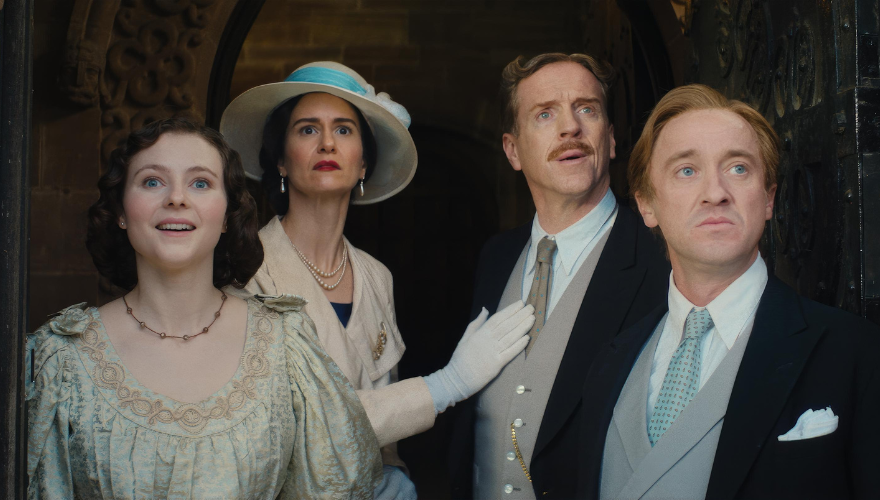
Sentimental Value (2025. Written by Eskil Vogt & Joachim Trier. 133 minutes)
There is something to be said for writers who can also direct well. Some of them can’t. Nunnally Johnson and Philip Dunne were great screenwriters but not all that great as directors. But then there are Preston Sturges, Billy Wilder, and Woody Allen, to name three.
Joachim Trier is one of the good ones. Five years ago Trier and his co-writer Eskil Vogt (they have been working together for twenty years) had a big international hit called The Worst Person in the World. You can read my review of it here, and many of the good things I said about their work in that film still apply to this one, especially their ability to show us very nuanced characters. They may be better at that in Sentimental Value (it may take you a while after you see the film and have thought about it for a while to understand why that title).
We first see Nora, a thirtysomething actor. She is supposed to be getting ready to go onstage, but she is having a mini-nervous breakdown and goes through all sorts of carryingons before she finally does manage to get on the stage. Where she is wonderful. As is the actress playing Nora. She is Renate Reinsve, who was sensational in The Worst Person in the World. She is even better here, working in an even more detailed way on the nuances of the character that the writers provide for her.
Nora is the daughter of the famous film director Gustav Borg. He has not been a good father, to put it politely. He is, as most directors (and many other highly successful people) are, narcissistic. He has not seen Nora in some time. He does not go to see her stage performances because he does not like live theatre. You may find that odd, but many film people are like that. I had a professor at UCLA who had been a successful screenwriter and when I mentioned something about liking theatre, he said he hated it. I asked why. He said, “Because I keep waiting for them to cut to the close-up.”
Vogt and Trier pick the perfect dramatic time for him to show up for Nora. If this were just about when he was absent, they would have not film. But Gustav has written a new script. And he wants Nora to play the leading role, which is based on her grandmother, Gustav’s mother, who had been in a concentration camp during the war. And who years later hung herself. Most actresses would kill their own grandmothers to get a part like that. But Nora has never worked with her father and is determined not to. She even refuses to read the script.
Nora is unmarried, but she has a younger sister, Agnes, who is now happily married with a child, Erik. As a child herself she appeared in one of her father’s films. It was not an awful experience for her, but she did not want to become an actress. She is the sanest member of the family. She reads Gustav’s script and insists Nora should do it. Nope.
So Gustav arranges for an American actress Rachel Kemp to play the part. Having an American play the part gives the writers the chance to get in a couple of dandy digs at Netflix. Good for them.
Gustav is played by the great Swedish actor Stellan Skarsgård. If you have not seen any of his great performances, you simply have not been going to the movies (Dune: Part One and Two [2021 & 2024]) or watching television (Chernobyl [2019] recently, not to mention Mamma Mia! and Mamma Mia: Here We Go Again [2008 & 2018]). I have not seen all of his movies and television films, but I think this is his finest performance ever. He gets everything he can out of the emotional details the writers give him. The film is worth watching simply to see what a great actor can do with great writing.
The American actress Rachel is played by Elle Fanning, who has done some great work in American films, such as Super 8 (2011). I have to admire her guts for taking on this role of a not-so-good actress. Rachel is a rather shallow actress, without the range of Nora. At one point she reads a scene from Gustav’s screenplay and she is flat, unlike every other character we have seen. And the character is supposed to be, so when we see Nora reading the same or similar speech later, we see why Gustav wanted her in the first place.
Rachel eventually drops out of the role, since she knows she is not delivering the goods. We get a scene where Nora and Agnes talk and Agnes talks Nora into taking the role. A great scene, beautifully performed by the two actresses. This is the scene that got Inga Ibsdotter Lilleaas a Supporting Actress Nomination, one of four acting nominations for the film. It got a screenplay nomination as well.
So Nora agrees to play the part, then Trier brings off a sly closing scene that, like me, you may not get the nuance of until it is sort of over. No, I am not going to tell you any more than that.
I will tell you something I haven’t mentioned. The family house is one of the stars of the movie. You will have to see the film to see why.
It Certainly Feels Like le Carré.
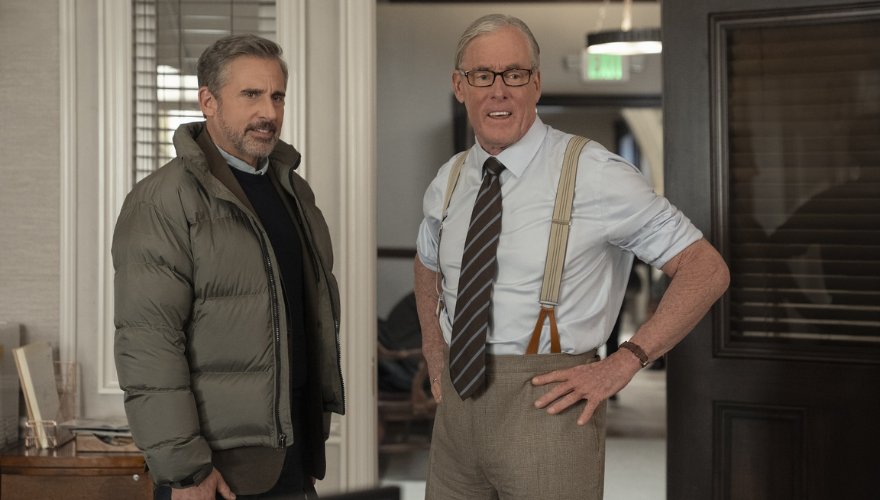
The Night Manager (Season Two, 2026. Written by David Farr, based on characters created by John le Carré. Six hours). The first season of The Night Manager was way back in the olden days of 2016. It was an adaptation of le Carré's 1993 novel. You can read by review of it here. My snarky subhead for that review refers more to the novel, one of the Master’s lesser works, than the series. When they were shooting it, they were considering a sequel, so the series’ ending was more open than the book’s.
Le Carré was interested in a sequel. At the premier of the first season at the Berlin International Film Festival, le Carré said to the series star Tom Hiddleston with what Hiddleston called “a twinkle in his eye,” “Perhaps there should be some more,” a le Carré line if there ever was one. Le Carré died in 2020 without having written a sequel, but the production team, which include two of le Carré’s sons, thought about it. Farr, who had written the first one, had an image of a young man on the mountain road that lead him to develop the second season. I think the second season, now available on Prime Video, is better than the first.
It is now ten years after the first series. Jonathan Pine, who in the first series was a hotel clerk who gets involved in spying on arms dealer Richard Roper, is now officially part of MI-6, now named Alex Goodwin. He knows Richard Roper is dead, because he went with his MI-6 contact Angela Burr (the great Olivia Coleman) to identify his body. I was bothered when I wrote about the first season that they were planning a second season, since I wondered how you could do it if Roper was dead.
One way they do it is create several interesting characters for Pine/Goodwin to deal with. He is now working for a semi-official MI-6 group called the Night Owls. They scan traffic video cameras in London, and one night Pine sees one of Roper’s old colleagues in the arms trade. He discovers the man is involved in a shipment of arms to Colombia. So they give Pine yet another name, Michael Ellis, and a background as a former banker who absconded with a lot of the bank’s fund that he is willing to “invest” in the trafficking business.
In Colombia he meets Teddy Dos Santos, a young man who seems to be running the arms trade. Dos Santos is played by Diego Calva. You may have seen him in Babylon (2022), but he did not make an impression on me in that. Here he commands the screen, even in his scenes with Hiddleston and the other actors.
One of Teddy’s partners is an attractive woman named Roxana, who is an executive in the shipping business. She is played by Camila Morrone, who keeps Pine and us on our toes as to whether she is in love with Pine or not. Too bad Morrone was not born sixty years before her time. She would have been perfect for film noir.
So Hiddleston and Pine have a lot to deal with. Then at the end of episode three, we are introduced to this series Arch Villain, whom I will just refer to by his first name Arch. I will not tell you anything more about him, since some of my readers here in the colonies and overseas have given me guff for revealing too much before they had a chance to see the show.
Arch is a real piece of work and the scenes between him and Pine are doozies. Especially their first meeting.
Meanwhile, we learn that the transfer of arms by plane is a front for an effort by several Brits, including those in MI-6, to foment a revolution in Colombia. Which they will then control. Ah, a return to the good old days when the sun never set on the British Empire.
Well, maybe, maybe not. The final episode has so many twists and turns that I got lost in a couple of places. In the past I have had no trouble following both le Carré’s books and the films made from them, but maybe old age is just creeping up on me. See if you can follow it better than I did.
Farr’s writing is otherwise sharp as a tack. He is great in the le Carré vein of creating and developing characters.
When I wrote about the first season I said of the director that she “is the Danish woman director Suzanne Bier. You are welcome to use this factoid when any of your misogynist friends say women cannot direct big action movies.” The director of this season is the British woman director Georgia Banks-Davies, who got the job on this project because she was very much interested in the characters. That made her a perfect fit for Farr’s script.
She also handles the action scenes very, very well.
I Never Imagined I Would See the Day When I Would Think There Would be Too Many Close-ups of Jodie Foster.
A Private Life (2025. Screenplay by Anne Berest and Rebecca Zlotowski in collaboration with Gaëlle Macè. 107 minutes)
This is a French film that is half character study and half mystery. The main character is Lilian Steiner, an American psychiatrist living and working in Paris. One of her patients, Paula, dies. Lilian begins to think she was murdered. Her first suspect is Paula’s daughter. And then her focus shifts to her husband, Simon.
That sounds like a good idea for a mystery. It might be, but it is not well developed by the writers. We spend a lot more time with the shrink agonizing over her patient’s death than solving the mystery. You can understand why when I tell you that Lilian is played by Jodie Foster. Rebecca Zlotowski is also the director and she keeps the camera focused on Foster A LOT. You can understand that. Foster is an international treasure and can do almost anything on-screen. Here we get all kinds of nuances of what her character is thinking and feeling. You can admire Foster’s craft, but it slows down the film to a snail’s pace. OK, the French tend to like slower movies than we do, but still.
Foster’s co-stars are two great French actors. Lilian’s ex-husband Gabriel is played by Daniel Auteuil, and the few scenes they have together are charming. The dead woman’s husband is played by Mathieu Amalric. He gets some nice scenes where he is crazy with grief. Both actors and the rest of the cast seem underserved.
And You Thought That Last One Had a Lot of Close-ups of Its Star.
If I Had Legs I'd Kick You (2025. Written by Mary Bronstein. 113 minutes)
The star here is Rose Byrne, on her way to becoming a national treasure. She Plays Linda, a psychotherapist, who is having a bad couple of weeks.
Really bad. Her husband is away on business and cannot get home to help Linda out. They have a young daughter, whose face we do not see until the very end. The daughter has a (fictional, and not entirely believable) disease. Sometimes the daughter seems to be able to get up and go out, but most of the time she is in bed, surrounded by a lot of medical equipment she is connected to. Then the roof caves in.
Literally. And the water from somewhere floods the apartment. The manager says he will get it fixed but the workers very seldom show up. So Linda, her daughter, and the medical equipment move into a cheap motel in what looks like a really seedy part of town. I would have thought shrinks would have made enough money so she could at least go to a Holiday Inn.
Through all this Bronstein, who also keeps her camera firmly on Byrne. From the very beginning, we often scenes with the focus only on Byrne. She is very good at showing us how crappy Linda feels, but we get it very quickly. There is almost no forward moment in the story in the first hour and a half of the film, just one damned thing after another. Much as I like watching Rose Byrne act, watching her be miserable for what seems like forever is just not very interesting. Byrne does everything she can, but it’s too much of the same thing. She was been nominated for a Best Actress Oscar, since over-the-top performances are often nominated and often winners. Does anybody in the known world think Al Pacino’s Oscar-winning performance in Scent of a Woman (1992) is really his best work?
Most of the supporting actors leave the overacting to Byrne and come across better. Linda’s shrink is played in a nice, understated way by Conan O’Brien. We get none of O’Brien’s overdone comic gestures here. Danielle Macdonald’s performance as the wackiest of Linda’s patients is also good.
After an hour and a half, at least some of Linda’s problems begin to work out. Her husband gets home, although it takes him a while to get up to speed on what’s going on. Linda has been told that if her daughter gains weight, they will be able to remove the tube in her stomach. Linda decides to remove the tube herself and it turns out to be a very, very, very long tube. You can see why the kid’s medical problem is fictional. The tube would fit in a small elephant, but not in a little girl.
No, I am not going to tell you the ending of this one either, except it has another close-up…

Tom Stempel is a Professor Emeritus at Los Angeles City College, where he taught film history and screenwriting from 1971 to 2011. He has written six books on film, five of them about screen and television writing. You can learn more about his books here. His 2008 book Understanding Screenwriting: Learning from Good, Not-Quite-So- Good, and Bad Screenplays evolved into this column. The column first appeared in 2008 at the blog The House Next Door, then at Slant, and then Creative Screenwriting before it found its forever home at Script.
In the column he reviews movies and television from the standpoint of screenwriting. He looks at new movies, old movies, and television movies and shows, as well as writing occasional other items, such as appreciations of screenwriters who have passed away, plays based on films, books on screenwriting and screenwriters, and other sundries.
In September 2023 Tom Stempel was awarded the inaugural Lifetime Achievement in the Service of Screenwriting Research by the international organization the Screenwriting Research Network.