

The Long Game: A Conversation with ‘Mortal Kombat II’ Writer Jeremy Slater
Screenwriter Jeremy Slater on writing characters worth fighting for, and why ‘Mortal Kombat II’ is the film he has been building toward his entire career.
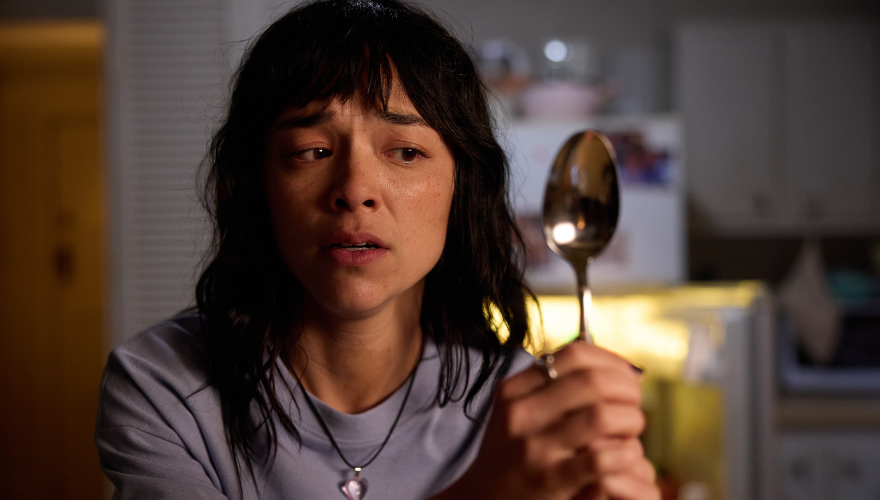
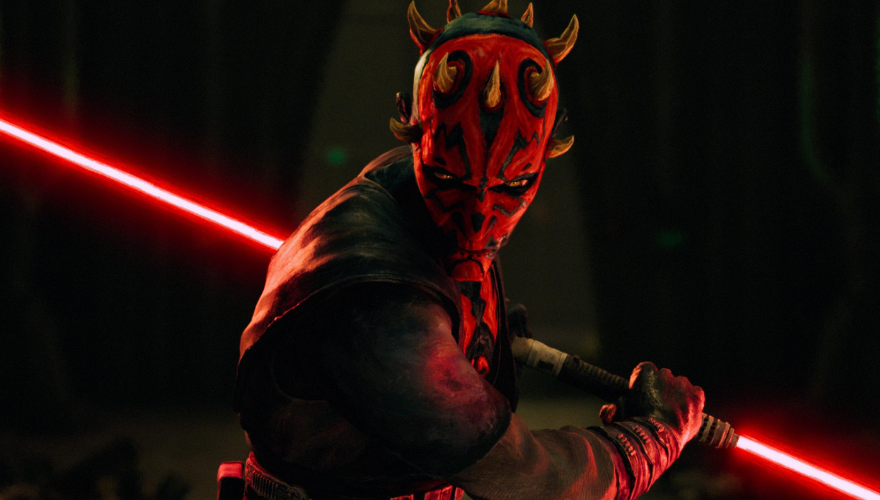
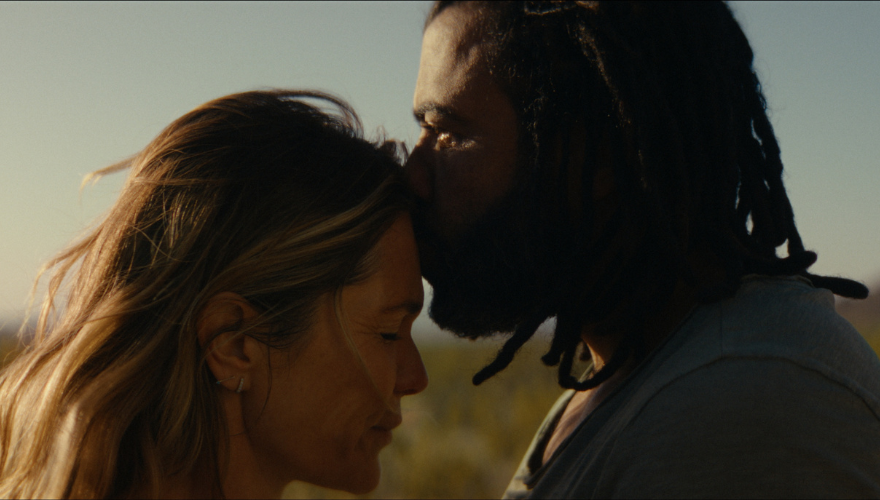
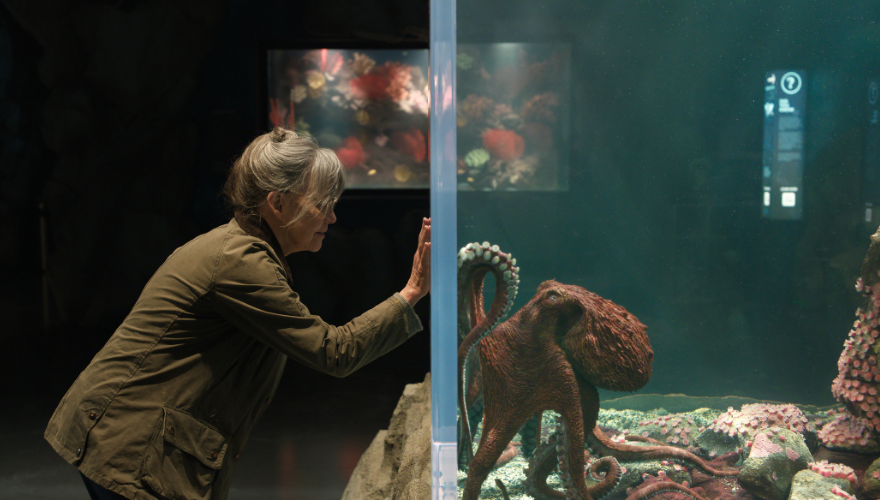
There is a particular kind of writer Hollywood does not make enough room for: the one who spent years in the cheap seats before anyone let them near the main stage. Jeremy Slater is that writer. He created Moon Knight for Marvel, developed The Umbrella Academy for Netflix, wrote Godzilla x Kong, and has now written Mortal Kombat II as the sole credited writer from first draft to final cut.
I had the opportunity to see an early screening of Mortal Kombat II, and what struck me most was not just the scale of the action, but how much the film cares about the people inside it. Karl Urban is an absolute blast as Johnny Cage, electric and funny and genuinely moving when the film asks him to be. The tournament delivers. The fatalities deliver. And underneath all of it, there is a story that earns its emotional beats rather than just gesturing toward them.
I spoke with Jeremy about the long road in, the craft of large-scale IP, and what it feels like to hear that the film you gave everything to actually landed.
This interview has been edited for flow and brevity.
Rahul Menon: You have built an unusually wide creative portfolio across major IP: Moon Knight, The Umbrella Academy, The Exorcist, Godzilla x Kong, and now Mortal Kombat II. But before any of that, there was a version of Jeremy Slater writing his way in. Where did it start, and what was the project or moment that made you feel like large-scale, mythology-driven storytelling was the space you wanted to live in?
Jeremy Slater: I was a teenager in the late-90s, which was probably the golden age for big, fun summer blockbusters. Movies like Jurassic Park, Speed and The Matrix absolutely changed the course of my life and made me dream that maybe someday I could give other people as much joy as these incredible filmmakers were giving me.
Breaking into the industry is already hard enough; breaking in writing big summer blockbusters is damn near impossible. I found my agent and manager thanks to some low-budget horror specs, which got my foot in the door but also meant every project coming my way was a nasty little Saw rip-off. The only way to break out of that box was to show people I had more to offer. So I passed on everything sent my way and wrote a spec called Man of Tomorrow, basically The Untouchables with superpowers set in 1940s Chicago. It never got made, but it impressed enough people that new offers started coming my way.
Rahul Menon: You have described the creative freedom of Moon Knight coming specifically from the fact that almost nobody knew who he was. As a writer, how do you approach that blank-canvas freedom differently from working with IP that carries enormous fan expectation?
Jeremy Slater: Your job as a writer is to always be anticipating the audience's reaction and calibrating your work to find new ways to surprise or satisfy them. In every single scene you should be asking yourself: what does the audience think is going to happen next? What do they want to happen next? That doesn't mean you automatically give them whatever they want, because that leads to stories that feel pandering or obvious. You have to give them what they ultimately want, but in a way they're not expecting.
So even if you're dealing with a relatively unknown character like Moon Knight, your audience still has expectations for what they want in a Marvel project: likable characters, a certain amount of humor, spectacular action sequences. It's your job to deliver on those expectations.
Rahul Menon: Moon Knight required you to build a writers' room around a character with Dissociative Identity Disorder, asking Oscar Isaac to carry the weight of multiple fully realized people simultaneously. How do you write a character like Marc or Steven on the page in a way that is specific enough for an actor to inhabit, but open enough that someone like Isaac can find what only he can bring?
Jeremy Slater: It starts by making sure both Marc and Steven felt like two separate but weirdly complementary characters on the page. Give each aspect his own unique voice and personality, and a talented actor will take that work and run with it. Oscar was certainly up to the challenge, and even ramped up those differences in crucial ways. The decision to give Steven a British accent was all his idea.
Ultimately, you want to give actors enough material to understand their character and ground their motivations, but not so much that they feel creatively stifled.
What comes through across these early answers is a philosophy rooted in calibration: reading what the audience needs, reading what the actor needs, and threading the needle between fidelity and surprise. It is the discipline that makes Moon Knight work as well as it does. Slater delivers on expectations and then quietly subverts them.
Rahul Menon: The Umbrella Academy, Moon Knight, Mortal Kombat II: each has a different kind of fandom with different expectations of fidelity. How do you calibrate the relationship between faithfulness and invention, and where do you draw the line between honoring a source and serving the story you need to tell?
Jeremy Slater: Fans are probably split on what they want from an adaptation. Some just want you to translate comic panels or video game cutscenes word-for-word and get angry any time you deviate. Personally, I find that approach a little boring. If I've already experienced an incredible story in one medium, it's never going to have the same emotional impact watching the same story play out the same way.
That doesn't mean I don't want fidelity and respect for the source material, because nothing is more frustrating than an adaptation that misses the point or butchers characters you love. But I want an adaptation to surprise me, to give me the same sense of discovery and excitement I felt when I first fell in love with the story.
Rahul Menon: Godzilla x Kong was engineered to feel like a beat-em-up video game, and Mortal Kombat II is your first actual video game adaptation. As a self-described hardcore Mortal Kombat fan, how does personal fandom help you as a writer, and when does it get in the way?
Jeremy Slater: I've learned the hard way to steer clear of adaptations unless I'm a genuine fan of the source material. It's easy to say 'yes' when a big paycheck is dangled in front of you, but the movie won't get made if you don't do a good job with the script, and you won't do a good job if you don't genuinely love what you're writing. I've passed on some major projects because I knew other writers were bigger fans and would do a better job bringing them to life.
Personal fandom isn't a detriment when you're taking these jobs. I'd say it's almost a requirement. Passion for what you're writing is something that can't be faked, and it's usually the difference between a good adaptation and a bad one.
Rahul Menon: You have worked across features, television, limited series, and now a theatrical IMAX sequel. How has moving between formats changed the way you think about building a scene, and is there a format that feels most natural to how you actually write?
Jeremy Slater: Without a doubt, I'm happiest writing for the big screen. My imagination tends to run on the expensive side. When you're working in television or a low-budget feature, you're constantly fighting the budget. Instead of asking what can we do in this moment to blow the audience's mind, you start asking what can we afford, or are there locations we could re-use to cut down on our days.
But when you get the chance to write something like Mortal Kombat II, the sky is the limit. That creative freedom lets you take off your responsible producer's hat and just let your imagination run wild.
Having now seen the film, that freedom is visible on screen. Mortal Kombat II is the work of someone who was not rationing himself. The action sequences have an inventiveness that only comes from a writer who knew the tools were there and used every single one of them.
Rahul Menon: Mortal Kombat II inherits two specific obligations from the 2021 film: the promise of a tournament and the arrival of Johnny Cage. How do you approach writing a sequel where the opening moves were already dealt before you sat down, and how do you make inherited promises feel genuinely yours?
Jeremy Slater: It's kind of a blessing, because it gave us very clear marching orders. We didn't have to waste time on the basic premise, because we knew fans would revolt if we didn't deliver on those two promises. And luckily, those were two things I really wanted to see as a Mortal Kombat fan, so it dovetailed nicely with my natural instincts.
Rahul Menon: You have talked about the challenge of tournament structures in film, specifically the risk of characters sitting around killing time between fights. How did you solve for that in the script?
Jeremy Slater: I have to tread lightly because of spoilers, and because the studio still hasn't revealed certain elements of the plot. But when I was originally brought in as part of a writers roundtable, that was something I was adamant about. If the entire movie is just characters standing around waiting for the next fight, the audience is going to get restless. So we worked hard to devise a B-plot running throughout the film, so our heroes had specific goals and objectives to fulfill beyond just staying alive in the next match. I'll go into more detail once the movie comes out!
Rahul Menon: Mortal Kombat II has a cast of roughly twenty characters. How do you decide which characters need to be in the story versus which ones deserve to be in it?
Jeremy Slater: The first question for any project is always: what is our emotional attachment here? Who do we care about, and why?
We had two killer new characters in Johnny Cage and Kitana, and fans had big expectations for both. That meant making sure they had full character arcs, that they legitimately changed over the course of the film. Johnny is such a funny character that it's always easy to stick him in the background making fun of whatever is happening, but I wanted you to actually be rooting for him. That required real screen time to land those arcs in satisfying ways.
Which naturally meant less screen time for some of the other heroes. We took a hard look at which characters felt like their arcs had concluded, or had gotten enough attention that fans would be fine giving someone else a turn. But even for those getting less to do, we made sure everyone had their own individual hero moment. Everyone is someone's favorite character!
Rahul Menon: The fatalities are one of the great dramatic and tonal challenges of this franchise. How do you write a fatality on the page, and how much of what ends up on screen was yours versus something the stunt team built out?
Jeremy Slater: All of our fatalities are pretty faithful to what was on the page. Coming from the horror space, it's not hard for me to dream up outlandish ways to kill characters. But we also had one of the best stunt and fight teams on the planet, and they added so many cool beats and ideas to every fight.
One of the scariest things about writing an action movie is that you ultimately have to put your trust in your partners. You would never write out every single beat of an action scene since you'd end up with unreadable gibberish. All you can do is lay out the general shape of the sequence and flag: here are the important moments, here are the gags that matter, here are the beats where the tempo changes. All the other details will be out of your hands. All you can do is give them the tools they'll need on set. And if you're lucky, the director and crew come back with something even cooler than you imagined. On this movie, I was very, very lucky.
Rahul Menon: You have been in those test screenings watching Mortal Kombat fans react the way you once reacted to Avengers: Endgame. Having now seen the film myself, I can say it genuinely delivers: bigger, bolder, and yet somehow still emotionally grounded. Karl Urban is an absolute blast as Johnny Cage, electric in every single scene. What does it mean to finally hear that the balance landed?
Jeremy Slater: You're actually the first person I've spoken with who has seen the movie, so I'm absolutely thrilled to hear that!
I'll be honest: I have complicated feelings about a lot of the projects on my resume. Any time you're writing above a certain budget, it's almost a guarantee you'll be replaced and rewritten somewhere along the line. That's just the price of playing in these particular sandboxes. Some previous projects turned out great but I wish I had been more creatively involved. Others took scripts I loved and turned them into something I barely recognize. But it's incredibly rare to have the experience I had on Mortal Kombat II, where I was the only writer from start to finish.
Sitting in that test screening and watching a theater full of diehard fans cheer and laugh and lose their minds at all the right moments, it was genuinely one of the best nights of my entire life. It felt like all the decades of hard work and setbacks and disappointments had finally paid off. I'm so proud to have helped bring this movie to life, and I really hope some of that pride and passion comes through on the screen.
Rahul Menon: Looking across everything you have built, from finding your way in to creating Moon Knight to now delivering a sequel fans have been waiting years for, what is the thing about this craft that still genuinely surprises you? And for writers still in the middle of their own long climb, what do you want them to understand about what this career actually looks like from the inside?
Jeremy Slater: Both questions probably have the same answer: if you want to work consistently, managing relationships is just as important as having talent.
It took me more than a decade to sell my first script. Ten years of cheap ramen noodles and missed car payments and people telling me to give up on this stupid dream. You need a healthy ego to survive in this business, but that same ego can get you in trouble. I've seen young writers flame out because they received bad feedback or disagreed with notes. It's so easy to fall into the trap of feeling like the misunderstood genius. I did it plenty of times, and I still regret the bridges I burned.
It's not your job to make a great movie; leave that to the director. Your job is to give everyone else the tools they need to make a great movie. That sometimes means swallowing your pride. You may not agree with all of your bosses' notes, but it's your job to hear them, understand them, and sometimes figure out the real note behind the note. Don't be the guy they have to fight every step of the way. Be the person who solves their problems and makes everyone's lives a little easier. And you'll never stop working.
There is a line near the end of this conversation that stayed with me. It is not your job to make a great movie. Your job is to give everyone else the tools they need to make a great movie. Coming from a writer who has spent two decades navigating one of the more unforgiving industries on earth, that is not resignation. It is hard-won clarity.
What Jeremy Slater's career illustrates is that the path into large-scale storytelling rarely runs straight. It runs through unsold specs and projects that came back unrecognizable and a decade of people telling you to quit. And then, if you are patient and disciplined and honest about what you love, it runs through a test screening where a theater full of people cheer at something you built from scratch.
Mortal Kombat II is that film for Jeremy Slater. Not just a sequel, but a proof of concept. Passion, as he says, is the difference between a good adaptation and a bad one. The long game, it turns out, is still the only game worth playing.
Mortal Kombat II hits Theaters and IMAX on May 8, 2026.