

The Irish Folktale as the Foundation of Scares: Damian McCarthy Discusses ‘Hokum’
Damian McCarthy discusses Irish folklore and how that has inspired his writing, writing the script for ‘Hokum,’ collaborating with Adam Scott, and his overall writing process from storyboarding to script.
Writer/director Damian McCarthy’s Hokum is his third feature and continues his tales of encounters with the otherworldly. His stories, steeped in Irish folklore, tap into our basic, primal fears. Damian isn’t quite sure he’s a strong believer in ghosts and the supernatural, but he’s had a couple of scary incidents that give him pause. “I saw a cup move once in a hotel, which was quite frightening, and I’ve stayed in a few hotels where there was a strange feeling in the room.”
The West Cork native and former electrician honed his filmmaking craft by doing short films in college. He faced a lot of rejection with his initial shorts and couldn’t get into any festivals. Out of frustration, he decided to do a four and a half minute black and white film with his best friend and a cameraman. That was He Dies in the End and it started opening doors for him. “That gave me a lot of confidence. It made me feel like I could make something that an audience would respond to and it taught me a lot about building tension. That was a very important film for me,” he told Script magazine
Welcome to the Seanchas
Seanchas are old Irish lore or history. Damian’s films utilize signature locations - a decaying home on an isolated island, an isolated manor, an insane asylum, a haunted hotel - and intertwine the supernatural with psychological trauma and conflict to create creeptastic flicks. With Oddity (2024), he not only bolstered the film with Irish legend but included a golem from Jewish mythology.
Sonya Alexander: What is your favorite Irish folktale?
Damian McCarthy: Favorite Irish folktale… that’s a good one. I always like the idea of the Púca, with the Púca being this trickster just out to interact with travellers and changing shape. That was always one I loved as a child.
Sonya: I read that your parents owned a VHS store?
Damian: That’s right.
Sonya: If you owned a video store, what would you name it?
Damian: What would I name it? McCarthy’s Movies? [laughs] I don’t know how long it would stay in business these days.
Sonya: I’ve noticed in each of your films, there’s an item that’s a call back to one of your other films. Which item is your favorite?
Damian: It’s the desk bell. I bought that beautiful, old desk bell years ago. I saw it at a market in Spain. I noticed the beautiful ivory button on top and just the design of it is quite lovely. It’s brass. I knew I was going to put it in a movie. I felt like a haunted bell would be a great object. It’s popped up twice now in my movies. I’ve got a nice collection starting to form at home between drumming bunnies, rabbits, and little figurines and clocks from Hokum. I like all that stuff.
Sonya: What do you think it is about folktales in general that makes them scary?
Damian: Just the fact that they could be real. Look at all of the Irish folklore that we would have learned growing up. Like any story, even any old ghost story, we wonder where it came from. Is there any truth to it? What’s the foundation under that story? Who did this happen to? Or was it just made up? There’s something interesting in that.
Sonya: What scares you?
Damian: I’m a bit of a hypochondriac so it’s probably all of the real-life things. [laughs] Worrying about health and stuff. I suppose, in terms of movies, I have an overactive imagination and think that a new place I’m staying at is potentially haunted. I wonder about creepy noises. I’m quite easily scared.
Sonya: What are some of your favorite scary movies?
Damian: I never tried to make a violent movie, like a slasher, but I enjoy those movies. Anything really. I’m a huge horror fan in general. I’ll watch everything. I’ll usually go back to older movies. I love anything John Carpenter’s made. I think he’s one of the masters.
Sonya: What is it about horror that interests you?
Damian: I used to always go to the horror section in my parent’s VHS store. I used to get so scared. I’d be very brave during the day but then the sun would go down and I’d be full of regret wondering why I’d filled my head with all that stuff. Getting into horror films and starting to come up with my own ideas, I found ways to take the sting out of it and it would become more fun. Even as an adult, I find it a very fun thing to watch, even with a crowd. It’s that shared experience.
Sonya: Your first short that put you on the map was He Dies in the End. What was it about?
Damian: I was working as an electrician at the time and I was changing lights over the office desks. I was thinking that whatever poor guy has to sit at this desk has this long hallway behind him. That would be quite a spooky place to work at night because you have that dark hallway behind you.
Hokum Chills and Skills
Sonya: What does Hokum mean?
Damian: The actual definition of the word is nonsense, or something that’s not to be believed. I thought that made sense for the character. Plus, I thought it was a catchy title.
Sonya: How did Hokum come about?
Damian: After making short films, I made Caveat, a no-budget feature film that took years to make. I was editing that movie for about a year and half, sound designing it, doing all these things. That found a little audience so that was great.
I’m always writing, so I had a draft for Hokum. I was working on a script for a film called Oddity. I’m very proud of Caveat, but Oddity was the first time I had a full crew, a small budget to work with, and people with a lot of experience behind me. That film found an audience and a lot of the right people saw it which was very important being Adam [Scott] was one of them. Adam had seen the movie and enjoyed it. He was curious about me and what I was working on and of course it was Hokum.
I had always been a fan of Adam’s. He has such a great body of work. And then I saw Severance and the timing was right. I had just finished the script and we were looking for an actor. I never write with an actor in mind. After watching Severance, I imagined Adam in the role. His character in that show is so internal and troubled and just really interesting. Sometimes you get lucky. He’d seen Oddity and we started talking. We both had the same idea about how to approach the film and the character. The rest seemed to work itself out. He was just lovely to work with too.
Sonya: What was the first thing you did on set everyday for Hokum?
Damian: I’d go around, say hello to everybody, talk to the crew, see how everybody’s getting on. See if there were any issues that day, if any troubles were ahead we weren’t expecting. The mornings are always the hardest. Spielberg once said the hardest part of making movies is “Just getting out of the car.” I agree with that. I love my job and I’m very grateful that I get to make movies but mornings can be tough.
I always try to go in with a plan and say, “Here’s where I think we can start today.” I’m lucky because I’m getting a bit of short hand with my crew. It’s the same people I work with all the time. They’re very cool, hard-working people. They’re a nice bunch. I’ve been lucky with my actors too because they come in and see everyone is relaxed and easygoing. That seems to put everyone at ease.
Sonya: You have a three-step process when you’re writing your scripts. Storyboards are the second part of the process. What happened when you wrote Hokum?
Damian: I go as far as I can with a script, until I feel like I need someone else to read it and see if there's something I don’t see. When you’re writing it can be quite lonely and you can wonder if you don’t see the woods for the trees anymore. It might be producers that have come on board or even friends or people whose opinions I trust. I give them the script and get some feedback. When you get to the point that you feel this is the film you should make, I still don’t think we have the shooting script.
Now we need to storyboard it. We start storyboarding it. That really informs the shooting script. I’m not a great artist but I draw things very basically. I put where I think the camera should go and whether it should be a close-up, medium, or wide shot. Once I have that, that throws up a whole bunch of ideas that I can go back to and work into that shooting script.
The final stage is sitting down and talking to the actors. Asking them if there’s anything they’re bumping on. I’m Irish, so someone from a different part of Ireland or from somewhere else might have a different turn of phrase. That continues the whole way through. I don’t know if a script is ever really finished because even on the day filming, things change.
Sonya: What was the most challenging day on the set for this?
Damian: The ending. There’s always that pressure with the finale. I’m sure you can think of a film you find OK, but the ending completely won you over. Sometimes it can just be a closing shot. It was a particularly challenging day because we were shooting in this old castle in the hills of Ireland. It was a beautiful location but it was tough going. It was a long couple of days.
Sonya: Why’d you name the main character Ohm?
Damian: I used to work as an electrician so it’s a unit of electrical resistance. I thought the character was quite resistant to everything around him. It’s also my nod to my former job.
Sonya: Do you have any say in the music that goes into your films?
Damian: Oh, yeah. Big time. It’s vital. I worked with Joseph Bishara, who did the score for this. Moby gave us a track, which was really cool. I write to music all the time too.
Sonya: Are you interested in adapting anything?
Damian: No, I’d prefer to stick with my stories. Not to say that I think what I’m making is amazing and the best thing ever but at least it’s mine. Every film is hard work. It’s two plus years of your life, so I think you really want to believe in that story and hang on to that enthusiasm the whole way through to the end.
Sonya: Are you working on anything else right now?
Damian: I have two scripts written. One of them is horror adjacent… it’s more of a crime type thing. I put that aside for now. I’d like to go back and make one more horror film first and take everything that I’ve learned from my short films and the three features that I’ve made and apply it and make something really scary.
Sonya: That actually leads into my next question. How will you take your experience with Hokum to your next project?
Damian: It’s like any job. You feel a little bit more confident working with people the more you do it. People will trust you more, so you can make more suggestions. You can assure people that though something might seem strange, in the edit or when they see it finished, it’ll make sense.
Sonya: How do you feel your directing informs your writing?
Damian: I like directing because you need other people to help you do it. If I just wanted it to be completely mine, I would just be a novelist. I’d just stay at home and write all the time and then send out the book. Or I’d focus solely on being a scriptwriter and just hand the script over. The more films you get to make, as you start writing, you get a clearer image of what it’s going to be like on set. That can then start to affect how you write things.
Sonya: What advice would you give to up-and-coming filmmakers who want to focus on horror?
Damian: Write about stuff that scares you. It’s kind of like when a comedian is writing jokes. I would imagine they have to find the jokes funny themselves to begin with. Also, make short films with your friends. Don’t bother waiting for funding or financing. Just start making stuff.
Sonya: Do you play video games at all?
Damian: Yeah, I do. Shadow of the Colossus is probably my favorite game. Max Payne 3 too… I love the hard boiled dialogue. Last of Us, Last of Us 2. I think 2 is a masterpiece. Yeah, I'm a gamer.
Somya: Some of the sounds in Hokum reminded me of Amnesia: The Dark Descent.
Damian: Oh, I’ve never played that. I’ll check it out.
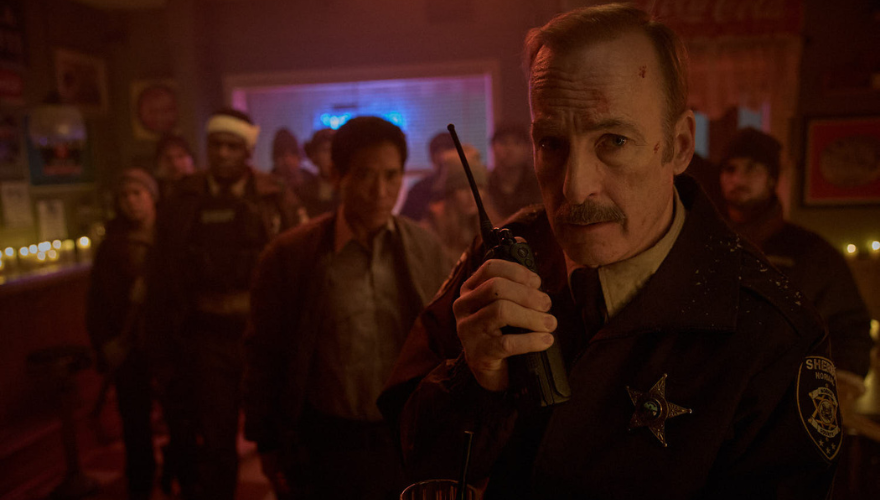
Hokum stars Adam Scott, David Wilmot, Michael Patric, Florence Ordesh, Peter Coonan, and Will O’Connell. The Neon film will be in theaters May 1, 2026.
Sonya Alexander started off her career training to be a talent agent. She eventually realized she was meant to be on the creative end and has been writing ever since. As a freelance writer she’s written screenplays, covered film, television, music and video games and done academic writing. She’s also been a script reader for over twenty years. She's a member of the African American Film Critics Association and currently resides in Los Angeles.