

UNDERSTANDING SCREENWITING: Actors and Theatre and Movies
All of that in ‘Wake up Dead Man: A Knives Out Mystery,’ ‘Rental Family,’ ‘Hamnet,’ and ‘Merrily We Roll Along’.
A Lot of Fun, and Then a Classic Flaw, but Then…
Wake Up Dead Man: A Knives Out Mystery (2025. Written by Rian Johnson. 144 minutes)
A great opening: Father Jud, a youngish priest, is being reassigned to another parish because he cold-cocked a colleague. So what makes the scene great? Listen to the dialogue, especially that of his superior, Bishop Langstrom. OK, you are going to say Jud is played by Josh O’Connor and the Bishop is played by Jeffrey Wright, two of the best actors around. They are, but they are given great stuff to say. Over their careers they have had worse dialogue to say, but Rian Johnson, who also directed, knows he can give them great dialogue and they will knock it out of the park. And they do. Can you start your screenplay with dialogue like this? If not, why not?
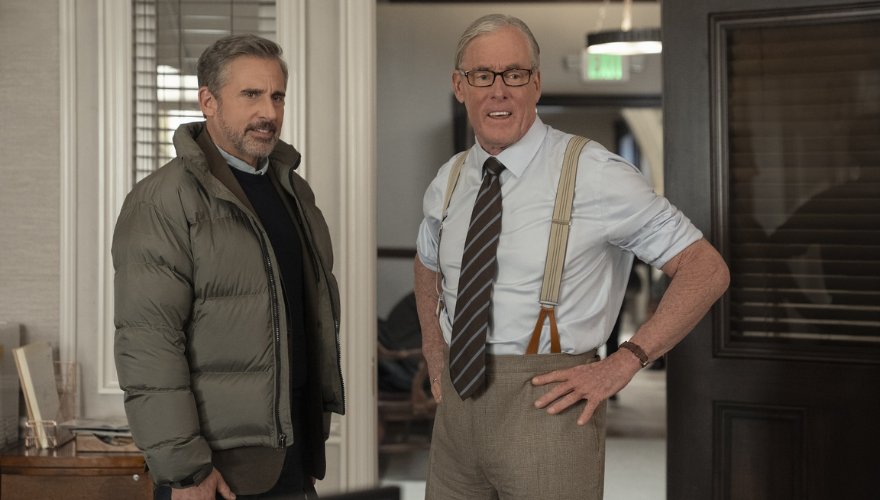
So Fr. Jud goes off to a small parish (the name of which is too good for me to spoil it here). His boss is Monsignor Wicks (yes, as in wicked), a tyrant who runs his parish like a cult. The parishioners, as you would expect in a Rian Johnson movie, are a collection of all-stars: Glenn Close (with hints of her Fatal Attraction [1987] character, although she does not boil a bunny in this one), Jeremy Renner, Andrew Scott, and Kerry Washington, with Mila Kunis showing up as the Chief of Police.
Fr. Jud is trying to make the parish a more Christian-like place, which Mons. Wicks does not approve of. So when Wicks dies in what appears to be a locked room murder, Jud is the primary suspect. But we may suspect everybody. The Chief is baffled and she calls in, you guessed it, Benoit Blanc. This time around Daniel Craig is wearing a really bad wig that covers enough of his face so we have trouble reading his expressions, especially when he has his glasses on.
Blanc starts talking to Jud and all the other suspects. We get some good scenes with the stars, and Johnson and his cinematographer Steve Yedlin keep it interesting visually with a lot of woods and shadowy places in and around the church.
Eventually we get down to the obligatory scene in the church when the villain is revealed. Not so fast. The mystery and its solution is so complicated with so many moving parts, it takes a long amount of time to unravel. This is a standard problem in mystery stories, as opposed to thrillers, which can end up with chases, car crashes, shootouts or whatever. You can see it in the Thin Man movies, where William Powell’s Nick Charles gathers everybody in a room and explains who did it. The running time of the first film, The Thin Man (1934) is 91 minutes. Wake Up is almost an hour longer. As you may remember, one of the mantras of this column is longer is not better.
On the other hand, in this movie we get, as part of the revealing of the murderer, the opportunity to watch one of the all-star suspects chew the scenery in flamboyant fashion for at least five minutes, maybe more. You may be like me and enjoy the over-emoting in spite of the time involved.
Of course, if you are not a Netflix subscriber, you have already missed it. Its theatrical run was about a day and a half. OK, one week to qualify for the Oscars. Netflix’s Ted Sarandos keeps saying Netflix is going to kill off the theatrical business. You could try to convince Universal and Disney that, but they are too busy counting the millions Wicked: For Good and Zootopia 2 made in theatres. Yes, Ted Sarandos is on his way to becoming the Donald J. Trump of the movie business.
Sweet, but Messy.
Rental Family (2025. Screenplay by Hikari & Stephen Blahut. 110 minutes)
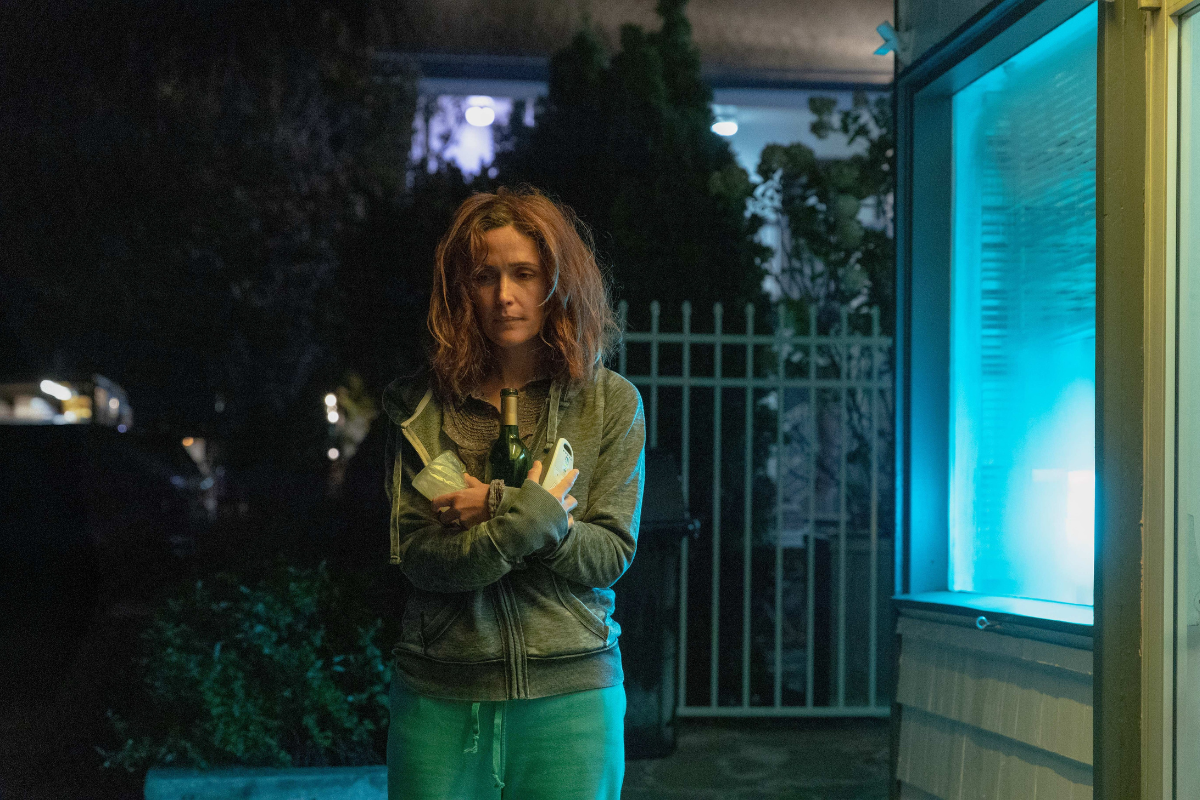
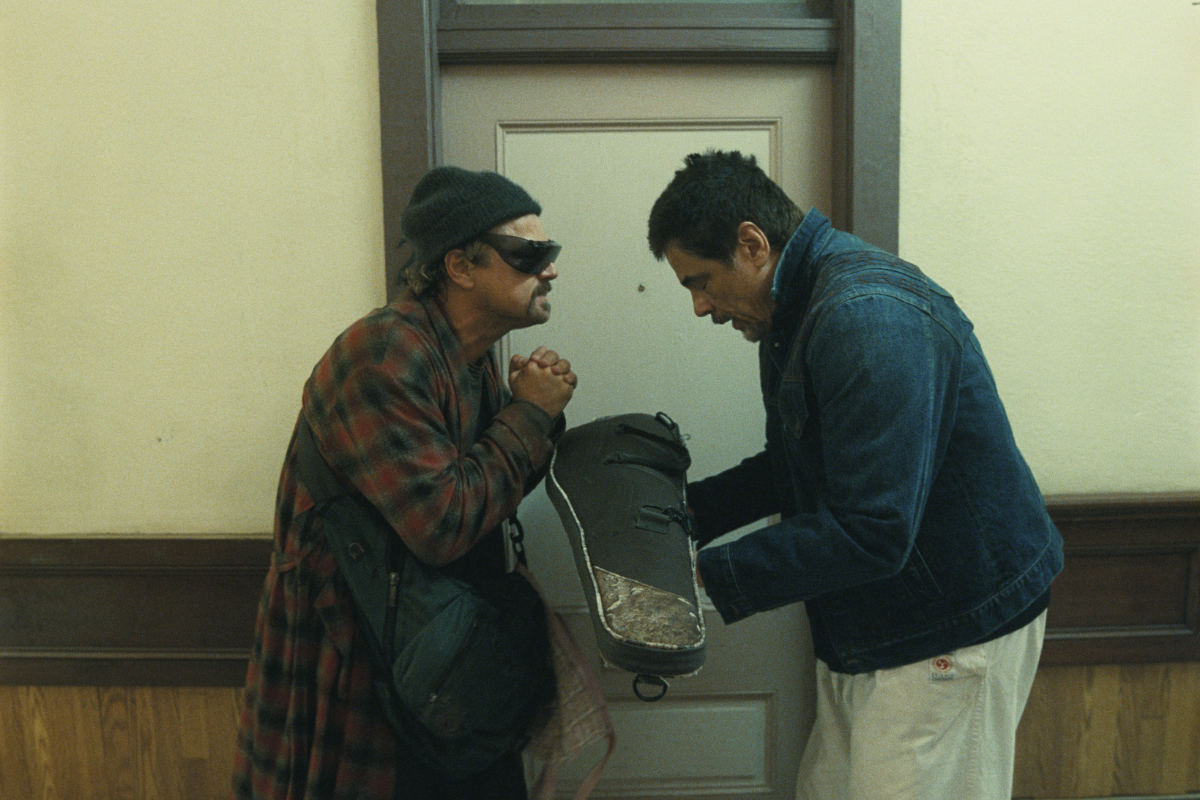
Doesn’t this sound like a Disney film to you? Phillip Vanderploeg, a struggling actor, gets a job at a “rental family” company. He gets rented out as a family member. The client he spends most of his time with is a young girl Mia, who has never known her father. Her mother hires Phillip to pretend to be the girl’s father. Mia is suspicious, but comes to love Phillip, but then he has to leave. You can figure out the ending from here.
Guess what? It is not a Disney film. Neither Jamie Lee Curtis nor Lindsay Lohan show up, even in cameos. You have not seen plush dolls of Mia in the Disneyland stores. And in the end Phillip does not fall in love with Mia’s mom and marry her.
It is an indie film, set and filmed in Japan, and the better for it. Rental family companies are common in Japan. We first find Phillip thinking he is going to an acting audition, but finds himself as a mourner at a funeral. While nobody else is surprised when the corpse sits up and thanks people for coming and saying nice things about him, Phillip is gobsmacked.
Phillip goes to work for the company. He “plays” a groom in a fake wedding so the bride can leave Japan with her lesbian lover. These gigs help set up what the rental gigs are like. As we get into the relationship of Phillip and Mia, there are fewer of those other jobs.
As the story moves on, we start getting other things that Phillip is doing, including pretending to be a writer interviewing an aging actor, which leads to him taking the actor on a trip to his old hometown. We guess, but we do not know until late in the film that this is a rental family job. The police think Phillip has kidnapped the actor, but that is easily settled. Still, it and some other rental family gigs for other people in the company take us away from the Mia-Phillip story when we are most involved in it. We spend a lot more time not with Mia than we do with her in the last half hour of the film. The audience by that time is more interested in the Mia story and is getting antsy.
We do finally get a reconciliation between Mia and Phillip, but it is almost too late and too short.
The best things about the film are the look at Japanese culture and Brendan Fraser’s performance as Phillip. Hikari, who also directed the film, uses Fraser’s shy charm beautifully. This is not the kind of performance you tend to think of a star performance, but that is exactly what it is. Hikari knows exactly what she has and how to get the most out of it with Fraser. This is a picture you want to see to see how to write your script to get the most out of your star.
Shakespeare in Love was funnier.
Hamnet (2025. Screenplay by Chloé Zhao and Maggie O’Farrell, based on the novel by Maggie O”Farrell. 125 minutes)
This is another movie about a younger William Shakespeare, but very different in tone from 1998’s Best Picture winner. This one is serious. Boy, is it serious.
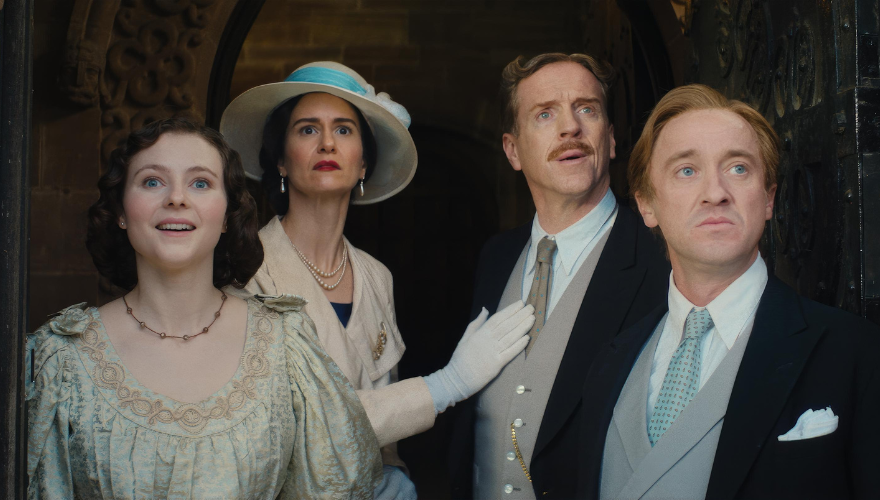
We start out with Will, although he is not named until late in the film, but we know. He is living in Stratford-upon-Avon, his home town. He is tutoring some children and falls in love with Agnes, a member of the family who some people think is a witch. He knocks her up and they get married and have three kids, two girls and a boy, whom they name Hamnet.
Whoa, wait a minute. We all know that Will married a woman named Anne Hathaway. And you now realize audiences for a serious film about Will would howl with laughter every time 2025 audiences heard her name. If Mel Brooks were making this movie, he could get a couple of hundred belly laughs out of the name. As serious writers you have to think about these things.
Anyway, the first hour or more of the film is slow and not very interesting and we watch the family life of Will, Agnes and the kids. Agnes is played by Jessie Buckley, one of the great actresses of our time. She spends a lot of time in the first hour groveling around in the dirt and screaming and crying. You and a lot of critics may appreciate that, but it woke me up as I dozed off waiting for some forward movement in the story.
Things pick up in the second hour. Hamnet dies while Will is off in London. Agnes is really pissed at him when he finally gets home for not being there. More crying and yelling from Buckley. But Will is dealing with it in his own way. Will is played by Paul Mescal, whom I was not impressed with in Gladiator II, as you can see from my review here. Here he is excellent, a quieter counterpoint to Buckley.
Will is moping around the neighborhood, saying things that you may probably recognize from Hamlet. He finally tells Agnes he has to get back to London. More screaming and crying. We see Will rehearsing actors in what is obviously Hamlet.
Back in Stratford, someone shows Agnes a flier about the play Hamlet. Agnes is pissed again. Really pissed. So she goes to London with a man I think is her brother.
Now the film turns fabulous. It is obvious Agnes has never seen any play before. She is baffled by the Globe theatre, doesn’t understand why all these people are here, standing around on the ground in front of a platform. She is equally baffled when guys come out on the platform talking the way Will writes. Agnes watches this in close-up. Agnes has finally shut up, and Buckley’s close-ups capture the great nuances of her performance as Agnes begins to understand how Will is dealing with Hamnet’s death. And how that is affecting not only her, but the people around her.
I only wish the first hour and a half of the film was as good.
Almost a Film.
Merrily We Roll Along (2025. Book by George Furth, music and lyrics by Stephen Sondheim; inspired by the play Merrily We Roll Along [1934] by George S. Kaufman and Moss Hart. 145 minutes)
In 1970, Sondheim, George Furth, and director Hal Prince collaborated on a new musical called Company. It was a hit, but not a smash hit because it was different. It was also the first distinctive Stephen Sondheim musical, although he had had successes before with West Side Story (1957), Gypsy (1959), and A Funny Thing Happened on the Way to the Forum (1962) The music and lyrics were much more complex and subtle than what was generally heard in the American musical theatre.
The company recording the original cast album financed a documentary about the recording of the cast album, made by two of the great directors of Direct Cinema, Richard Leacock and D.A. Pennebaker. You can find it (Company: Original Cast Album) on a DVD and it is worth your while (listen to the commentary track as well, which includes the star Elaine Stritch explaining she was not really drunk during the recording; I have talked to two people who were in the room where it happened. They both agree she was drunk as a skunk).
In the years following Company Sondheim created Follies (1971), A Little Night Music (1973), Pacific Overtures (1976) and Sweeney Todd, the Demon Barber of Fleet Street (1979). All of them now considered classics of the American musical theatre, and rightly so.
In 1980 Sondheim, Furth, and Prince got together to create a new show, Merrily We Roll Along. Their inspiration was a play of the same name by the legendary playwrights Kaufman and Hart. The play and the musical tell their stories (about a writer in the early show and a composer in the later one) in reverse order. The heroes are schmucks at the start of the shows and we see how they got that way.
Broadway was abuzz at the idea of the guys who created Company were doing a new show. But the word got out that there were problems. The leading man and the choreographer were replaced before the show opened. Some of the best script doctors like Peter Stone and Neil Simon were brought in but could not fix it. After 44 previews and only 16 performances, it closed.
The makers of the show asked D.A. Pennebaker to make another documentary, this time about the whole production. But nobody would put up the money. Penny heard all the rumors about the problems and, as he told a class at CalArts years later, he had thought, “I should have robbed a bank.”
Some flops never see the light of day again. That is not true of several Sondheim shows, especially Merrily. I first saw it a few years after its Broadway run at the La Jolla Playhouse in San Diego. I could see one major problem. Gussie, the second wife of composer Franklin Sheppard, is a bitch from the beginning of the show back into the past. So we do not feel any sympathy for Franklin.
A few years later I saw a production in a small theatre in Los Angeles (LA is a great theatre town; don’t let anybody tell you differently) that solved the Gussie problem by making her the smartest person in the room, which makes her a bitch when people don’t pay attention to her. I talked to somebody at the theatre and then a few days later the director called me and we had a nice chat. She said that the other thing she did to make it work was cast a likeable actor as Franklin so we have sympathy for him as we see how he came the jerk he is at the beginning of the show.
Sondheim and Furth diddled with the show over the years and finally came up with a version they liked.
In 2023 a new production premiered in New York and was a hit. And the provincial New York critics assumed this was the first time it had happened. Sorry folks, but the folks out in the provinces, and not just LA, are sometimes smarter than New York theatre people about how to do Sondheim. I have seen it happen on Merrily and Assassins (1990).
It is the new New York production that has now been filmed and as of this writing is playing in theatres. The production and film have been produced by Sonia Friedman, one of the best British theatre producers, and the play and the film have been directed by her sister, Maria Friedman, who has a long career as an actress in theatre.
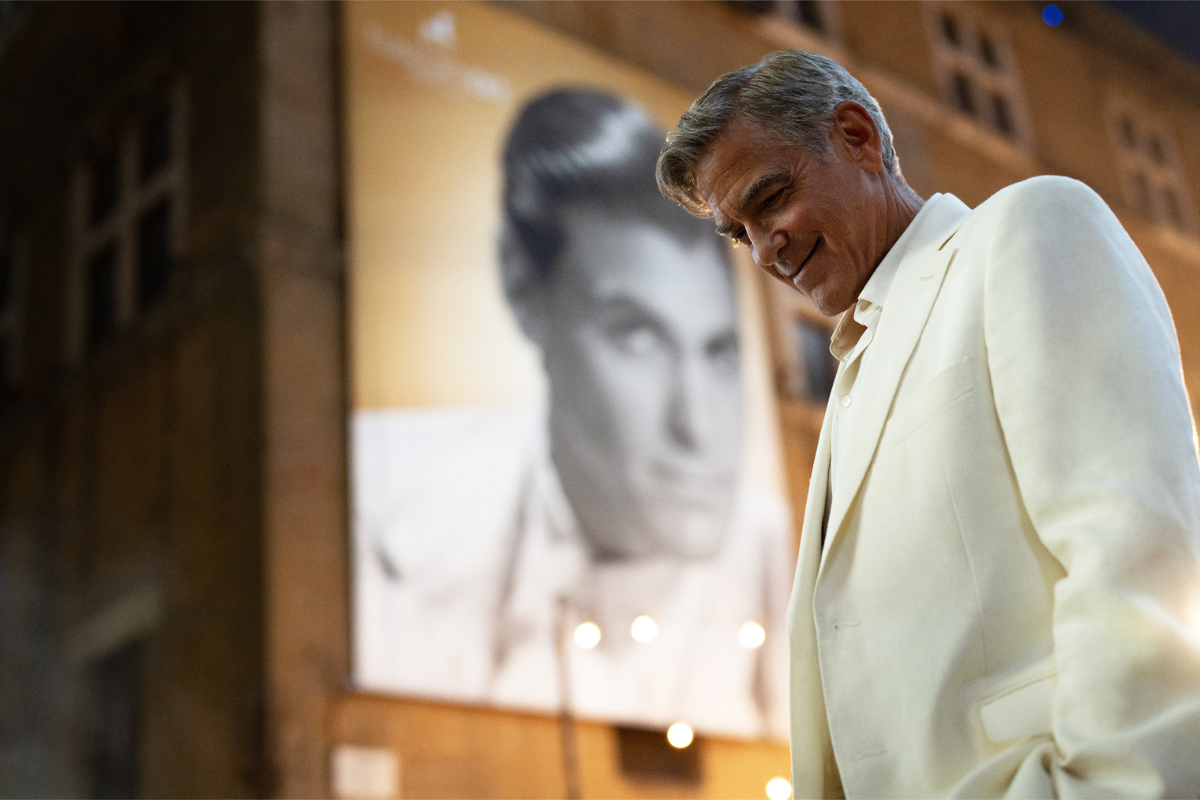
This is one of those productions that is a filmed play. You may have seen the similarly-produced Hamilton a few years back. This is done a lot better than that was. Hamilton was shot with several cameras that did not change their positions that often, so after a couple of hours I would say, “Oh, they are back to camera seven again.” Maria F. and her cameraman Sam Levy and editor Spencer Averick have been more flexible in their approach. They manage to get a lot of close-ups (which one viewer writing on IMDb hated, hated, hated), which is great for both the book dialogue and the songs. Furth and Sondheim can be very subtle in their writing, and Friedman and her crew get a lot of nuanced reaction shots (and you know how central I think reaction shots are, don’t you?). The casting of the three leads is perfect. Jonathan Groff (late as King George in Hamilton) is perfect as Franklin: likable, but behaving stupidly. Daniel Radcliffe is equally nuanced as Franklin’s collaborator. And Lyndsay Mendez is a perfect Mary. Krystal Joy Brown (Gussie) is maybe a little too bitchy all the time, but there are moments when other emotions shine through.
They have used the sets from the 2023 production, which are very obviously theatre sets, which is why I labeled it above as “almost a film.” But the close-ups of the actors keep you from paying too much attention to the sets.
I have gone into all this detail about the history of Merrily not only because I know a lot about it, but it is a good demonstration of what Sondheim wrote about in a song from Sunday in the Park with George (1984) called “Putting It Together” about creating art. One of the lines is “Art isn’t easy.” If you are getting into making art, you ought to know that. As much of a genius as Stephen Sondheim was, he also knew it is hard work.
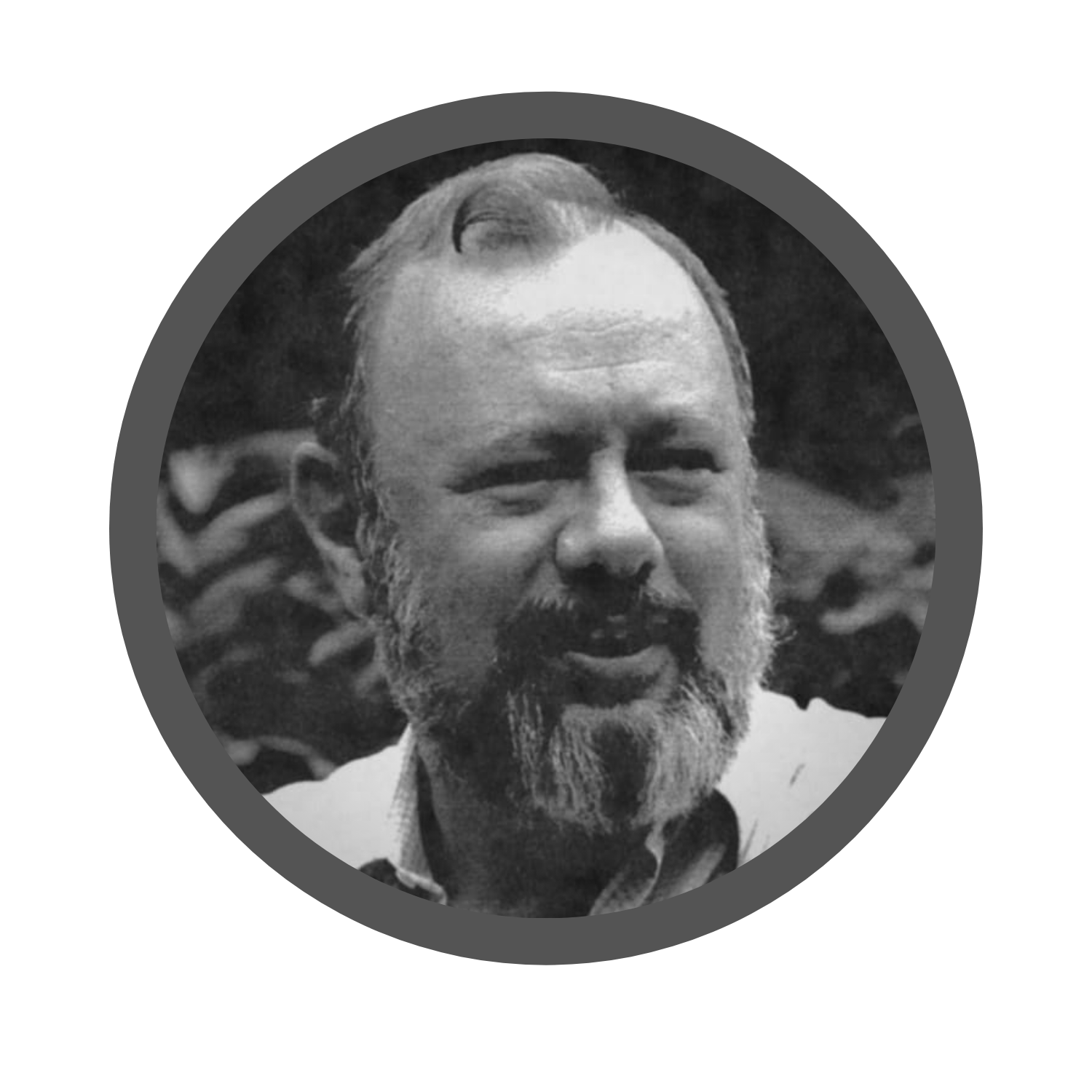
Tom Stempel is a Professor Emeritus at Los Angeles City College, where he taught film history and screenwriting from 1971 to 2011. He has written six books on film, five of them about screen and television writing. You can learn more about his books here. His 2008 book Understanding Screenwriting: Learning from Good, Not-Quite-So- Good, and Bad Screenplays evolved into this column. The column first appeared in 2008 at the blog The House Next Door, then at Slant, and then Creative Screenwriting before it found its forever home at Script.
In the column he reviews movies and television from the standpoint of screenwriting. He looks at new movies, old movies, and television movies and shows, as well as writing occasional other items, such as appreciations of screenwriters who have passed away, plays based on films, books on screenwriting and screenwriters, and other sundries.
In September 2023 Tom Stempel was awarded the inaugural Lifetime Achievement in the Service of Screenwriting Research by the international organization the Screenwriting Research Network.