

UNDERSTANDING SCREENWITING: Some Newbies, Both Movies and TV
The movies are ‘Jay Kelly’ and ‘Nouvelle Vague’ and the TV stuff includes ‘The Rainmaker,’ ‘9-1-1,’ ‘9-1-1 Nashville,’ and ‘I Love LA’.
A Short Note. In last month’s column I mentioned that there existed a photograph of the filmed but unused food fight at the end of D. Strangelove and that you “might be able to find it.” I threw that in as a challenge to Sadie Dean, the editor of the column who finds all kinds of stuff. What she found was a video about that scene with lots and lots of stills. Since you are used to me putting a link I under the word “here,” you may have missed it. Since it is absolutely fascinating, you can find it here.
“One of the Best Pictures of the Year!” No, seriously.
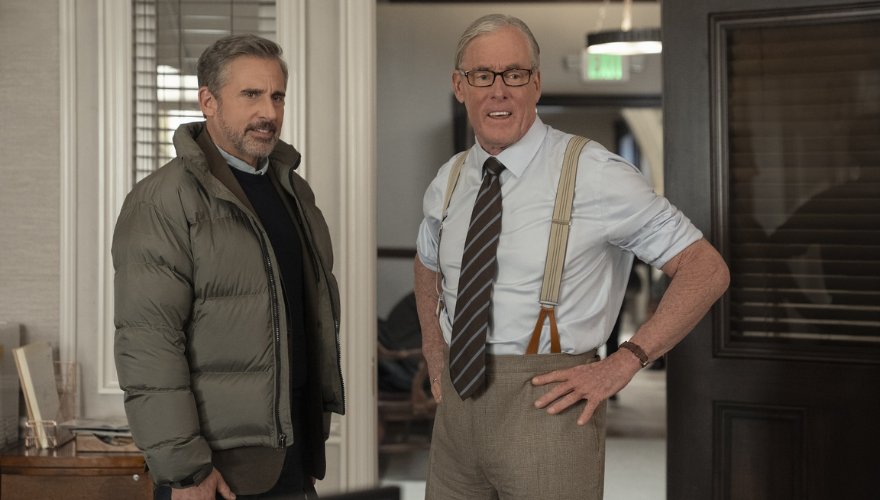
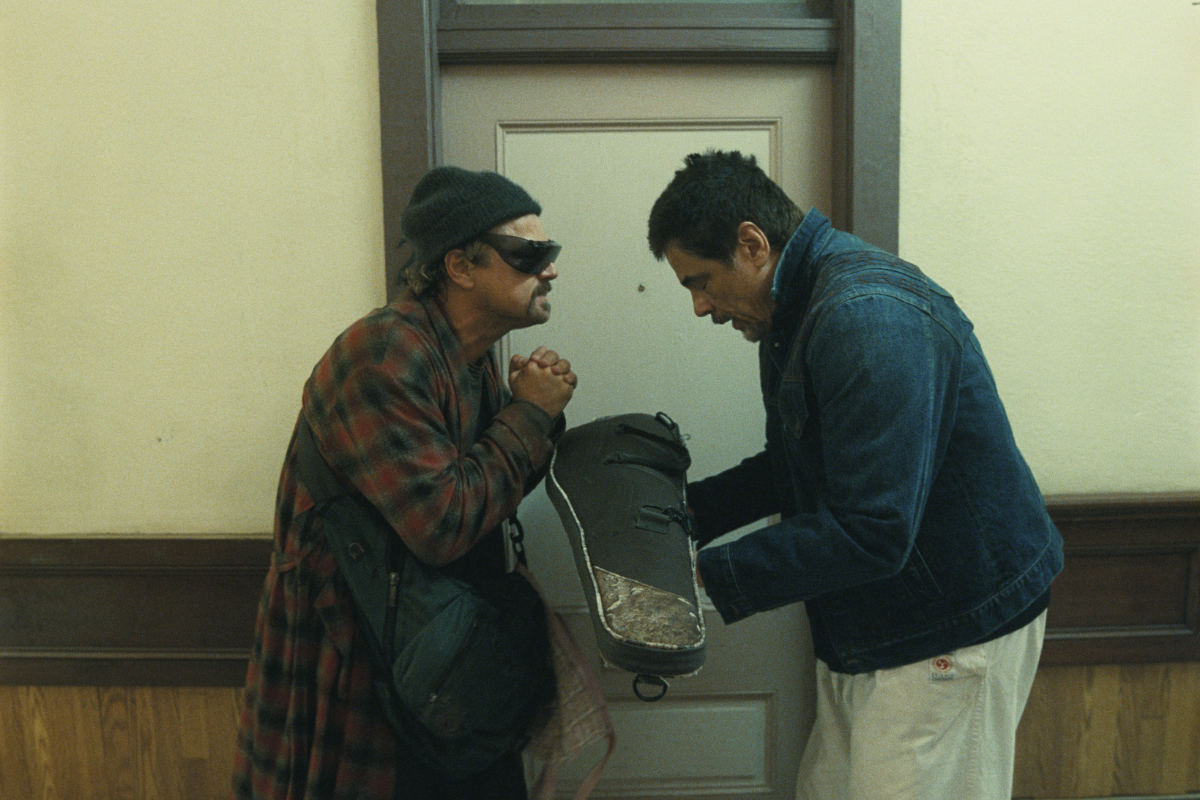
Jay Kelly (2025.Written by Noah Baumbach and Emily Mortimer. 132 minutes)
If you have read more than a few of my columns, you know I love great screenplays. And script with great scenes. And great acting in those great scenes. So it will not surprise you to learn that Jay Kelly has all of the above in abundance.
Noah Baumbach has been interested in character more than plot, as in his terrific 2019 film Marriage Story (you can read my review of it here). His new film is better structured than a lot of his previous films, but with his great skill at creating characters still intact. His title character is a big, big movie star beginning to have regrets about some elements of his life. Jay is played by one of the biggest movie stars around, George Clooney, who is perfect casting. Clooney can easily lay on the movie star charm, but he also plays the subtle undercurrents of unease his character feels.
Early in the film he goes to a memorial service from an old friend, and he meets there a roommate from his school days. We suspect the friend, played by Billy Crudup, holds a grudge against Jay. He does. When they were just starting out, Jay went with him to an audition, and ended up getting the part. All of this is in a terrific scene, which includes a much-talked about scene in which Crudup reads a menu like a Method actor. I was afraid Baumbach and Mortimer had shot their wad too early with such a great scene, but not to worry. They have not.
Jay visits his eldest daughter, Jessica, who insists Jay go with her to her shrink. Now what would you do with that scene? What the writers do is have Jessica insist that her shrink read a letter she has written to her father. Yes, it shifts the action to a minor character, but we get the reactions from Jay and Jessica. As I have beaten you over the head with for years, reactions are the lifeblood of movies.
Jay learns his younger daughter Daisy is going off to Europe, so he goes after her. One of the best sight gags of the year occurs when Jay arrives at the hanger of his private jet. First one limo comes into sight, then a second, then a third, then a fourth. Buster Keaton would be proud.
Jay and his entourage end up on a train to Italy, full of people, some of whom recognize Jay and some of whom don’t. Look at the Ale and Quail Club scene is Preston Sturges’s 1942 film The Palm Beach Story for the great forerunner of this scene.
Along for the ride are Ron, Jay’s manager, and Liz, his publicist. The writers have paid equal attention to them. Liz leaves the middle of train trip, but Ron stays on. Ron is played by Adam Sandler, in his career best performance, similar to his performance in Punch-Drunk Love (2002).
The writers end on a truly touching note. Jay and Ron are at a festival in Tuscany where Ron is getting an award. We see Jay and Ron looking at the clips from Jay’s movies (clips from Clooney’s movies), and we also see people in the audience whom we have met before. Well, some of them dead, but they show up anyway.
Oh, the second writer, Emily Mortimer, is best known as an actress. She has a walk-on in this film. She has written two other works. She comes by her writing talent easily. He father is John Mortimer, the creator of Horace Rumple, as in Rumpole of the Bailey. I always think of Emily as Rumpole’s granddaughter.
Another Linklater movie so soon?
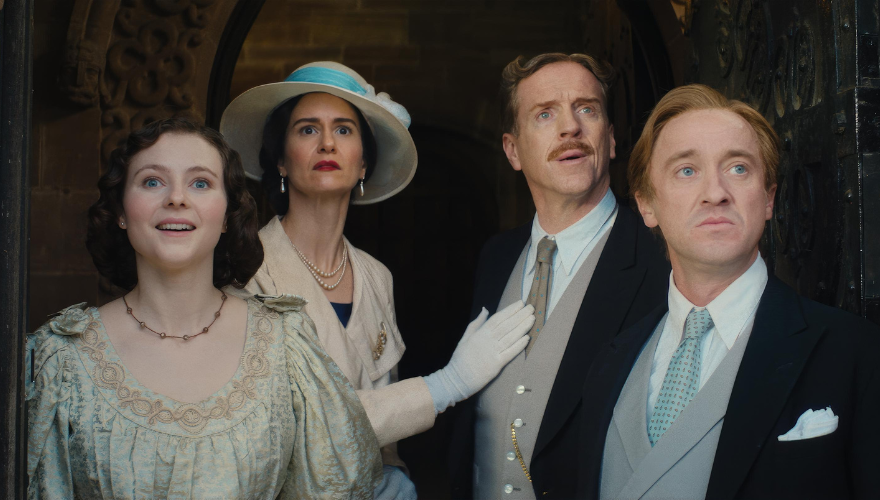
Nouvelle Vague (2025. Screenplay by Holly Gent, Vincent Palmo Jr., Adaptation and Dialogues by Laetitia Masson, Michèle Pétin. 106 minutes)
Just last month I was reviewing director Richard Linklater’s Blue Moon (favorably) and this month we get his other new film. You can go back to my review of Blue Moon here. In that review I also mentioned an earlier Linklater film Me and Orson Welles (2008), which was written by Holly Gent Palmo and Vincent Palmo Jr. No, I have no idea why Holly Gent dropped the Palmo. Anyway, here they are again with Linklater (whom they have worked with in various capacities for years).
This is another film about artists, like Orson Welles and Blue Moon. In this case it is about the French director Jean-Luc Godard and the making of his first feature A bout du soufflé (1960, known in the English speaking world as Breathless). It was one of the films that started what the French called the Nouvelle Vague (or in English the New Wave). The New Wave was a reaction by young filmmakers against the classic French cinema of the Thirties and Forties, which tended to be large budget, heavily scripted, and more formal.
The younger filmmakers wanted to do away with scripts (although as you can see in NV they did not completely manage that) and, at least partly because they had small budgets, made movies on the very cheap, using shooting on locations and in everybody’s apartments. The results were very free-wheeling, which some filmgoers, particularly the younger ones, loved. Some older people and critics hated them.
I was in my late teens and early twenties when the NV came along and I saw a lot of the films when they were first shown in the United States. Some films and filmmakers I liked, and some I did not. Godard was not one I liked. His work just seemed sloppy and often incoherent. He was born in France and grew up in Switzerland, but he had the air of a French intellectual of the worst sort, larding his films with literary quotes. Most of his characters seemed to be very well read in French literature and philosophy. In the current film, one woman tells another, “He’s a genius. Just ask him, he’ll tell you.”
Godard is a rather obnoxious character to place at the center of the film. That is partly true with Lorenz Hart in Blue Moon, but Hart is funny, Godard not so much, although if you get into his rhythm, you might enjoy hanging around with him for 106 minutes.
The film follows Godard as he and François Truffaut, who had just come off the success of his first film, The Four Hundred Blows, work on the story, which changes daily. They start shooting without a script, with Godard changing things every day. We get a day by day account of the making of the film, and it gets very repetitious and monotonous. Which you know is true of any movie set when they are filming. The first hour you are on the set is fascinating, and then it quickly gets boring as hell. And that is what happens as you watch this movie.
The film is a beautifully detailed looking at the kind of filmmaking Godard did, right down to the camera we see the future great cinematographer Raoul Coutard use. If you are a student of the French New Wave, you might find the production details fascinating. I did not, and I am not sure students today would be that interested.
I saw the film in a theatre on a Wednesday afternoon the day before it was to close its run. The theatre was in Westwood, the home of UCLA, one of the great university film programs. I was the only person in the audience. So much for student interest in classical French films.
Following Coppola.
The Rainmaker (1997. Screenplay by Francis Ford Coppola, narration by Michael Herr, based on the novel by John Grisham. 135 minutes) and The Rainmaker (2025. Developed for television by Jason Richman and Michael Seitzman; multiple screenwriters: Julia Cohen, Barbara Curry, Wendy Mericle Johnny Richardson. Ten one hour episodes)
Most people, when asked to name Francis Ford Coppola’s best films, would pick the obvious ones: The Godfather (1972), The Godfather II (1974), The Conversation (1974), and Apocalypse Now (1979). There may even be a couple of people who would choose Megalopolis (2025).
Probably not many people would pick The Rainmaker. It is not nearly as ambitious as his other films. Some people would say it is just based on a pot-boiler novel by John Grisham. But keep in mind that all the critics thought Mario Puzo’s novel The Godfather was nothing but a pot-boiler and look what that turned into as a film.
I do not want to claim Coppola’s film of The Rainmaker is anywhere close to The Godfather films (well, it is better than III), but it is really a good, solid piece of narrative filmmaking. Coppola was a screenwriter for several years before he became a director. He was coming off a number of films in the nineties that did not work as well as his earlier films. He decided he wanted to go back to a traditional narrative film with lots of good characters. He wanted to work with actors and not expand the art of cinema as we know it.
So what you get with his film is a Grisham thriller, with great performances by a wonderful cast: Matt Damon as Rudy the young lawyer; Mickey Rourke as Bruiser Stone, the boss of a very low-rent law firm; and Jon Voight in one of his greatest character-role performances as a slick lawyer. And if those are not enough, the cast includes Claire Danes, Mary Kay Place, Dean Stockwell, Teresa Wright, Virginia Madsen and a lot of others. Coppola works the same directorial magic with this cast as he did with the even more brilliant casts of the Godfather movies. (OK, with the exception of Sophia Coppola in III, whom he directs like her father rather than her director.)
The new miniseries does not have that kind of starpower, but they are all good. Milo Callaghan has a slightly different sensibility that Matt Damon had in the film. John Slattery takes over the Jon Voight part and is less flamboyant than Voight. Bruiser, originally a male, is now a sexy woman played by Lana Parilla; I prefer her to Mickey Rourke.
The film was tightly written and directed by Coppola. The miniseries has ten hours to expand on what the film can do, so it moves at a slower pace, but unlike a lot of miniseries, it does not seem to drag. They do stretch the big trial to two one hour episodes, which slows it down a bit.
It was on the USA channel and I am sure it is or will be streaming somewhere if you want to catch it.
Some Fall 2025 Television.
9-1-1 (2025. 9th Season. Various writers. 43 minute episodes)
The mother ship of the 9-1-1 family got off to a rousing start, as it tends to. A few years ago they started with a massive title wave. I wondered then as I wonder now, if they blow all that money on the first few episodes, are they going to have any budget left for the rest of the season. Somehow they managed to find some change in the cushions in the Writers’ Room and carry on.
As the 9th season opens, the 118 firehouse is mourning the death of their captain Bobby last season. The first episode is mostly the mourning, especially by his widow Athena. But it also sets up the story of what happens next. Hen (Henrietta), a paramedic, saves the life of Elon Musk. OK., he is not named that in the show, but you know who he is. As a thank you, he offers to send Hen into space, along with his mistress, a young male would be genius, an aging astronaut and any other person Hen would like to invite. She ends up selecting Athena. Well, if you are going to go into space in a vehicle designed by a guy who builds weird cars, you are going to want an aging astronaut and Angela Bassett.
Needless to say, this being 9-1-1, shit happens. The spacecraft is hit with space debris (there is a lot, and I mean a LOT, of that up there). They manage to get their space vehicle to the space station. Where things are worse, of course. With the help of people on the ground---not the millionaire, of course---most of the crew are saved.
The suspense is terrific, as are the special effects. 9-1-1 never looks cheap in any way.
9-1-1: Nashville (2025. First season. Various writers. 43 minute episodes)
This is the newcomer to the 9-1-1 universe. 9-1-1: Lone Star finished its five season run this year, and I am guessing that producer Ryan Murphy did not want to sell his fire trucks, so they came up with 9-1-1: Nashville.
I liked Lone Star for some of the same reasons I liked the mother ship. Dealing with 9-1-1 calls gives you a lot of opportunities for stories, not just your basic crime-fighting murder-of-the-week stories. Murphy and his team are great at casting, especially in giving us a diversity of characters.
Nashville is rather a disappointment for me. The first two series managed to balance the personal and professional lives brilliantly. On the basis of the first few episodes of Nashville, that is not the case. The main plot line is that the captain of the fire house, Don Hart (playing by Chris O’Donnell without the same kind of gravitas that Peter Krause and Rob Lowe brought to their performances in the other two series) not only has his son Ryan by his current wife Blythe in his unit, but in the first episode he meets the son Blue he had later out of wedlock to Dixie. He has not seen Blue in decades, although he is secretly sending him financial support. Blue is a stripper in a club and his outfit is a fireman’s uniform. So naturally there is an event where Blue, in uniform, saves a person’s life. So Don decides Blue should train to become a real firefighter.
I just realized this sounds even sillier as I write it than it did when I was watching it. And it gets worse. Dixie, Blue’s mother, is out to get Don in ways we do not know yet. Dixie comes across as the bitch of your choice from Dallas or Dynasty. So Nashville is leaning way more to the soap opera side than the earlier series did.
And guess who they have cast as Dixie? LeAnn Rimes. She does OK., but bitchiness does not seem to be in her natural range.
I’m going to keep watching for a few more episodes, hoping they can rebalance the show.
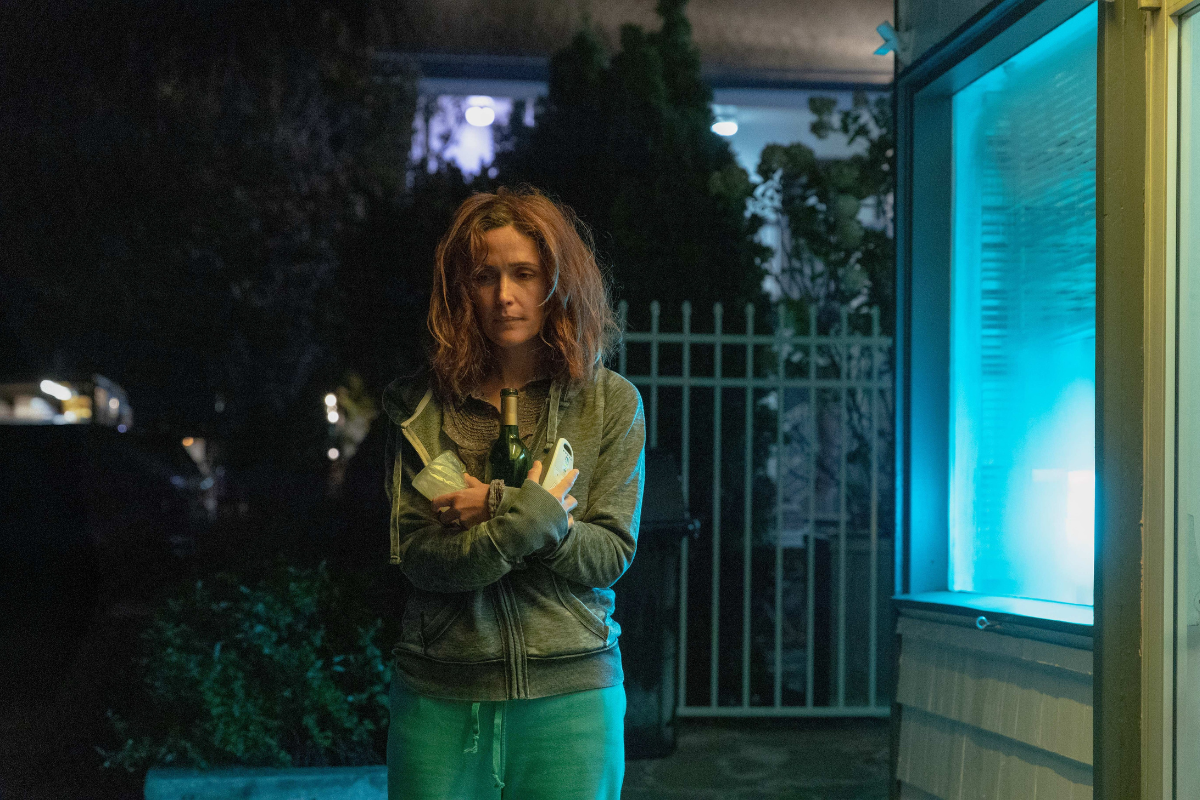
I Love LA (2025. Pilot written by Rachel Sennott. 38 minutes)
Sennott is the great actor who was wonderful in Shiva, Baby (2020). You can read my review of it here. She co-wrote and starred in Bottoms (2023). You can read my review of it here.
With those two under her belt, you can imagine I was looking forward to her new series for HBO, which she writes and stars in. It is about several twenty-to-thirtysomethings living in Los Angeles.
At least at the pilot stage it is a massive disappointment. None of the characters look or sound like people who live in Los Angeles. They all sound like New Yorkers. There is a montage of them driving around LA with, yeah, you guessed it, Randy Newman’s “I love LA” on the sound track, and the montage sticks out like a sore thumb. Given how much I like Sennott and her earlier work, I gave her second episode a watch. It was worse than the first one.

Tom Stempel is a Professor Emeritus at Los Angeles City College, where he taught film history and screenwriting from 1971 to 2011. He has written six books on film, five of them about screen and television writing. You can learn more about his books here. His 2008 book Understanding Screenwriting: Learning from Good, Not-Quite-So- Good, and Bad Screenplays evolved into this column. The column first appeared in 2008 at the blog The House Next Door, then at Slant, and then Creative Screenwriting before it found its forever home at Script.
In the column he reviews movies and television from the standpoint of screenwriting. He looks at new movies, old movies, and television movies and shows, as well as writing occasional other items, such as appreciations of screenwriters who have passed away, plays based on films, books on screenwriting and screenwriters, and other sundries.
In September 2023 Tom Stempel was awarded the inaugural Lifetime Achievement in the Service of Screenwriting Research by the international organization the Screenwriting Research Network.