

UNDERSTANDING SCREENWRITING: John Wayne in a Parody of Downton Abbey?
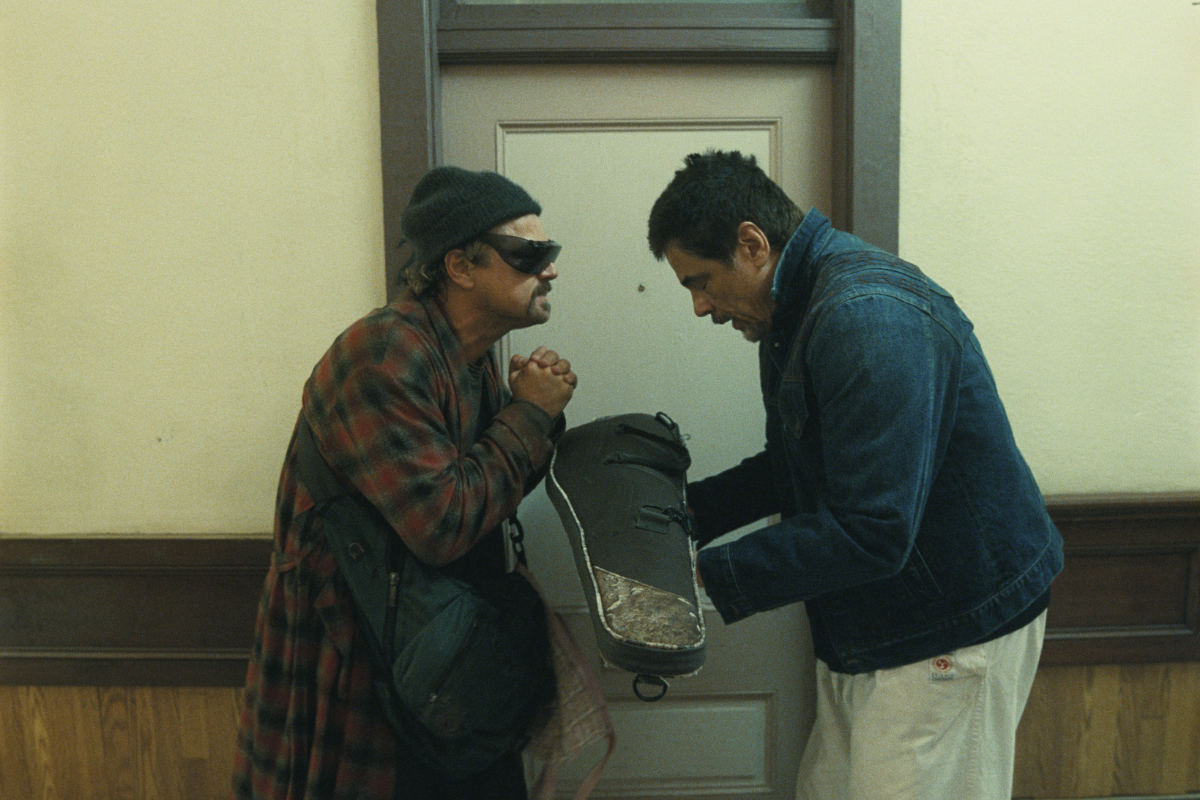
Guess which of this month’s following films those two opposites show up in: ‘Send Help,’ ‘Angel and the Badman,’ ‘Fackham Hall,’ ‘The Bluff’.
Rachel McAdams and…James M. Barrie?
Send Help (2026. Written by Damian Shannon & Mark Swift. 113 minutes)
You all know the Scottish novelist and playwright J.M. Barrie as the author of the 1904 play Peter Pan, or the Boy Who Wouldn’t Grow Up. The play has had great success over the years. It was turned into a successful musical, and of course the 1953 animated feature that probably introduced most of you to Peter.
Barrie wrote other plays as well. One of his most successful in his lifetime was The Admirable Crichton (1902). Wikipedia tells us it may have been inspired by the 1896 German play Robinson’s Eiland, in which a group of Berlin officials are stranded on a desert island, and a secretary becomes the leader.
In Barrie’s play, it is an upper class British family stranded on an island, and the butler Crichton who takes charge. Lady Mary, the daughter of the Earl of Loam, falls in love with Crichton and is about to marry him when they are rescued. After the get back to civilization, Crichton and Lady Mary agree to part.
There was a 1918 silent film of the play, and he next year in America. Cecil B. DeMille directed another silent version called Male and Female, which was noted primarily for a scene of Gloria Swanson taking a bath.
There was also a good 1957 British film, several versions on television, and even a Bing Crosby----
Wait a minute. What does all this have to do with Rachel McAdams? Her new film, Send Help “may have been inspired” by the play or the many productions and film versions. Or it may not. The writing team of Shannon & Swift met at the University of Southern California, then later went to different colleges and universities. So it is possible they ran across The Admirable Crichton somewhere along the way. They wrote the 2003 Freddy vs. Jason and the 2009 Friday the 13th, as well as the 2017 Baywatch. So you will rightfully expect there will be humor and blood in their new movie.
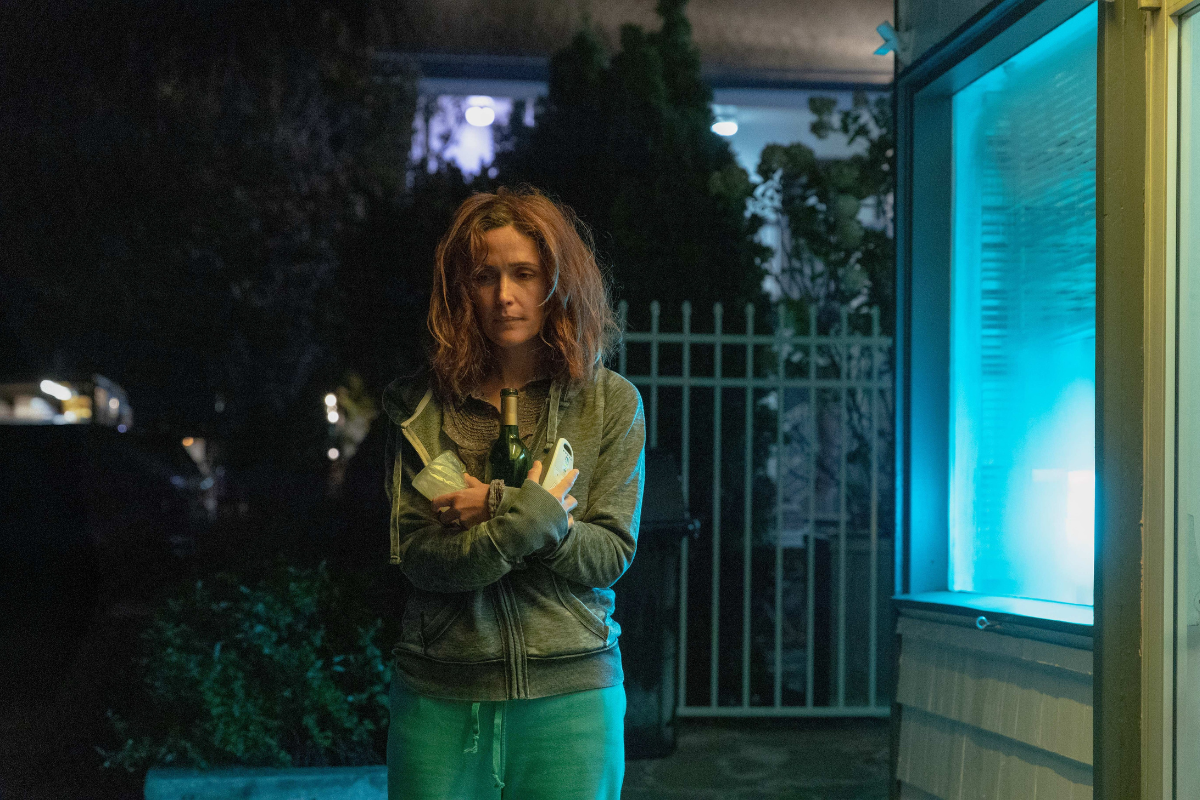
McAdams plays Linda, an office worker in a large company. She is sort of a nerd, but efficient. McAdams plays her broadly enough in the opening scenes so that you know this is not a “serious film,” but a “fun movie.” She ends up on a plane to a company trip to Thailand to help open a new branch. But the plane crashes and she and Bradley, the new company president, survive and make it to a deserted island.
And you thought the business of Linda being a fan of the TV show Survivor was just a character detail. Nope. She knows what berries are poisonous and which are not. She knows how to build a shed. And she can kill a wild boar so they will have meat for dinner. Bradley is an over-privileged jerk who has no practical knowledge of anything. And McAdams is having a ball.
Yes, there is a nude bathing scene, but it’s not what you may expect.
Also, if you are expecting them to fall in love, forgetaboutit. He seems at times to becoming human, but then he isn’t. Meanwhile Linda is having a good time putting all her knowledge to use and watching him sweat. Shannon & Swift keep us as well as them off balance, which gives the actors a lot to play. And the shifts keep the film moving right along.
Then Bradley’s financé shows up to rescue him. Except…well, now I am getting into spoiler areas. But there are plenty of twists and turns left.
Not a great movie, but a lot of fun. And yes, there is blood of all kinds if you like that sort of thing.
James Edward Grant.
Angel and the Badman (1947. Written by James Edward Grant. 100 minutes)
I had thought that as a kid and later I had seen all the westerns John Wayne made in the forties. But I hadn’t. I knew about Angel and the Badman for years, but had never got around to it until it popped up on the Encore Westerns channel a while ago.
I think I had assumed it was just another Wayne B western like those he did in the thirties. It’s better than that. Not perfect, just better. And part of the reason for that is that the script is by James Edward Grant.
Grant, like many of the good screenwriters of the thirties and forties, was a former newspaperman. He came out to Hollywood in the thirties after Irving Thalberg at MGM bought one of his magazine stories for the studio. Grant has some interesting credits from his MGM days. Boom Town (1940), the Clark Gable-Spencer Tracy hit, was based on a story by Grant. He wrote the story and co-wrote the screenplay for Johnny Eager (1941), a solid gangster picture that won Van Heflin a Best Supporting Oscar.
In the early 1940’s John Ford introduced Grant to Wayne and when Wayne signed a new contract at Republic, his home studio, that let him produce his own films, he contacted Grant. Grant brought with him the script that became Angel and the Badman. Wayne liked it and Grant said he wanted to direct it. He had not directed before, but it was time when writers were turning into directors (Preston Sturges, Billy Wilder, et al). Wayne’s biographers Randy Roberts and James Olson write that Wayne ended up controlling the production and directing some of it. Grant only directed one more film, but he continued writing.
Angel has Wayne as Quirt Evans, a well-known outlaw. In the opening shootout he manages to escape the bad guys who are trying to kill him and he takes off through John Ford’s beloved Monument Valley before winging up near Sedona, Arizona, where most of the film was shot. He is taken in by a Quaker family, and he falls for the daughter in the family Penelope, played by Gail Russell in the best performance of her checkered career.
The tension of the movie is whether Quirt will give up his outlaw ways and settle down with Penelope or not. The plotting is solid, and the film is filled with interesting characters, a hallmark of Grant’s screenwriting. One of the most interesting is Marshall Wistful McClintock, played by the great silent western star Harry Carey. Grant gives him an interesting view of which bad guys he expects to use his handing rope on.
Probably because the script was a little wordier and more philosophical than most scripts for westerns, the film was not as big a success as Wayne’s films usually were. But Grant continued writing for Wayne. He co-wrote one of Wayne’s biggest hits of the period, The Sands of Iwo Jima (1949), which won Wayne his first Oscar nomination. He also wrote co-wrote the screenplay for one of Wayne’s worst movies, Big Jim McLain (1952), an anti-Communist tirade.
He wrote Wayne’s vanity project The Alamo (1960) and co-wrote one of Wayne’s best sixties films The Comancheros (1961). And there are others you can see in his IMBd filmography here.
Yes, They do Keep Mispronouncing the Name the Way You Think They Will.
Fackham Hall (2025. Written by Steve Dawson & Andrew Dawson & Tim Inman & Jimmy Carr & Patrick Carr, based on an original idea by Jimmy Carr & Patrick Carr. 97 minutes)
Downton Abbey collides with the Airplane movies, the Naked Gun movies, and a lot of much worse satires of assorted other movies. This one is not up, or down, to the classics of the movie parody genre.
But it is not terrible. Any movie that gives you jokes based on Downton Abbey, the Beatles, and J.R.R Tolkien (you will be surprised what Bilbo Baggins full name originally was) can’t be all bad. There are a lot of good jokes, but you will most likely smile and chuckle than roar with laughter. But you will enjoy smiling and chuckling.
The various writers on this have worked mostly in British television on variety and awards shows, so I was surprised that they have written a film that is not just jokes. It has a couple of firm plot lines. We are at Fackham Hall and where they found a stately home of England that is about three times the size of Downton Abbey I have no idea. The adult couple is Lord and Lady Davenport, and they are trying to marry off Poppy, one of their two daughters. They have no male heir (although the IMDb points out that by the 1930s when the film takes place women were allowed to inherit estates, but hey, we’re making a movie here), so she has to marry a cousin, Archibald. She runs away with, well, not Archibald.
So that leaves Rose, the smartest of the two. She certainly does not want to marry Archibald, so the family may lose the estate.
We get nice details of the estate, several of which could have fit in Downton Abbey without a change. The scenery is gorgeously photographed, including the drone shots coming up on the house. Some of these details start out straight and then end with a gag. You will undoubtedly remember a shot from Downton where the service bells in the kitchen are all in a row. Pay attention to the one at the end that rings and read the label on it.
There is a funny hunting scene, a take-off on a sequence in Jean Renoir’s la règle du jeu (1939). Lord Davenport is accidentally shot and thinks he is dying. He says that he going to meet his four dead sons, John, Paul, George, and Ringo. A lot of writers would just leave it at that, but this gang takes it even further and makes it funnier. I should remind you here that if you think there should only be one writer on a film, the Marx Brothers on some films had a writer for each brother and a couple of utility infielders as well.
In the beginning of the film we see Eric, orphaned as a child, being given the job of taking a handwritten letter to Lord Davenport. He meets Rose on the way in a mildly amusing meet cute and they are smitten. He gets to the Hall and ends up with a job as a “hall boy,” whatever that is. And forgets to deliver the letter to Lord Davenport. If you do not know who Eric really is and what is in the letter, you have no business being in this screenwriting class.
Then the writers pull a switch. They have been getting a lot of mileage out of satirizing Downton Abbey, but now Lord Davenport is killed. For real. And the movies turns into an Agatha Christie murder mystery. Which is OK (except that Lord Davenport has been beautifully played by Damian Lewis and the great wig he was), because it now gives the writer other targets.
The police inspector arrives, with a Kenneth-Branagh-Murder-on-the-Orient-Express-sized moustache. Which he immediately takes off and hangs up on the hat rack. Revealing a Kenneth-Branagh-A-Haunting-in-Venice-more-reasonable-size moustache.
A few columns ago I wrote about the Thin Man films and I mentioned the problem with mysteries is that there is usually a long scene at the end where the detective explains how the murder happened and who the murderer is. Here this is a short scene in which the detective tells a large, very large, crowd he knows the murderer is in the room. Then he does not tell them. And the writers give the quickest, funniest, “the murderer is and how the victim was killed” you have ever seen.
So the movie wins on points, but not by a knockout.
(And now a Public Service Announcement. Longtime readers may remember that the reason I quit Netflix after only a couple of months is they had the habit of cutting off the credits at the end of films to start the next film they wanted you to see. I tried, unsuccessfully, to find out how to watch the credits. My streaming service now is Prime Video, and they started that nasty business of cutting off the credits. I finally stumbled on how to see the full credits on Prime Video. When the credits start to roll and then are cut off, hit “stop” on your remote. The page of the film will come up and there will be a box marked “Resume.” Click on that and you will get all the credits. Of course on Fackham Hall the credits are so small you cannot read them, but that’s show biz. You’re welcome.)
Where are Ben, Mank, Ted & Terry, and Stuart and Jay When You Need Them?
The Bluff (2026. Written by Joe Ballarini & Frank E. Flowers. 103 minutes)
The heads of the old studios were smart. They knew that pirate movies should be fun, which is why they hired people like Ben Hecht and Herman J. Mankiewicz to write pirate movies, The Black Swan (1942) and The Spanish Main (1945) respectively. The writers on the first three Pirates of the Caribbean (2003, 2006,2007) movies, Jay Wolpert, Stuart Beattie, and Ted Elliott & Terry Rossio, all knew pirate movies should fun.
I don’t think Ballarini & Flowers understand the concept. There are not a lot of yucks in The Bluff. Not even a good Johnny Depp joke. It is not that The Bluff is a serious movie, but it is not as much fun as it should be.
Ercell (Priyanka Chopra Jonas) is a young mother living on a gorgeous island with her two children, a daughter and a son. Suddenly there is kerfuffle out in the ocean between a large pirate ship and a small sailing ship. The captain of the smaller boat is taken hostage by the Captain Connor of the larger ship. OK, nice action, a little bloodthirsty, but it lets you know you are in a pirate movie. The titles also tell us it is 1846, at the very, very end of the golden age of piracy. Why set it in 1846? That may mean you can have pistols that can fire multiple rounds, which, according to a note on IMDb, was before the invention of such guns, but what the hey, we’re making a movie here.
We get some lovely scenery of the island and Jonas (both are equally beautiful), and then the pirates come ashore. And the movie gets very, very bloody. Captain Connor is after Ercell, who for all the motherly instincts we have seen, was known as Bloody Mary in her pirate days. And she stole Conner’s gold. A lot of gold. And he wants it back and he and crew will kill anybody who gets in their way. So the non-action scenes are just breathers between the fights and killings, which get tiresome.
Eventually the blood that is shed is that of Connor and his crew and Ercell and her kids survive, along with gold. If you don’t mind all the bloodletting, you may enjoy this. Jonas makes a good action heroine, the photography of the island is great, and the editing is particularly sharp.

Tom Stempel is a Professor Emeritus at Los Angeles City College, where he taught film history and screenwriting from 1971 to 2011. He has written six books on film, five of them about screen and television writing. You can learn more about his books here. His 2008 book Understanding Screenwriting: Learning from Good, Not-Quite-So- Good, and Bad Screenplays evolved into this column. The column first appeared in 2008 at the blog The House Next Door, then at Slant, and then Creative Screenwriting before it found its forever home at Script.
In the column he reviews movies and television from the standpoint of screenwriting. He looks at new movies, old movies, and television movies and shows, as well as writing occasional other items, such as appreciations of screenwriters who have passed away, plays based on films, books on screenwriting and screenwriters, and other sundries.
In September 2023 Tom Stempel was awarded the inaugural Lifetime Achievement in the Service of Screenwriting Research by the international organization the Screenwriting Research Network.