

Sundance 2026, With Love
One Final Winter in Utah and the Films That Carried It Forward
There are film festivals, and then there is Sundance.
For decades, the Sundance Film Festival has existed as both a proving ground and a sanctuary. It is where filmmakers arrive carrying stories they have protected for years, sometimes for a lifetime. It is where audiences gather not simply to watch films, but to experience them together, in packed theaters, hushed rooms, and long lines wrapped around snowy streets. Sundance has always been about discovery, about the electric moment when something unfamiliar suddenly feels essential. That spirit felt especially alive this year, because this was also a goodbye.
As the sun set on the final Sundance Film Festival in Park City, Utah, there was a quiet sense of closure layered with anticipation. The ski town has long been the beating heart of independent cinema, hosting volunteers, artists, critics, dreamers, and first-time filmmakers from across the world. It has witnessed standing ovations at Eccles Theater, surprise premieres that rewrote careers overnight, and countless hours spent waiting in the cold for the promise of something extraordinary on the big screen. Sundance here was never just an event. It was a shared ritual.
When the festival moves to Boulder, Colorado next year, it will carry Park City with it. The town is ingrained in the festival’s DNA, its birthplace and its forge. Sundance will live on in the locals who ran theaters and shoveled snow, in the filmmakers who heard their first applause here, and in the memories of audiences who trusted the festival to show them something bold. Yet in this final year in Utah, it was the films themselves that made Sundance feel urgent, alive, and deeply human.
The lineup this year reaffirmed why independent cinema still matters. These films challenged, comforted, unsettled, and exhilarated. They stayed with me long after the lights came up, and they reminded me why Sundance continues to be a place where risk is rewarded, and discovery still feels possible.
Josephine
Winner of Audience Award US Dramatic and US Grand Jury Prize Dramatic
Written and directed by Beth de Araújo
There are films that unsettle you, and then there are films that fundamentally rearrange you. Josephine belongs firmly in the latter category.
Written and directed by Beth de Araújo, this is a devastating examination of childhood trauma and the impossible weight of protecting innocence in a world that offers no guarantees. It is not an easy watch. It is also a necessary one.
The film centers on 8-year-old Josephine, who accidentally witnesses a violent crime in Golden Gate Park. What follows is not a procedural or a courtroom drama, but an intimate portrait of aftermath. Josephine begins to act out, lashing out physically and emotionally as a form of self-preservation. Her parents, played by Channing Tatum and Gemma Chan, struggle to hold their family together as their own fears and belief systems begin to fracture.
This is an extremely upsetting film, and that discomfort is the point. Josephine plays like Come and See for contemporary parents, forcing the audience to experience violence through the eyes of a child who cannot yet process what she has seen. I was deeply shaken by de Araújo’s Soft and Quiet, and I wrongly assumed this would be more restrained. It is not. It is just as confrontational, all the more impressive because so much of its emotional weight rests on the shoulders of a child actor.
Mason Reeves delivers a staggering debut. Her performance is raw, restrained, and painfully honest. She does not perform trauma. She inhabits it. Reeves has an uncanny screen presence that pulls focus without effort, especially in scenes opposite seasoned actors.
Channing Tatum gives one of the most affecting performances of his career. His work here is quiet, restrained, and devastating. He allows himself to sit in discomfort, resisting any urge toward charm or likability. His final scene is quietly shattering. Gemma Chan is equally compelling, especially in the early moments where grief and panic collide in real time.
De Araújo’s writing & filmmaking is forceful and unyielding. She often places the audience directly inside Josephine’s emotional headspace, refusing easy signposts or comforting distance. Cinematographer Greta Zozula crafts a claustrophobic visual language that mirrors the characters’ internal collapse, grounding the story in a lived in San Francisco rarely seen on screen.
There are frustrations. Some parental choices feel engineered to escalate conflict, and the ending did not fully land for me. It gestures toward resolution in a way that feels too neat for the trauma explored.
Even so, Josephine is a powerful and essential film. It is a brutal meditation on violence, parental fear, and the terrifying realization that love does not come with answers. This is a film that hits hard in the theater and even harder once you leave it behind.
Hold Onto Me
Winner of Audience Award World Cinema Dramatic
Written and directed by Myrsini Aristidou
The architecture of a child’s memory is often built around absence. In Hold Onto Me, the deeply empathetic debut from Cypriot filmmaker Myrsini Aristidou, that absence takes the shape of a father who left and a daughter who refuses to let him remain a ghost.
An 11-year-old girl named Iris learns that her estranged father Aris has returned to town for his own father’s funeral. Determined to finally know him, she tracks him down to a rundown shipyard where he has been living. What begins as an act of stubbornness slowly evolves into a fragile reckoning between two people who do not know how to speak the same emotional language.
Aristidou directs with remarkable restraint, allowing the relationship to unfold through glances, silences, and shared routines. Maria Petrova plays Iris with quiet toughness and emotional clarity, never tipping into precociousness. She feels observant, guarded, and achingly real.
Christos Passalis is exceptional as Aris, capturing the charm and evasiveness of a man who has spent years outrunning responsibility. Their chemistry is rooted in mimicry and observation. Iris slowly adopts her father’s posture and instincts, a subtle reminder that connection exists even when denied.
The film resists easy closure, opting instead for emotional honesty. It recalls films like Paris, Texas and Aftersun without ever feeling derivative. Shot with an unvarnished eye, Cyprus becomes an emotional extension of Iris herself, warm, lonely, and searching.
Hold Onto Me is a film about why we reach for the people who hurt us first. It hurts in all the right places. A quietly powerful debut that lingers.
Shame and Money
Winner of World Cinema Grand Jury Prize Dramatic
Directed by Visar Morina
Written by Visar Morina and Doruntina Basha
There is a particular exhaustion that settles into the body when survival itself becomes a full-time job. Shame and Money lives inside that exhaustion with devastating precision. The latest film from German-Kosovan filmmaker Visar Morina is heavy, sad, and quietly enraging, a work that understands how economic precarity corrodes pride, relationships, and eventually the self. What makes it hit so hard is how familiar it feels.
After losing their livelihood, a Kosovar family is forced to leave their village and move to the capital in search of stability. Morina opens the film in a rural space defined by routine, labor, and dignity. Shaban and his wife Hatixhe run their dairy farm with care and pride, surrounded by family and a sense of purpose. That life is ripped away almost overnight, pushing them into a city and a system that has little patience for people who arrive already bruised.
Shaban wants desperately to be a provider. Yet his mother’s savings keep the family afloat, and accepting help from a wealthy brother-in-law comes with humiliating conditions that slowly dismantle his sense of self. Each compromise chips away at his dignity, pushing him closer to an unseen edge. Astrit Kabashi delivers an extraordinary performance, his silence doing more work than any outburst ever could. His face becomes a battlefield where shame, rage, and helplessness constantly collide. Flonja Kodheli is equally remarkable as Hatixhe, grounding the film with quiet strength and emotional intelligence.
Morina directs with discipline and restraint, refusing melodrama or easy catharsis. The film frames shame as a social construct tied directly to power. Charity becomes transactional. Family bonds become debts. The city becomes a machine that demands gratitude while offering no security. And yet, in fleeting moments of tenderness between family members, the film finds its human pulse.
Austere, compassionate, and deeply unsettling, Shame and Money offers no solutions, only recognition. It lingers like a bruise, reminding us how quickly dignity can become unaffordable.
Take Me Home
Winner of Waldo Salt Screenwriting Award US Dramatic
Written and directed by Liz Sargent
For much of Take Me Home, it is not immediately clear who is taking care of whom. That uncertainty is the film’s emotional engine, and it is what makes Liz Sargent’s debut feature so quietly radical. Expanded from her acclaimed short, this is a film that listens more than it declares, observing lives that are rarely afforded this level of patience or attention on screen.
Anna is a 38-year-old Korean adoptee with a cognitive disability who lives with her aging parents in a Florida suburb. Together, they exist in a fragile balance of mutual care, each depending on the others to get through the day. When a relentless heat wave disrupts their carefully maintained routine, long postponed questions about Anna’s future come sharply into focus. What follows is not a tidy march toward resolution, but a compassionate exploration of what independence can look like when the world is not built to support you.
Liz Sargent directs with tenderness and restraint, grounding the film in everyday rituals and quiet moments. Anna Sargent delivers a remarkable performance that never feels performative or sentimental. Her Anna is treated as a full human being first, with her own rhythms, anxieties, humor, and desires. The film refuses to turn her into a problem to be solved or a symbol to be explained, a choice that sets Take Me Home apart from many well-intentioned portrayals of disability.
The relationship between Anna and her parents is depicted with striking honesty. Caring for aging relatives is difficult under any circumstance. When those parents are also responsible for a child with cognitive impairments, the emotional and logistical weight becomes immense. Sargent does not shy away from the indignities of bureaucratic neglect or the failures of the care system, yet the film never collapses into despair.
What makes Take Me Home linger is its refusal to frame disability as tragedy. Independence here is nonlinear, shaped by patience, community, and trust. Modest, humane, and deeply felt, this is not a self-important film. It is simply an important one.
Bedford Park
Winner of US Dramatic Special Jury Award for Debut Feature
Written and directed by Stephanie Ahn
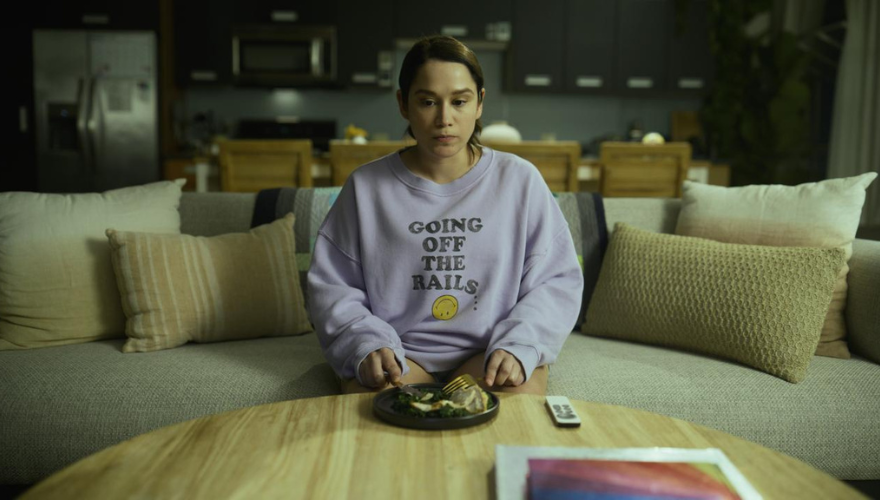
Bedford Park is a tender and quietly devastating portrait of two wounded adults learning how to breathe again. Written and directed by Stephanie Ahn, the film understands how adulthood can feel like a long negotiation between inherited pain and deferred desire, especially for children of immigrants who were taught to endure rather than articulate.
Audrey is a Korean American woman in her thirties who has learned how to function without ever feeling fully at ease inside her own skin. Haunted by an abusive childhood, she returns to her parents’ home after her mother is injured in a car accident. There, she meets Eli, the ex-wrestler responsible for the crash, a man carrying a past that sits just as heavily on his body and spirit. What begins as an uneasy collision slowly transforms into something gentler, as two guarded people begin to recognize pieces of themselves in one another.
Moon Choi and Son Sukku deliver deeply affecting performances, grounding the film with a chemistry that feels lived in rather than performative. Their connection is built from glances, pauses, and small moments of trust, capturing how intimacy often grows when neither person quite knows how to ask for it. Both characters are shaped by immigrant upbringing, silence, and sacrifice, legacies that linger as guilt, anger, and isolation well into adulthood.
Stephanie Ahn directs with vulnerability and restraint, allowing the film to unfold at its own deliberate pace. Bedford Park is not interested in rushing its characters toward catharsis or neat resolutions. Instead, it finds meaning in small acts of attention. A shared car ride. A moment of honesty. The quiet relief of being seen without explanation.
Healing here does not arrive through grand gestures, but through presence. There is melancholy woven throughout the film, but it is never indulgent, and the hope that emerges feels earned. A confident and compassionate debut, Bedford Park announces Stephanie Ahn as a filmmaker with patience, empathy, and a deep understanding of emotional landscapes rarely afforded this level of care on screen.
Honorable Mention
Levitating
Directed by Wregas Bhanuteja
Written by Wregas Bhanuteja, Defi Mahendra & Alicia Angelina
Levitating is a hypnotic coming-of-age odyssey where rhythm becomes resistance and community becomes survival. Directed by Wregas Bhanuteja, the film plunges into the ecstatic world of trance dance hypnosis and emerges as something singular, transportive, and deeply alive.
Set in a town where pleasure and possession are intertwined, the story follows Bayu, a gifted young spirit channeler whose flute guides dancers into inhabiting creature energies drawn from the land. These trance parties are not mere spectacles. They are communal rituals, spaces of release and care where pain, joy, desire, and fear are processed together. When an impending eviction threatens the community, Bayu aspires to become the shaman of a major trance event, placing the weight of collective survival squarely on his shoulders.
Bhanuteja treats rhythm as narrative grammar. Music and movement are not embellishments but the language through which emotion and meaning are conveyed. The film moves with a pulse that mirrors Bayu’s inner life, swelling and contracting as he grapples with ambition, responsibility, and unresolved personal trauma. Levitating becomes not just a coming-of-age story, but a meditation on balance, on the danger of using one’s gifts without first making peace with oneself.
The film is immersive and propulsive from the moment it begins. Every element feels calibrated toward a shared sensory experience, from the editing and cinematography to the choreography and sound design. The trance sequences are electrifying and spiritual without ever becoming precious, their power rooted in physical commitment rather than spectacle.
Angga Yunanda delivers an extraordinary performance, grounding the film’s most ecstatic moments in vulnerability and restraint. His Bayu is magnetic yet fragile, a young man learning that guiding others requires confronting what is fractured within.
Levitating lingers because it refuses easy answers. It invites the audience to sit with discomfort, wonder, and collective joy. A communal cinematic experience in the truest sense, this is a film meant to be felt together.
This year at Sundance was a powerful reminder of what cinema is still capable of when artists are given space to take risks. Watching these films, engaging in conversations with filmmakers, and feeling audiences respond together in packed theaters was deeply motivating, not just as a critic, but as a writer and filmmaker. There is something irreplaceable about that collective experience, the moment when a story lands and you can feel a room shift.
Sundance continues to be a place where bold work is encouraged and where stories that might struggle elsewhere are allowed to exist on their own terms. The imagination, rigor, and emotional honesty on display this year reaffirmed why independent cinema still matters. These films did not chase trends or formulas. They trusted the audience. That trust was rewarded.
Thank you to the Sundance Film Festival for an unforgettable week of cinema, conversation, and connection. Thank you to the programmers, volunteers, filmmakers, and everyone behind the scenes who made this final year in Utah feel so meaningful. This felt like a celebration and a farewell all at once.
As the festival prepares for its next chapter in Boulder, Colorado, I am excited to see how that new landscape shapes the stories to come. I will also be sharing a dedicated coverage piece on Shorts and Documentary films from this year, spotlighting more bold voices and discoveries that deserve attention.
Until then, this feels like a beautiful goodbye.