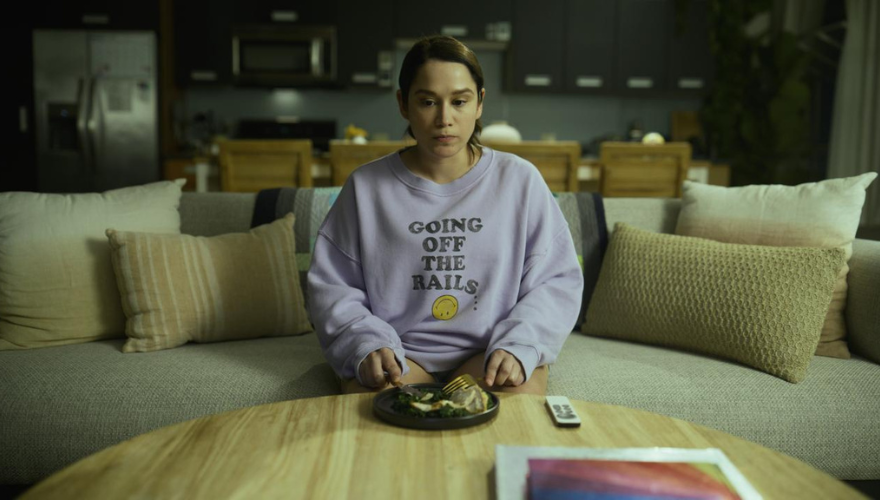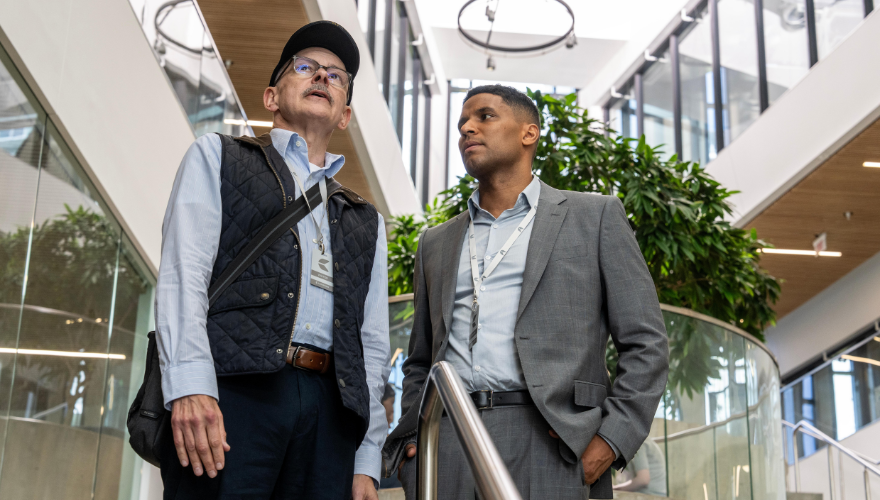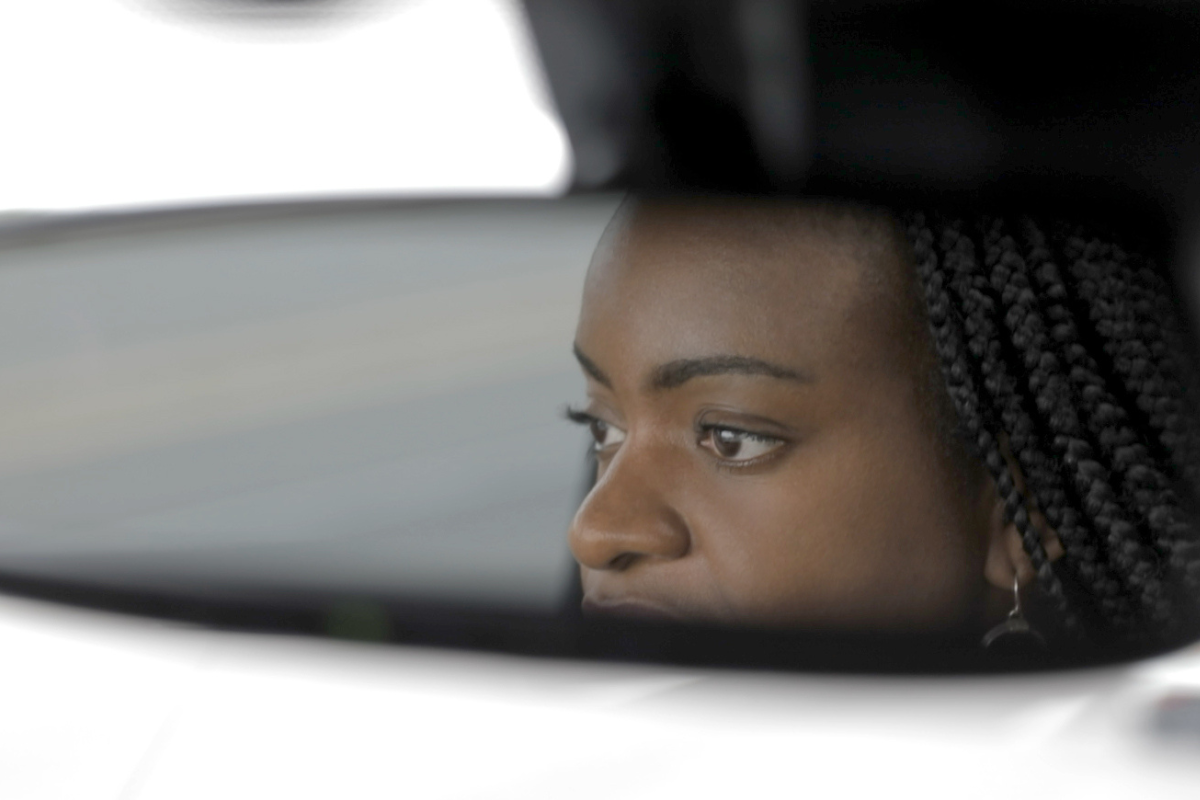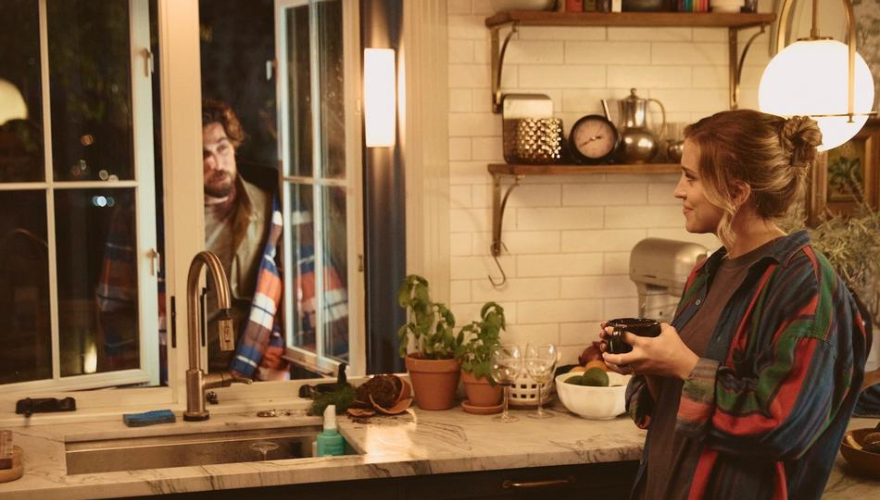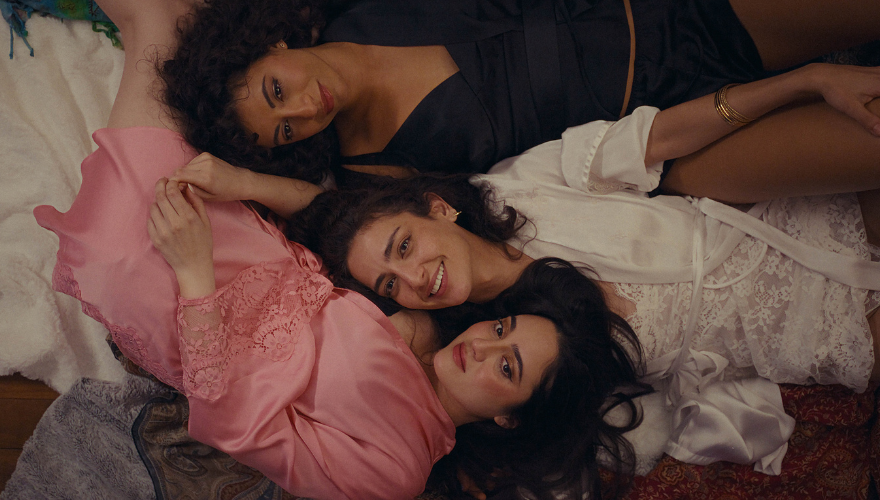


Sundance 2026: Documentary
Where the Truth Refuses to Look Away
There is a reason Sundance remains one of the most important festivals in the world, and it is not just because it launches careers or sells distribution rights. Sundance matters because it still believes cinema can be urgent. It can be dangerous. It can be a public record of the present tense.
Nowhere is that belief more visible than in the festival’s Documentary section.
Sundance documentaries are not designed to simply inform you. They are built to confront you. These are films that push past headlines and statistics, choosing instead to live in the messy, complicated human aftermath of history unfolding in real time. They move across war zones, hospital corridors, protest streets, and cultural battlegrounds, often placing the camera where it is not supposed to be, or where it is too uncomfortable for most people to look.
The Documentary section at Sundance typically includes both U.S. and international nonfiction titles, ranging from intimate character studies to political investigations and formal experiments. Some are deeply journalistic, others are poetic, and many exist somewhere in between, blending personal storytelling with global stakes. What ties them together is not subject matter, but intention. These films are made with the understanding that documentary cinema is not passive observation. It is participation. It is witness.
This year’s lineup felt especially potent. Not because the world has suddenly become more chaotic, although it has, but because these filmmakers refuse to let chaos blur into background noise. Each documentary I was fortunate enough to catch at Sundance 2026 felt like an act of resistance against forgetting. Against numbness. Against the slow cultural erosion that happens when tragedy becomes routine.
From Syria to Scotland to Gaza to the underground chaos of New York’s public access revolution, these films reminded me why nonfiction filmmaking remains one of cinema’s most vital forms. Not because it offers easy answers, but because it forces us to stay present long enough to feel something real.
Here are the Documentary section films from Sundance 2026 that stayed with me.
Birds of War (World Cinema Documentary Special Jury Award for Journalistic Impact Winner)
Written and Directed by Janay Boulos and Abd Alkader Habak
Some documentaries hit you with their scale. Others break you with their intimacy. Birds of War somehow manages to do both, unfolding as a love story written in real time against the backdrop of revolution, exile, and the kind of daily danger most of us only witness through headlines.
It begins with a simple text exchange between a BBC journalist in London and a Syrian cameraman on the ground in Aleppo.
“Can you find a story and film it?”
“Yes, but who are you? All I know is that you’re from the BBC.”
That is the spark. And from that spark, Janay Boulos and Abd Alkader Habak build a film that feels like a personal archive of the modern Middle East, stitched together through 13 years of voice notes, footage, photos, and lived experience.
What makes Birds of War so affecting is how naturally the professional relationship turns into something deeper. At first, Boulos is assigning stories, requesting footage, trying to shape narrative from afar. Habak is capturing reality up close, where journalism is not a job but survival. Slowly, their connection becomes personal, and the film becomes something far rarer than a political documentary.
It becomes proof that love can exist even when the world is collapsing.
The editing is astonishing, not just in its technical skill, but in its emotional rhythm. The film moves between flirtation and devastation without ever feeling exploitative. It understands that human beings do not stop being human during war. They still laugh. They still argue. They still fall in love. They still dream about futures that might never arrive.
There is an incredible tenderness in how Boulos and Habak frame their relationship, but also an honesty about what war does to intimacy. Safety becomes a negotiation. Home becomes an idea. Even joy feels temporary, like something borrowed.
If the film has a weakness, it is the inevitable limitation of its runtime. Condensing thirteen years into 85 minutes means certain moments feel like they pass too quickly. There are times you want the film to slow down, to sit longer with who these two people are beyond their circumstances. Yet in some ways, that is also part of its power. Their lives have been forced into acceleration by history.
Birds of War is deeply moving, sometimes heartbreaking, and strangely hopeful. It reminded me that at the heart of every true revolution is not just rage, but love. Love for people. Love for place. Love for the possibility of a better world.
And when I realized I had seen Habak’s footage years ago, long before I knew his name, it hit like a punch to the chest. This is what documentaries can do. They connect the images we consume to the lives that created them.
A beautiful film. A necessary one. And a love story that feels genuinely miraculous.
Everybody To Kenmure Street (World Cinema Documentary Special Jury Award for Civil Resistance)
Directed by Felipe Bustos Sierra
There are documentaries that make you angry. There are documentaries that make you cry. And then there are documentaries that make you want to run outside and join something bigger than yourself.
Everybody To Kenmure Street is that kind of film.
On May 13, 2021, the first day of Eid, immigration officers arrived in Glasgow’s Pollokshields neighborhood to detain two men for deportation. What they did not anticipate was the response. Within minutes, neighbors began pouring into the street. People left breakfast tables, work calls, and daily routines to physically block the van from leaving. What started as a small group of locals turned into a protest of thousands, lasting eight hours, until the men were released.
It is one of the most inspiring acts of spontaneous civil resistance in recent memory, and Felipe Bustos Sierra captures it with an energy that feels both urgent and life affirming.
What works best about the film is its ability to show organization happening in real time. People take on roles without being assigned. Someone brings food. Someone negotiates. Someone documents. Someone keeps the crowd calm. It becomes a living portrait of what community actually means when it is put to the test.
The documentary also makes a smart decision by grounding the protest in Glasgow’s broader political history. The city’s legacy is complicated, built in part on exploitation and colonial systems, yet also shaped by a tradition of resistance. Sierra uses archival footage and interviews to connect Kenmure Street to a longer timeline of protest culture, reminding us that collective action is not an accident. It is inherited.
There is also a clever creative touch in the film’s reenactments, including voice performances by Emma Thompson and Katie Dickie for individuals who chose to remain anonymous. It is an inspired choice that keeps the film playful while still honoring the seriousness of what took place.
If the film occasionally loses momentum, it is during moments when it lingers too long on historical framing at the expense of the central event. But when it returns to the street, it becomes electrifying again.
Watching it now, especially in an era where anti-immigrant sentiment continues to rise globally, feels almost surreal. It is healing to witness a community refuse to be intimidated. It is even more powerful to see a multi-racial, multi-faith neighborhood act as one body.
Everybody To Kenmure Street is not just a documentary. It is a reminder. There are more of us than there are of them. And when people stand together, even the machinery of the state can be forced to stop.
One In A Million (Directing Award Winner: World Cinema Documentary)
Directed by Itab Azzam and Jack MacInnes
Some documentaries capture a moment. One in a Million captures a life.
Filmed over ten years, Itab Azzam and Jack MacInnes’ extraordinary documentary follows Isra’a, a Syrian girl first encountered in 2015 while selling cigarettes on a street corner in Turkey. She is eleven years old, bright eyed, fearless, and already carrying more responsibility than any child should. Her family has fled Aleppo, and like so many refugees, they are preparing to make the perilous journey toward Europe.
What begins as a story of survival becomes something far more complex. The film follows Isra’a and her family from Turkey to Greece, eventually to Germany, documenting not only the physical dangers of migration, but the emotional aftershocks that come after.
The film’s opening statement is devastating in its simplicity.
“War is not the hardest thing a person can go through. It is not as hard as what comes after.”
That line becomes the documentary’s soul.
Because One In A Million is not interested in the spectacle of war. It is interested in what displacement does to identity. To family. To tradition. To the idea of home.
Once the family settles in Cologne, the story evolves into something even more painful. The struggle is no longer escaping death, but navigating freedom. Western values begin to collide with Syrian traditions. Isra’a grows into adolescence, then adulthood, and the documentary captures the quiet heartbreak of watching a family fracture in slow motion, not because they stop loving each other, but because survival changes people.
The intimacy here is staggering. Azzam and MacInnes are not outsiders observing from a distance. Their camera feels like part of the family. The film never sensationalizes its subjects, never judges them, and never forces easy moral conclusions. It simply watches as time reshapes everyone.
Israa’s mother emerges as one of the most compelling figures in the film, a woman carrying the weight of trauma while still trying to build stability for her children. The father is more complicated, at times frustrating, at times heartbreaking, wrestling with masculinity, tradition, and the fear of losing control in a new world.
The documentary is beautifully shot and scored, though its decade spanning structure means certain threads inevitably move faster than you want. There are moments you wish the film would linger longer, because the material is rich enough to fill a miniseries. But even in its compressed form, it remains profoundly powerful.
By the end, One In A Million feels like you have lived beside this family. You do not just watch Isra’a grow up. You feel it.
This is one of the most emotionally devastating documentaries I have seen in years, and one of the clearest examples of why long-term nonfiction storytelling can be one of cinema’s greatest gifts.
Everyone deserves a chance at happiness. This film makes you understand what it costs to earn it.
American Doctor
Directed by Poh Si Teng
There are films you admire. There are films you recommend. And then there are films that feel like they should be mandatory viewing, not as entertainment, but as moral obligation.
American Doctor is that kind of documentary.
Directed by Poh Si Teng, the film follows three American doctors, Palestinian, Jewish, and Zoroastrian, who travel to Gaza to provide medical aid as hospitals are targeted, resources are obliterated, and civilians, many of them children, pay the price of an ongoing catastrophe.
The documentary is furious, harrowing, and absolutely unflinching. It does not romanticize heroism. It does not sanitize suffering. It does not look away.
Early in the film, there is a chilling exchange about whether certain images should be blurred. The filmmaker’s instinct is understandable. The brutality is overwhelming. But the response from the doctor is immediate and furious, arguing that the world’s desire to look away is part of the violence itself.
That moment sets the tone.
From that point forward, American Doctor refuses comfort. It forces the audience to witness the reality of bombed hospitals, exhausted physicians, impossible triage decisions, and children whose injuries should not exist in any sane world. The footage is difficult to watch, and it is meant to be. As one doctor states plainly, not showing these images would be journalistic malpractice.
What makes the film even more devastating is the awareness that the doctors are American citizens, fully conscious that their own tax dollars are funding the weapons creating the injuries they are trying to treat. That contradiction hangs over the documentary like poison. It is a cycle of horror that feels impossible to break.
Yet the film is not only an indictment. It is also a testament to unity. The three doctors come from different religious and cultural backgrounds, but they are united by something more urgent than ideology. They are united by conscience. By medical ethics. By humanity.
American Doctor feels like nonfiction cinema in its purest form. It strips away political spin and forces the truth into the room. It is shattering. It is enraging. It is necessary.
I have seen many documentaries at various festivals over the years, but very few have left me this shaken. This is a film that does not ask for your attention. It demands it.
Public Access
Directed by David Shadrack Smith
Public Access is the kind of documentary that feels like discovering a secret history, one that was hiding in plain sight, broadcasting on late night television while the rest of America slept.
Directed by David Shadrack Smith, the film explores the anarchic, boundary shattering world of New York City’s Manhattan public access television in the 1970s, a cultural experiment that essentially handed the keys of broadcast media to the people.
Long before social media created influencers and digital celebrities, public access TV offered something even more radical. Total creative freedom. No editorial oversight. No corporate filter. Just a camera, a slot on the schedule, and a willingness to put yourself on screen.
Smith’s documentary dives into a chaotic landscape of underground programming, interactive shows, experimental art, queer television, and provocative content that pushed public morality into legal warfare. It is both hilarious and fascinating, but also surprisingly serious in how it frames public access as a genuine democratic tool.
The archival footage is wild, often jaw dropping in its boldness. The documentary becomes a time capsule of a city that felt like it was inventing its own culture live on camera. The film’s best sections explore how public access created space for LGBTQ voices at a time when mainstream media barely acknowledged their existence, let alone allowed them to speak openly.
That portion alone could have been its own documentary, and honestly, I would watch a full series about it.
Public Access is also stuffed to the brim with ideas, and that is both its strength and its limitation. Every segment could be expanded into a feature length film. The documentary moves quickly through an enormous stretch of history, and at times the sheer volume of information becomes overwhelming. There are fascinating threads, including a brief mention of MTV as a colonialist entity, that fly by so fast you almost want to pause the film and demand an entire chapter.
Still, the documentary is sharply edited, deeply entertaining, and surprisingly relevant. Watching it in 2026, in an era where media platforms claim to democratize expression while quietly controlling algorithms and visibility, Public Access feels like a reminder of what freedom actually looked like when it was not monetized.
It is quirky, fun, overstimulating, and undeniably compelling. More than anything, it makes you mourn what has been lost. A time when leaders still had some obligation to the public, and when media briefly belonged to everyone.
Public Access is a fascinating piece of nonfiction history, and a reminder that the battle over who gets to speak has always been the battle that matters most.
Paralyzed by Hope: The Maria Bamford Story Directed by Judd Apatow & Neil Berkeley
There is a certain kind of documentary that leaves you feeling like you just spent time with someone rather than simply watched them. Paralyzed by Hope: The Maria Bamford Story, co-directed by Judd Apatow and Neil Berkeley, is exactly that kind of film. It is warm, funny, and disarmingly intimate, the kind of deeply personal portrait that sneaks up on you, earns your trust, and then quietly wrecks you in the best way.
Maria Bamford is beloved for turning her radical sensitivity and honesty into laughs, but what makes this documentary so affecting is that it never reduces her to a quirky comic persona. Instead, it treats her as what she truly is, a singular artist whose voice was never built to fit neatly into any mainstream box.
The film traces her path to comedy, from her childhood in Duluth, Minnesota, to discovering stand-up in college, and eventually finding her place in Los Angeles. Along the way, Apatow and Berkeley balance Bamford’s distinctive comedic voice with a thoughtful exploration of her mental health journey and the relationships, both nurturing and challenging, that shaped her. It is not a simple rise to fame narrative. It is a story about survival, persistence, and the strange, complicated act of staying alive long enough to find your voice.
What makes Paralyzed by Hope so compelling is how effortlessly it blurs the line between performance and personal crisis. Bamford turns her mental health journey into material that is riotously funny and ultimately inspiring, but the documentary never frames that transformation as easy or clean. The laughs land, but so does the weight behind them.
And there is weight here.
Bamford is a pretty eccentric person, especially in her comedy, and the documentary understands that her uniqueness is not a gimmick. It is the point. Someone in the film makes the observation that she never tried to emulate other female comedians, or comedians in general, and that becomes one of the film’s most fascinating threads. Bamford was never chasing a trend. She was building her own language. Her work lives somewhere between stand up and performance art, and while it might not always be an easy rhythm for every viewer, the film smartly uses her stand up in short bursts that make it feel accessible and perfectly paced.
In fact, the editing is one of the film’s quiet strengths. The structure eases you into Bamford as a person, and it does so with intention. At first, you might think, I do not know about this, bub. Then, slowly, you begin to understand her. And eventually, you realize you are watching someone incredibly gentle and pure hearted, burdened by mental illness but still finding ways to laugh through it.
There is something genuinely inspiring about watching how Bamford carries her OCD, especially because the documentary does not sanitize the severity of it. This is not a surface level portrait of anxiety. It is an honest look at a mind that never fully shuts off. That said, viewers should be aware that there is a lot of suicide related discussion throughout the film, and it can become overwhelming at times.
Still, the documentary is never bleak. Bamford’s humor is a kind of survival mechanism, and the film captures that with remarkable sensitivity. It also includes interviews with other comedians, which help contextualize why she is so respected and why she carries the reputation of being your favorite comedian’s favorite comedian. You feel the admiration from her peers, but what is more powerful is how they speak about her craft, not just her courage.
I was familiar with Maria Bamford from my years living in LA, but this documentary feels like a deep dive into her past, her struggles, and a career spent constantly on the cusp of being the next big thing. Even when the film moves through heavy territory, it keeps you laughing, which is part of what makes it such an impressive balancing act. It is rare to watch a film that can be this emotionally loaded and still feel like an enjoyable experience with a festival crowd.
If there is a flaw, it is that the film does not quite stick the landing. By the final stretch, it begins to feel like it wants to include everything, even if it comes at the expense of flow. There is a moment that feels like a natural ending, and then the documentary keeps going, eventually cutting to a quirky song from Bamford as the credits roll. It is not a disastrous choice, but it does feel slightly deflating after such carefully constructed storytelling.
Even so, Paralyzed by Hope: The Maria Bamford Story remains a deeply worthwhile watch. It is an honest look at OCD, depression, comedy, femininity, and the patriarchy, anchored by a subject who is magnetic and lovely. Whether you are a longtime fan or someone who has never heard her name before, this documentary has a way of pulling you in, making you laugh, and then making you care far more than you expected.
If you feel like you might skip this because you do not know much about Bamford or her comedy, do not. Give it a watch. You will likely walk out with a new favorite comedian, and a new appreciation for what it means to turn vulnerability into art.
Sundance 2026 reminded me, once again, that documentaries are not simply films. They are evidence. They are memory. They are resistance.
Whether it is a love story unfolding through war footage, a neighborhood refusing deportation, a decade long portrait of a refugee family, doctors risking everything to expose atrocities, an artist laughing through their trauma, or artists hijacking television before the internet existed, these films share the same mission. They refuse silence.
And in a world that increasingly demands we scroll past suffering, Sundance’s Documentary section continues to be the place where cinema insists we stop, sit, and actually see.