

Sundance 2026: Shorts in Focus
From daring experiments in form to intimate character studies, the Sundance Short Film Program is a window into the next generation of cinema.
Short films have always been the playground where filmmakers experiment, take risks, and reveal their voices without the weight of a feature-length production. At a festival like Sundance, shorts serve as the perfect vehicle for emerging writers and directors to craft their visions in a cost-effective, concentrated way. They are laboratories for storytelling, often distilling a perspective, emotion, or idea into a potent, unforgettable experience.
Over the years, shorts have not only launched careers but also acted as blueprints for feature films that have gone on to critical acclaim. From daring experiments in form to intimate character studies, the Sundance Short Film Program is a window into the next generation of cinema.
This year, I was fortunate to see an extraordinary array of shorts that ranged from quietly hilarious to unsettlingly disturbing, from tenderly intimate to historically profound. The variety alone is a reminder of why shorts are vital to the life of cinema.
The Baddest Speechwriter of All (Short Film Grand Jury Prize Winner)
Directed by Ben Proudfoot and Stephen Curry
Few documentaries manage to make history feel immediate, urgent, and intimate in just thirty minutes. The Baddest Speechwriter of All achieves that, and then some. Co-directed by Ben Proudfoot and NBA star Stephen Curry, the short film captures Dr. Clarence B. Jones, now 95, reflecting on his pivotal role in shaping some of the most iconic moments of the Civil Rights Movement.
From the opening moments, the film establishes a rare intimacy. Jones speaks directly to the camera, his voice lively, deliberate, and often infused with wry humor. He recounts how he met Martin Luther King Jr., the writing of the “I Have a Dream” speech, and other formative experiences. Each anecdote feels like a window into history from the perspective of someone who was not only observing it but shaping it. Proudfoot and Curry wisely allow Jones to take center stage, never interrupting the rhythm of his storytelling, while using supplementary animation and archival footage with careful precision. The images never feel superfluous. Instead, they enrich the viewer’s understanding, visualizing Jones’s memories in a way that feels impressionistic yet grounded.
In our interview, Proudfoot elaborated on this approach, explaining how they carefully curated every piece of archival material to enhance, rather than distract from, Jones’s narration. Curry added that the goal was to let Jones’s voice drive the film while creating a cinematic texture that keeps the audience engaged throughout. That focus on pacing and intentionality is apparent in every frame. When Jones describes walking out of a New York City bank with one hundred thousand dollars to bail out Dr. King and other demonstrators, you can feel both the pressure and the weight of responsibility. Anecdotes like his call to Harry Belafonte for guidance reveal the human and often humorous side of history.
The film excels in balancing urgency with reflection. When Jones recalls his mother’s battle with terminal cancer, the moments of vulnerability resonate deeply. These instances are not just personal digressions; they illuminate the stakes of the civil rights work he undertook and the sacrifices behind it. The documentary also conveys the improvisational spirit of collaboration, especially evident in how King ultimately riffed off the text Jones drafted, taking cues from gospel singer Mahalia Jackson. It is a rare and thrilling reminder that history is not written by plan alone but by instinct, courage, and responsiveness to the moment.
What makes The Baddest Speechwriter of All particularly compelling is its efficiency. Every story, every cut, every animated sequence is precise and purposeful. The film is fast paced without ever feeling rushed, and Jones remains magnetic throughout, commanding attention without theatrics. This is a short that proves history can be exhilarating, human, and profoundly moving when told by those who lived it.
Soft Boil
Directed by Alec Goldberg
Written by Alec Goldberg & Camille Wormser
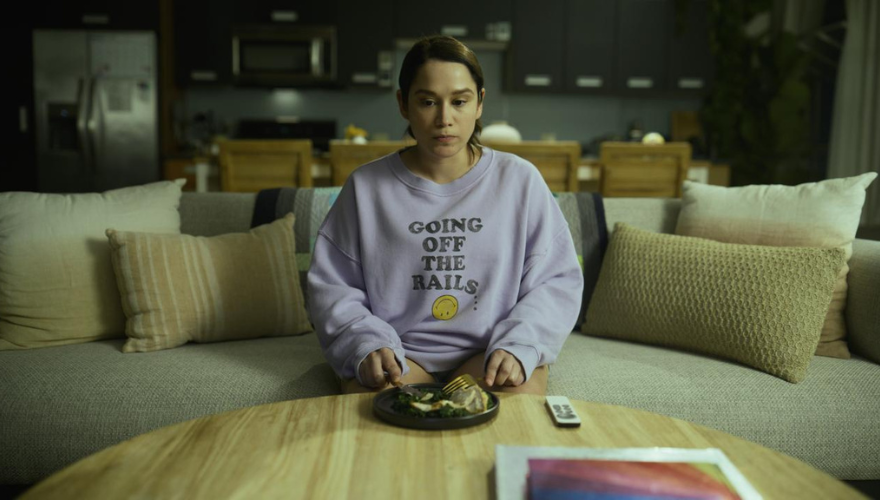
Soft Boil is the kind of short film that sneaks up on you. It is small, weird, quietly hilarious, and packed with the kind of uncomfortable comedic tension that makes you laugh first, then immediately wonder if you were supposed to. That uneasy rhythm is exactly what makes it work.
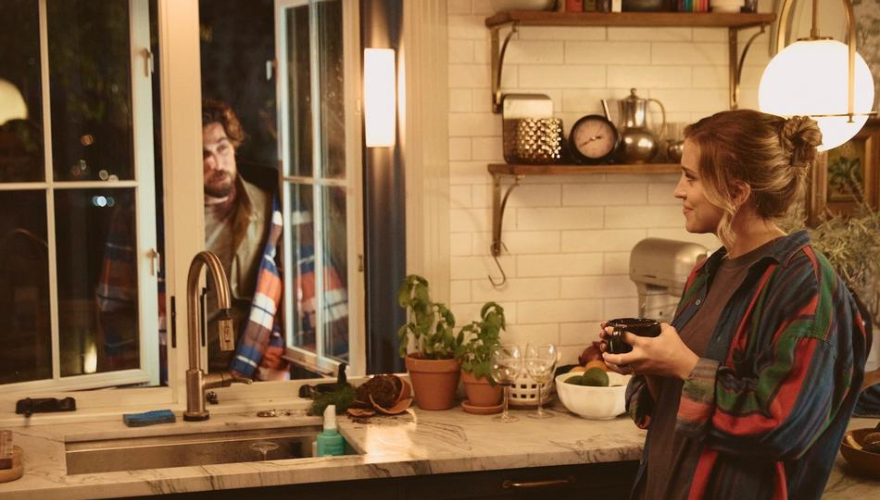
Directed, written, and produced by Alec Goldberg in collaboration with Camille Wormser, Soft Boil introduces us to Lulu, a struggling actor whose life is already in free fall when the film begins. Her relationship has just imploded after she catches her boyfriend cheating, and she responds in the most Lulu way possible, by spiraling into the kind of emotional chaos that feels both painfully real and deeply absurd.
So naturally, she decides to become a nanny.
Lulu has no qualifications, no emotional stability, and absolutely no business being responsible for children. And yet, the film smartly understands that desperation has a way of making even the worst ideas feel like survival. The setup is simple, but the execution is playful, precise, and full of offbeat charm. It is the kind of story that thrives on awkward pauses, mismatched social cues, and the creeping dread of watching someone say the wrong thing, then keep talking.
Wormser’s performance is a huge part of why Soft Boil lands as hard as it does. She has this deeply uncomfortable comic energy that makes every beat feel sharper. Lulu is not just anxious. She is anxiety personified. Every sentence feels like it is being pulled out of her against her will, like her brain is running a marathon while her body is trying to stay polite.
When I spoke with Wormser, she described Lulu as “such an anxious, strange lady,” adding that she pulled from her own experiences, but pushed the character further, like it was “on crack, on steroids.” That description is perfect because Lulu feels heightened but never fake. She is unhinged, but she is still human.
The most memorable scene comes during Lulu’s interview with the mother. It is a slow-motion car crash of a conversation, where Lulu steadily loses her composure while the mother watches with polite horror. You keep expecting the interview to end immediately, but the film smartly stretches the moment just long enough to become excruciatingly funny.
Goldberg told me his collaboration with Wormser began after they crossed paths at a film festival, where both had short films in the same program block. That sense of creative chemistry is all over Soft Boil. It feels like a project built on shared comedic instincts, where both filmmakers understand the power of restraint.
That restraint was intentional. Goldberg and Wormser explained they wanted to avoid leaning on one big reveal, instead spreading smaller comedic turns throughout the short, letting the audience stay unsettled rather than relieved.
Visually, the film is also more deliberate than you might expect. They described working with cinematographer Robin Webster to build a style that leaned into empty space and distant eyelines to enhance Lulu’s isolation. That choice works beautifully. Lulu often feels like she is trapped inside her own world, even when other people are right in front of her.
Soft Boil is women centric without ever announcing itself, and that is part of its confidence. Goldberg and Wormser cited The Worst Person in the World as a reference point, not in plot, but in its emotional honesty about growing up and falling apart while trying to appear functional.
Most importantly, Soft Boil feels like a pilot for something bigger. Wormser and Goldberg confirmed that as they kept writing, they realized Lulu is a character best explored over time. And honestly, I agree. I want this as a full episodic series, just to watch Lulu spiral through more unhinged nanny gigs.
Prime
Written and Directed by Meagan Coyle
There is a very specific kind of horror that hits harder than any masked killer or supernatural demon. It is the kind where everything looks peaceful, the people smile a little too long, and you can feel the danger in the air even when the sun is shining.
Meagan Coyle’s debut short Prime understands that kind of dread instinctively.
Screening as part of Sundance’s Midnight Shorts program, Prime follows Claire, a trauma victim who joins what appears to be a utopian farming community, only to discover she has bitten off far more than she can chew. And the film wastes no time establishing its tone. From the moment Claire steps into this seemingly idyllic environment, you can sense something is off. It is the kind of place that looks like healing, but feels like a trap.
Prime immediately brought Midsommar to mind, not because it copies its aesthetic, but because it understands the same psychological machinery. Folk horror rooted in the seductive promise of belonging. A character who is emotionally fractured. A community that offers comfort, structure, and purpose, while hiding something rotten underneath.
Only here, the horror is tied to food.
And that is what makes Prime so disturbingly clever. We are currently living in a world obsessed with wellness language, clean eating, organic labels, and moral superiority disguised as dietary discipline. The film weaponizes those everyday conversations and makes them terrifying. The most relatable moments in Prime are not the shocks, but the casual discussions about where food comes from and what it means to eat ethically. The script knows how to lure you in with familiarity before tightening the noose.
When I spoke with Coyle, she described her approach to balancing beauty and unease in a way that perfectly captures the film’s mood. “Even though we shot a lot of the film in wide open spaces, I still wanted it to feel claustrophobic,” she told me. “There’s something threatening about being in a wide-open field. I tend to feel very exposed. I also love horror that takes place during the day because there’s nowhere to hide.”
That choice is felt in every frame. Prime is bright, sunlit, and open, yet it feels suffocating. Claire is surrounded by nature, but it never feels freeing. It feels like the Earth itself is watching her.
Claire is a character shaped by grief and vulnerability, and the film never mocks her for wanting a fresh start. In fact, it makes her choices painfully understandable. Coyle explained that “grief and loss can take us to weird places,” and that when people are vulnerable, they make decisions they might not normally make. That emotional truth is the film’s anchor. Prime works because it understands that the scariest cults do not recruit confident people. They recruit the wounded.
The community’s leader, Rhea, is one of the film’s strongest creations. She is nurturing, charismatic, and quietly terrifying, the kind of person who can make control sound like compassion. Coyle mentioned she researched cult leaders extensively while writing, and even developed a detailed backstory that was shared only with the actor playing Rhea, keeping everyone else in the dark. That secrecy translates beautifully into the performance.
Prime is not just a sharp Midnight short. It is a nasty little thought experiment about morality, consumption, and the terrifying things people will justify in the name of belonging.
Crisis Actor (Short Film Jury Award: U.S. Fiction Winner)
Written and Directed by Lily Platt
Crisis Actor is a dark comedy that simultaneously entertains and unsettles. Sarah Steele plays Celine, an impulsive actress addicted to drama, who crashes a support group and spirals into a chaotic night. Platt’s sharp writing balances humor with acute observation, exploring American fascination with performance, curated victimhood, and compulsive attention seeking. It is a short that is hilarious, darkly insightful, and impeccably paced.
The Boys and the Bees (Short Film Jury Award: Nonfiction Winner)
Directed by Arielle Knight
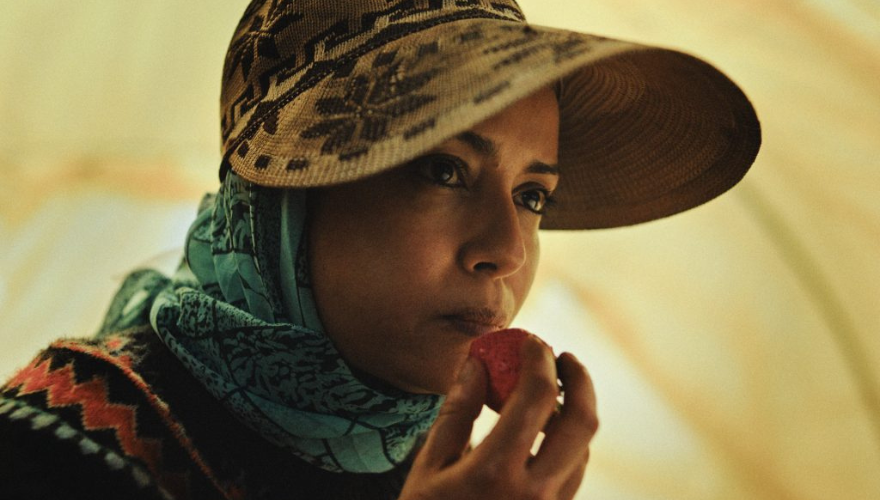
Knight’s short is an intimate and tender portrait of Black beekeeping parents in rural Georgia, teaching their sons about nature, life, and love while restoring their homestead. The film celebrates resilience, the reclamation of land, and the transmission of wisdom across generations. Watching these boys learn to handle bees with care is a quiet meditation on nurturing courage, responsibility, and connection to the land.
Still Standing
Directed by Victor Tadashi Suárez and Livia Albeck-Ripka
Still Standing examines the aftermath of the 2025 Altadena fire, exploring the invisible scars left by destruction. It focuses on residents forced to navigate contaminated homes and toxic ash, and it powerfully captures the tension between attachment and survival. The film’s intimate perspective allows the audience to feel the weight of impossible choices, and it is quietly devastating in its depiction of resilience amid loss.
Luigi
Directed by Liza Mandelup
Luigi turns a murder suspect into a canvas for collective obsession. Mandelup traces the fevered fascination of online communities that reframe, mythologize, and fantasize around Luigi Mangione. The film examines how society projects narratives onto individuals, transforming them into symbols of hope, rage, or comedy. Through letters, fantasies, and conspiracies, Luigi captures the absurd and tragic dimensions of cultural storytelling in the digital age.
This year, the Sundance Shorts Program reminded me why shorts matter. They are laboratories of experimentation, intimate snapshots of human experience, and in some cases, the first glimpse of stories that may later become full features. Watching these films and engaging with their creators was inspiring and motivating. It reaffirmed the immense value of short form cinema as both a creative proving ground and a source of artistic joy. The shorts I experienced this year were fearless, inventive, and deeply human, a testament to the future of storytelling.