

The Story Tone and the Photographic Tone with ‘Eternity’ Cinematographer Ruairí O’Brien
‘Eternity’ cinematographer Ruairí O’Brien discusses the importance of the script’s tone and visual style.
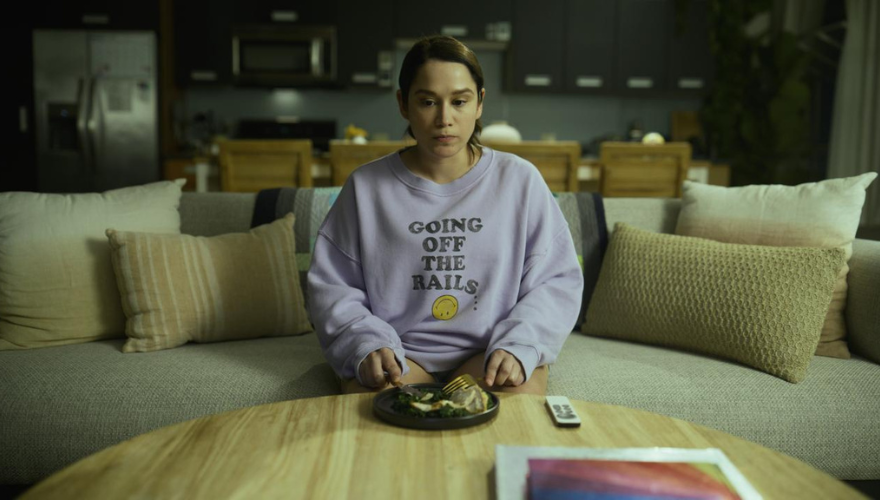
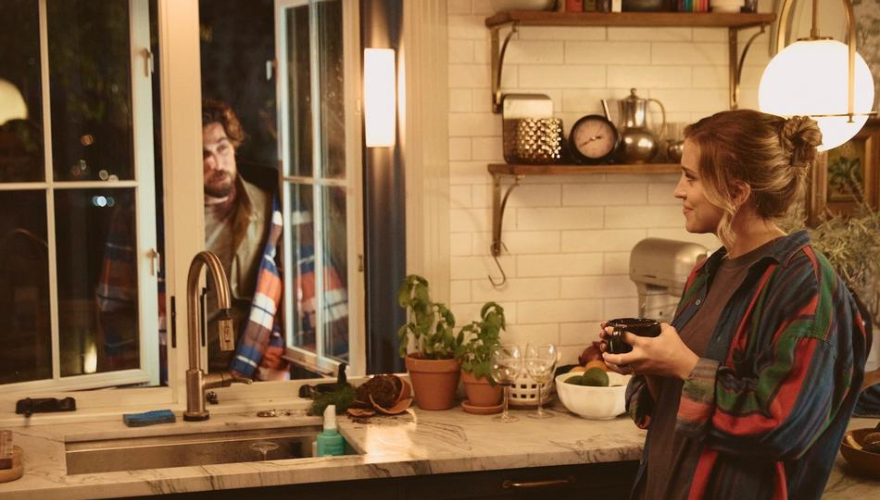
In an afterlife where souls have one week to decide where to spend eternity, Joan (Elizabeth Olsen) is faced with the impossible choice between the man she spent her life with (Miles Teller) and her first love (Callum Turner), who died young and has waited decades for her to arrive.
Eternity cinematographer Ruairí O’Brien discusses focusing on the importance of the script’s tone and visual style, his collaborative process with director and co-screenwriter David Freyne, referencing films like The Graduate and The Sound of Music for inspiration, and how they pulled off a dreamy, nostalgic feel, using digital cameras and post-production techniques to achieve a film-like look.
This interview has been edited for content and clarity.
Sadie Dean: Coming aboard this project, I know that you've collaborated with director David Freyne before, but what was it about this script in particular that you knew you had to be part of this project?
Ruairí O’Brien: I always think, there are lots of instructions on what makes a perfect piece of writing. Everyone has their theories, and you can talk about this person says that. But actually, I think you're always looking for in a writing or a piece of music or a film or poetry, is just that bit of magic that is kind of beyond description. And this is an absolute page turner, and I couldn't put it down. I read a lot of scripts, but this one just stood out. And it was funny, it was emotional, and it had a really definite tone.
I always think, for me, the problem very often comes out of uncertain tone where you're not really sure is this comedy, is this drama? But it very much knew what it was on the page, and I could see why actors had signed up to do it, why everyone wanted to make it. It just had a very definite sense of what it was setting out to do.
Sadie: There’s this wonderful nostalgic 1940s-50s softness to set this dream-like tone. What were those creative conversations to dial in the tone with other key departments, like production design and costume, to make it cohesive?
Ruairí: We had a kind of a funny process. The first thing we discussed was the tone of just the story, not the visuals. And I said to him, 'Is this a Billy Wilder film?' And he said, 'Yes, it is.' So, we were straight on the same page there. We didn't speak for a while about it, actually, because this was two years before the film got made – so, we didn't really talk about that much until the money came to it and it was happening. And then we had discussions, and he wanted me to look at some Albert Brooks films.
And then in terms of color, I said to him, ‘How do you feel about The Graduate?’ And he was like, 'The Graduate, photographically, that's kind of where my head is at.' So, we looked at The Graduate and The Sound of Music. But it was a process. It wasn't just a very direct thing of we are doing this. We discussed the story tone and the photographic tone, and out of that, everything else came. And of course, he was having other conversations with the production designer and with costume people.
So, until I landed in Vancouver, with all these separate conversations happening, which we kind of then got to finally unify, we all worked together. But again, because we were able to kind of dial in quite specific references, there's a whole beach sequence, and David was like, ‘There's an Agnes Varda film I love.’ He showed me some stuff. I was like, ‘Oh, now I get what you're doing. OK, that's great.’
So, we started there, and then from there, you kind of start to expand and develop, and you do a bit of, what if we try this? What if we try that? We didn't go all the way with the old references. We didn't want it to actually look like it was made in that time, because you want to appeal to a current audience. For example, we discussed a black and white opening, but we just know a lot of people will turn on a streamer, watch the first minute, and go 'Black and white, I'm not doing that!' Even though we love the idea, we have to sort of have a certain, I don't know, sense of reality about what would work.
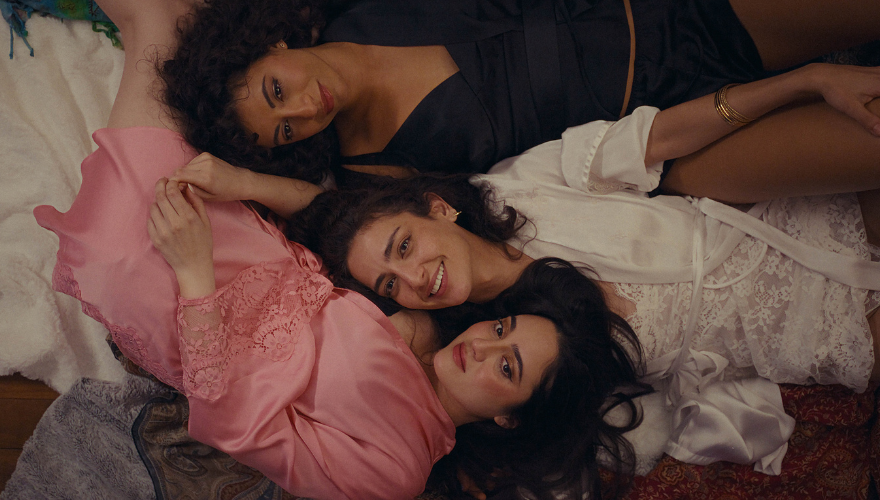
As you often do, you take something and then you just fit it to our time. So, we just took those sensibilities and updated them a little bit, but we wanted those lovely technicolor skin tones and that kind of dream like feel for our heavens. I often think modern films do this thing where heaven is full of visual effects and spectacle, whereas older films heaven can be much more just beautiful. And that's kind of what we leaned into. There is great spectacle in a huge mountain… you're not covering it in VFX sunshine.
Sadie: Yeah, there is something with just looking at a mountain and nothing else is obstructing it like VFX, there is beauty in that.
Ruairí: And in the film, the way we discover this mountain eternity, it's just to show a blue sky. We tilt and we find them, and they're marveling at the world. And I'm going, 'Wow, the sky is so blue.' Was it Aristotle… it's plot and then character... we let the plot be driven by the characters, and the characters express all the emotions. And I'm quite happy that the cinematography just holds the story. It's not trying to be smarter than the story. We weren't looking for trick shots. We worked very hard to actually keep the photography subtle in a certain way that you just think you're watching a story unfold.
Sadie: As a DP, what are you looking for in a script? Or things that you wish that writers or writer-directors didn’t write into the script?
Ruairí: Well, I always think great writing again, whether it's a script or a novel, there's always a little bit of space for your imagination… More you're told, the less you're involved.
[There’s] all these kinds of screenwriting manuals and writing instruction. It's the intangible magic that's where the real skill is just conjuring something up out of seemingly nothing. And it's what's between the lines.
I think cinematography is quite like screenwriting, in you want it to look easy. Kurt Vonnegut said, 'The reader doesn’t have to work. Don't make it hard for them.' Which I thought was really interesting. I would like people to see our film and go, 'Wow, they went to some nice locations, and they got quite lucky with the light.' Completely unaware that we're, like, pulling our hair out trying to get the light to fit in the schedule. I think all good craftsmanship is like the face of a watch. A watch took humans couple 1000 years come up with, and you just see these two hands spinning. You're not thinking about it very much, it looks effortless.
Eternity is now in Theaters.