

Kleber Mendonça Filho has always made films that feel like roaming spirits. They wander through rooms, drift down streets, and hover above people as if searching for something only memory can provide. Until a few minutes ago, my favorite Kleber films were Neighboring Sounds and Bacurau. The Secret Agent is now right up there with them, competing closely for that spot. It feels like a spiritual companion to the 2012 film Neighboring Sounds, yet it stands fully on its own. It returns to themes that run through his entire body of work: cinema as a vessel for remembrance, memory as a haunting presence, and the city as a battleground where the past refuses to remain buried.
Set in Recife in 1977, the film moves through a Brazil caught between joy and fear, a country caught in the grip of authoritarian control yet still bursting with humor, music, and an irrepressible sense of community. I have seen a fair number of Brazilian films, and very few have conveyed what it feels like to be Brazilian as vividly as this one. It is a film that is happy and sad at the same time. Every moment feels drenched in color and emotion. Despite its length, the two hours and forty minutes float by. This is cinema that breathes.
The film follows Marcelo, played with quiet intensity by Wagner Moura, a technology professor who returns to his hometown during Carnaval. His purpose is not celebratory. He is trying to escape a violent past in São Paulo and plans a dangerous departure for himself and his young son. The regime’s gaze is everywhere. The threats are constant yet invisible. Still, the film never turns into a traditional thriller. Instead, it becomes a long and deliberately calm journey through spaces that seem to bend under the weight of history.
From the first scene at a gas station, Kleber creates an impression of what I can only describe as hyper reality. Bodies fill the frame with a clarity that feels almost tactile. Surfaces seem to glow with life. Each shot lingers on textures, sounds, and presences that build tension not through obvious suspense but through the heightened awareness of simply being watched by the world. The anxiety grows not from rapid plotting but from slow accumulation. And yet it never resolves into a conventional climax. The film cares less about plot than the sensations that emerge from the places its characters inhabit.
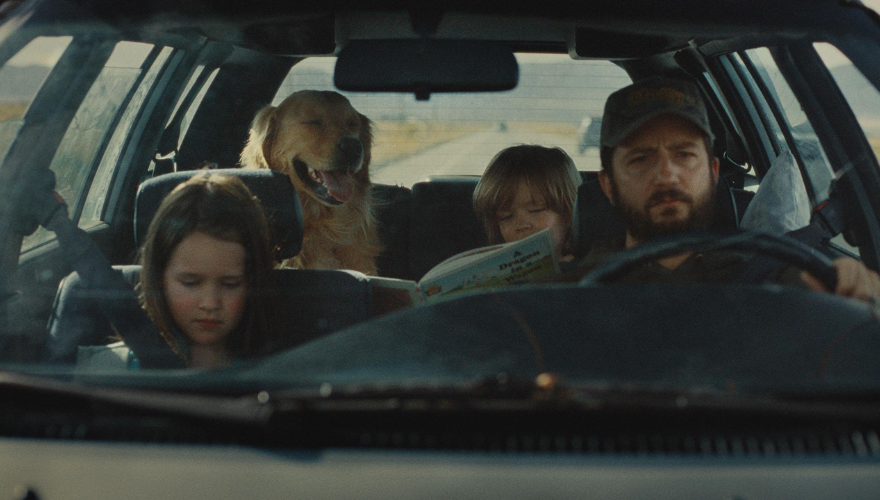
Kleber explored patient screen time in Neighboring Sounds and Aquarius, but here he refines it further. He allows scenes to stretch with tenderness. Gestures linger. Silences breathe. The scene in the car between Marcelo and his son is the heart of this approach. It contains an unguarded honesty that sits quietly between affection and fear. It is one of the most beautiful things Kleber has ever filmed.
The themes begin to dissolve into details. The political message becomes something you feel rather than something the characters articulate. It is still present, still sharp, but it moves through atmosphere rather than speeches. The film shows how the political can infiltrate daily life, not through grand events but through surfaces, sounds, and tiny emotional ruptures. In this way, The Secret Agent becomes a story about how people move through a haunted city. And it becomes clear that the true antagonist is not a single figure but a system that shapes the air around everyone.
One of the most striking structural choices is the insertion of present-day scenes. Young women listen to cassette recordings that relate directly to the events in the past. The cuts to these scenes are abrupt. They create fissures in the flow of memory. Voices echo across time. Images blur between what is remembered and what is imagined. It feels as if the film itself is being reconstructed in front of us. Cinema becomes the medium that tries to give form to stories that have been suppressed.
The camera participates in this process. It is not an objective recorder but a witness. It glides with calm curiosity, reacting to sounds and presences like a consciousness drifting through a dream. In the major shootout sequence, the camera moves between the cinema and the street with a rhythm that blends suspense with wonder. It follows the choreography of action yet never feels controlled by it. The result is an uncanny mix of precision and drift.
Even the comedy follows this wandering spirit. Moments of humor do not break the tension. They coexist with it. Dona Sebastiana, played with irresistible charm by Tânia Maria, embodies this tone perfectly. She feels both improvised and deeply lived in. She brings warmth into the story without ever diluting its melancholy. She represents the best of Brazil, a maternal force that offers refuge to the forgotten. Her kindness, especially in the scene with the injured cat, becomes a powerful statement about the people who hold communities together.
The film’s historical reconstruction is immaculate. It never leans on clichés or overplayed symbols. Instead, it finds Brazil in the music that floats through windows, in faces filled with life, in the way Recife’s streets pulse with energy even during a time of repression. The world feels intimate because Kleber films it with affection.
Many have questioned the ending, but for me it fits perfectly with the film’s internal logic. The structure behaves like an imperfect memory. Events appear fractured. Emotions bleed into time. The past does not unfold cleanly. The idea that crucial moments remain unseen is consistent with a film about a country that often refuses to confront its own ghosts. The revelation of Marcelo’s fate through a black and white newspaper photo is devastating in its restraint. Wagner Moura’s character, so alive in memory, becomes one more grainy image lost to time. It echoes the final notes of Ivan’s Childhood, where the collision between fantasy and reality marks the tragedy of forgetting.
This contrast between the warmth of the past and the starkness of the present becomes increasingly clear. The present has no music. No softness. No spectral glow. It is cold and unmediated. When Marcelo’s son casually mentions that the hospital was once a movie theater, the film reveals its final layer. Memory survives where people have the courage to keep looking. Cities remember. Cinema remembers. Even when people do not.
For all its ambitious structure, The Secret Agent remains grounded by its performances. Wagner Moura is phenomenal. He carries a quiet sadness that never turns sentimental. He is magnetic and vulnerable at the same time. Tânia Maria is unforgettable. And the ensemble around them brings Brazil to life with sincerity and affection.
Kleber Mendonça Filho has made a film that feels at once political, personal, and deeply cinematic. It is a thriller that resists the conventions of thrillers. It is a memory piece that refuses to be clean. It is a love letter to Recife and to the people who try to preserve their identity in a world eager to erase them. The film left me moved, shaken, and grateful. A great film with strong ideas, solid execution, incredible actors, perfect characterization, and a director who knows exactly what he is doing.
The Secret Agent is now in Theaters.