

The Discernment of Filmmaking: Kleber Mendonça Filho Discusses ‘The Secret Agent’
Kleber Mendonça Filho discusses his writing process, how he went from film critic to filmmaker and his love for American cinema.
Writer/director Kleber Mendonça Filho (Pictures of Ghosts, Bacurau) doesn’t believe in rushing the creative process and his latest film The Secret Agent is a good example of the time and care he puts into his projects. “I allow myself enough time to think about what needs to be in the film and most importantly to listen to the film,” he recently told Script Magazine. “The film itself tells me what it wants and what it doesn’t want. If you show a lack of respect for what the film is trying to tell you, it’s not a good thing.”
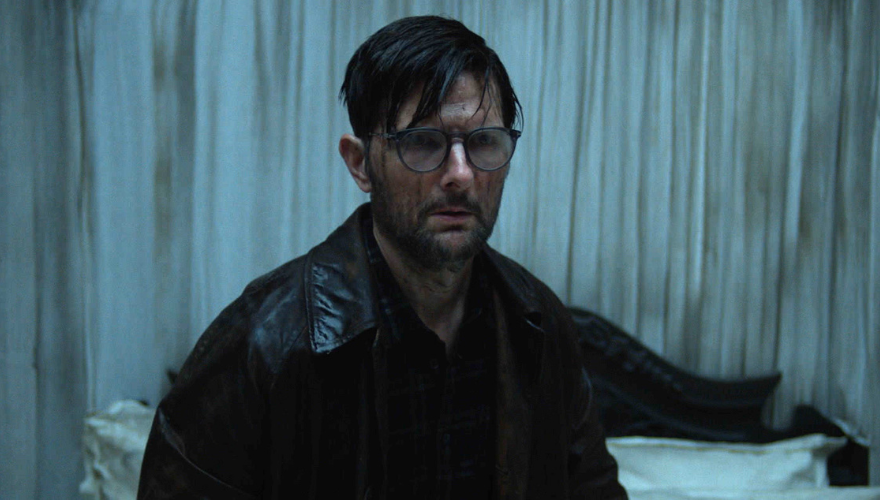
Thriller The Secret Agent, like 2024’s critical sensation and Oscar nominee I’m Still Here, addresses the military dictatorship that ruled Brazil for over two decades, from the mid-60s to the mid-80s. Filho’s The Secret Agent doesn’t hit you over the head about the volatile time of censorship, unmitigated violence, and government corruption, but weaves a pragmatic journey spearheaded by Brazil native Wagner Moura’s (Dope Thief, Civil War) Marcelo/Armando as he connects with others in his situation in Recife. Filho was born in this region and currently lives there, so he has intimate knowledge of it. The period of “mischief” covered is something Filho considers to be associated with a subgenre that threads through Brazilian, Argentinian, and Chilean cinema.
Kleber Mendonça Filho: Platoon and Full Metal Jacket. In the late 70s, Apocalypse Now and The Deer Hunter…all of those films became a subgenre of American cinema. The same thing applies to the dictatorship film. I think it’s an interesting play of words to announce a very dramatic time in my country by calling it a time of mischief and hopefully watching the film you will understand the historical aspect of that time, the reconstruction of a certain period, and the logic of that period, which was essentially very violent, very corrupt, But, maybe because of that, also full of affection, love, and great people trying to help each other.
A Critical Eye
Sonya Alexander: You recently won the Director Award from the Critics Choice Association. How did that make you feel?
Kleber: It made me feel good because it was from the Latino community. I felt included and that’s a great feeling. Many years ago I worked as a journalist and a film critic. At best, I try to be a part of what cinema is by trying to understand it. As a film critic I tried to understand what society is trying to tell us through cinema. I’m not only talking about Godard and intellectually minded films. When you see a romantic comedy, you’re getting ideas about human behavior, the state of society, or the state of capitalism. Maybe even the emotional state of where we are as a society.
Sonya: What nuances of Brazilian culture are you trying to convey in your films?
Kleber: I think I come from a country….where people live their lives like in so many other countries. Of course we’re separated by cultural differences. This is normal. But I really think that once you see a film from whatever country…it could be South Korea, could be Brazil…I think there’s a good chance we are establishing a connection. I grew up, for instance, watching U.S. films and when I came to the U.S. for the very first time in 1991, it really felt like the whole place was familiar because I had been introduced by cinema. I really want to see films from all over the world not being alien to anyone anymore. We have the technical ability to see films from anywhere. Optimistically, I think this is happening. In a more pessimistic way, I think we still have a very long way to go, but I’m happy to see The Secret Agent being released in the U.S. and in 94 other countries.
Sonya: What are some of your favorite U.S. films?
Kleber: One of my favorite films is Rear Window by Alfred Hitchcock. I also love McCabe & Mrs. Miller by Robert Altman. I love a film from that same era and the same cinematographer called Close Encounters of the Third Kind by Steven Spielberg. I think these are three wonderful films that were made in the U.S.
Sonya: How did you transition from being a film critic to a director?
Kleber: Very slowly. During the years I was working as a film critic, at the same time I was experimenting with short films. The short films slowly started to gain traction and they began to draw a lot of attention. When I wrote my first feature, it naturally felt like my work as a film critic was coming to an end. I also had grown a little tired. It was a lot of work, watching five, sometimes seven films a week. Each film two hours. Writing about them. Interviews. I regret nothing. It was one of the best, most constructive periods of my life, but the transition finally happened on a Friday. I quit my job as a film critic and on Saturday I began pre-production on Neighboring Sounds.
The Process
Sonya: The Secret Agent is so detailed. Did you have any say in the set design, costumes, and music?
Kleber: It’s all part of a lot of work. I think a film like this is developed for at least two years. I think the whole thing is probably three years. So, a long and difficult time writing the script. I love filmmaking but the scriptwriting is probably the toughest part.
Sonya: Why?
Kleber: It’s a time full of self-doubt. You might have a full week where you’re not productive. But I have come to understand that a week or two without getting anything written down is also two weeks where you were thinking about the story. Maybe it’s part of the process. But it does bring you down a little bit when you go home for the fourth day without really having written anything good. But on the other hand, when the film begins to write itself, which is one of the most amazing moments, it’s gold.
The writing process brings about many ideas about the setting, the music, the places where I want to shoot because I know my city very well. I thought I knew where to put the camera and many of those places proved to be effective for the film. A lot of it comes from writing, taking photos, listening to music, and dreaming that maybe this or that piece of music can be in the film. But you only know by giving yourself time and confirming in the editing process, which is the second toughest part of the process.
Sonya: Would you ever do an all-English film?
Kleber: Of course. It’s all a question of finding the right material and I’d need final cut. I wouldn’t do a director-for-hire kind of project. I would love to find something not too big to do in the U.S. or maybe France. I’m fascinated by American cinema. It’s part of who I am.
The Secret Agent has already been nominated for numerous awards, including being nominated for the Palm d’Or at Cannes, where Filho won Best Director. The cast includes professional actors as well as first-time actors. “I love to mix the ‘professionally trained’ actors and actresses with the non-professionals. I’ve been very lucky because the professional people I’ve been working with in so many films, the latest being Wagner Moura, are usually very generous people,” says Filho. Wagner Moura, Maria Fernanda Cândido, Alice Carvalho, Gabriel Leone, Carlos Francisco, and Udo Kier star.
The Secret Agent, a Neon film, will open in New York theaters on November 26 and in Los Angeles on December 5.

Sonya Alexander started off her career training to be a talent agent. She eventually realized she was meant to be on the creative end and has been writing ever since. As a freelance writer she’s written screenplays, covered film, television, music and video games and done academic writing. She’s also been a script reader for over twenty years. She's a member of the African American Film Critics Association and currently resides in Los Angeles.