

UNDERSTANDING SCREENWRITING: The Gang’s All Here: Alan and Nicholas, Ralph and Sir Edward, Elphaba and Glinda, Henryk and Hedda, Frances and Albert, Robert, Nick and Nora, and of course Asta
The films that all those refer to are: ‘The Choral,’ ‘Wicked: For Good,’ ‘Hedda,’ ‘The Thin Man,’ ‘After the Thin Man,’ and ‘The Thin Man Goes Home’.
A Gem.
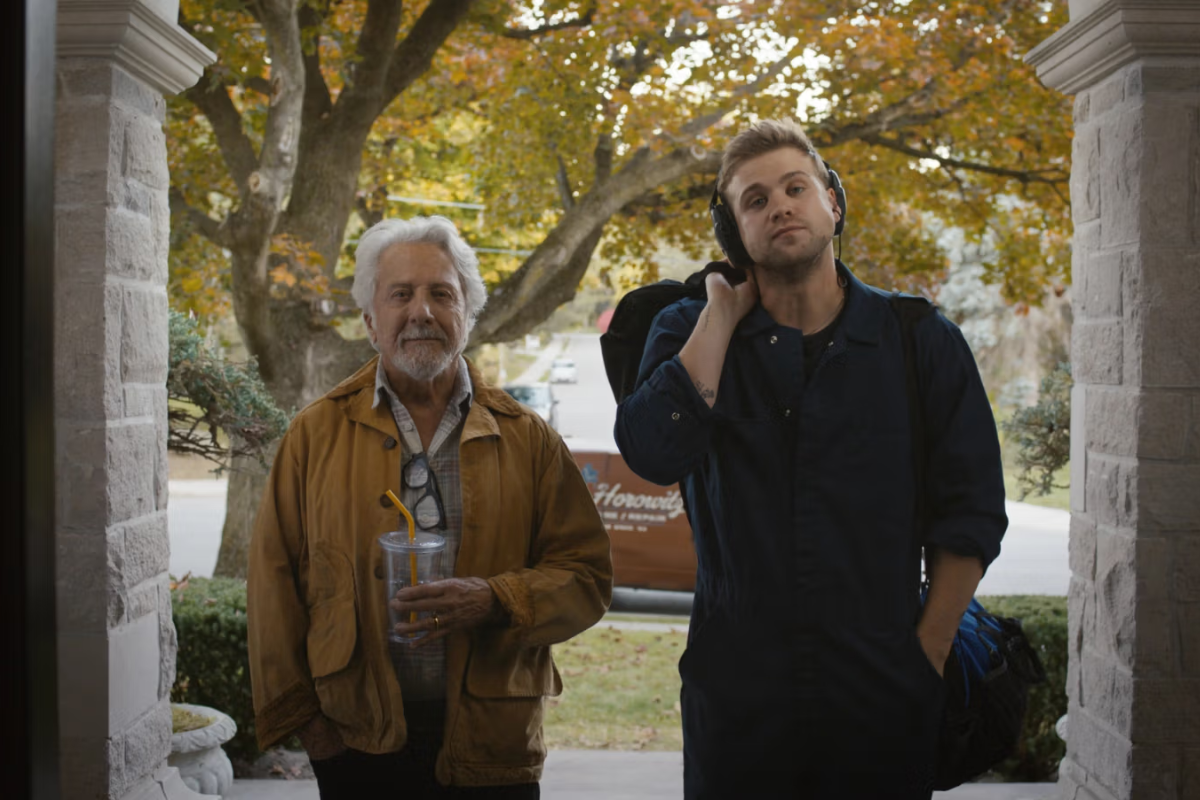
The Choral (2025. Written by Alan Bennett. 113 minutes)
Alan Bennett is now 91 years old. And you think only young people can write good screenplays. Bennett first came to public notice in the 1960 review Beyond the Fringe, which was such a success at the Edinburgh Festival it was produced in London and later New York. Including Bennett, the cast of four consisted of Dudley Moore and Peter Cook, who went on to act in films, and Jonathan Miller who went on to direct plays on the London stage.
Bennett started writing plays both for the stage and for television. You may be most familiar with the film versions of his stage hits The Madness of King George (1994) and This History Boys (2006), both of which were directed by Nicholas Hytner, who directs The Choral.
In other words, this whole film, including its wonderful cast, is strictly His Majesty’s First Team. And it shows.
I mentioned in my review in last month’s column that Wake Up Dead Man: A Knives Out Mystery that Rian Johnson opens the film with a short dialogue scene. Bennett is a little more cinematic. It is 1916 and we are in a town in Bennett’s native Yorkshire, England. The opening scene has a young man in the GPO (General Post Office) uniform on a bicycle delivering telegrams to local women. Look at how little dialogue Bennett needs to let us know that these are telegrams telling the women of the loss of their husbands, sons, and lovers in the Great War. The GPO boy has a friend who makes snarky comments, and we see other people in town reacting to both boys. By the time this scene is over, we know everything we need to know about this town, its inhabitants, and their attitudes. If you see this film, and you should, make sure you get into it at the beginning so you can study this sequence.
Then the story begins. The local choral society is losing its conductor, who has decided to enlist. The committee (a group of some of the finest character actors in England) finally decides, reluctantly, to hire Dr. Henry Guthrie. Reluctantly, because he recently spent several years studying music in… Germany. (In case you were absent that day in history class, Britain and Germany were enemies in World War I.)
Guthrie realizes the choral, with a lot of its men in the army, cannot bring off the piece that they had planned to do. You know how I beat you over the head about the importance of reaction shots? The audition scenes are a master class of what a writer, director and star (Ralph Fiennes) can do with simple but very nuanced reaction shots.
Given the animosity toward Germany and German composers, Guthrie decides to replace the scheduled piece by one of the then-living British composer Sir Edward Elgar. They get permission from Elgar to play his piece. One of the choir members writes to Elgar inviting him to come.
So you know what’s going to happen, right? Elgar will come, he will be upset at the lack of professionalism and won over by the sincerity of the chorus.
Not a freaking chance, kiddies. Elgar, played by one of the greatest British actors, Simon Russell Beale, arrives and is warm hearted and charming. He is enthusiastic, until he realizes they are singing the oratorio in modern dress, including military uniforms, with wounded soldiers as extras. He storms out. Study this scene, watch it several times to see how precisely Bennett, Hytner, and Beale balance the shifts in Elgar’s attitude.
Elgar leaves, but the performance continues. The audience is moved. You think this is the end? Nope, Bennett then shows us the boys who did sing in the performance getting ready to go off to war. I was not sure as I was watching this section of the film if it was needed, but finally I trusted Bennett’s judgment at including it. Especially since it includes the funniest scene in the movie, something that may have come from Bennett’s Beyond the Fringe days.
Not Quite as Good as the Party of the First Part.
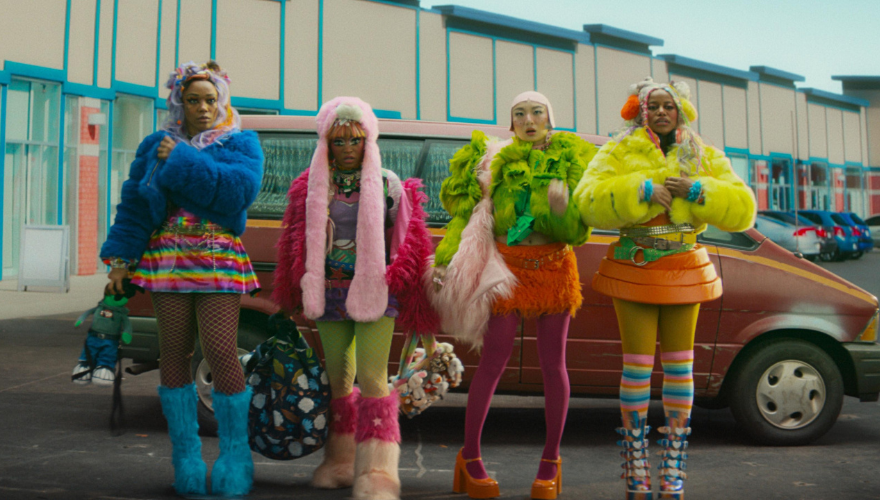
Wicked: For Good (2025. Screenplay by Winnie Holzman and Dana Fox, based on the musical stage play book by Winnie Holzman, based on the novel by Gregory Maguire, and (uncredited) based on characters created by L. Frank Baum. 137 minutes)
You may remember that, in spite of my not being crazy about The Wizard of Oz (1939) I loved the first film of last year’s Wicked. You can read my review of that here. It was fun and very lively.
The second part slows down. It is 23 minutes shorter, but it seems longer. Unlike its older sister, it drags more than a little. The balance between the flashy group musical numbers and the more intimate moments between Elphaba and Glinda is off. There are less of the former and more of the latter. Some people have complained about this film being darker than the first. I do not think that is the problem. Yes, this part is darker, but that is inherent in the story. The problem I think is that we get too many smaller scenes, either of the two women alone or together. Those scenes are less compelling in film terms. Cynthia Erivo and Ariana Grande are still good, but the material limits how much they can do.
The film does get off to a rousing start, with Elphaba on her broomstick in a very Wicked Witch mood dive bombing the workers trying to build the yellow brick road. (Given the current president’s desire to cover everything with gold, the scene is a bit creepy.) Then we get into the character scenes, and I know it will surprise you to see me object to too many character scenes, but here they are simply not as cinematic as the first film.
There is one great flashy scene in the middle of the film. Elphaba is determined to upset Glinda’s wedding to Fiyero, whom Elphaba loves. So Elphaba sets loose a whole lot of animals. You have probably been to a few weddings where something goes wrong. This scene is the liveliest in the film, and the ultimate something-went-wrong-with-the-wedding scene.
Ultimately everything works out, although some of the mechanics of who dies and who lives is, at least for a little while, unclear. But generally it is a happy ending. And Glinda finally claims her rightful title as The Good Witch.
Oh, if some of you are wondering if a Judy Garland look-alike shows up as Dorothy, don’t worry. I love the way this film handles Dorothy, including a comment by one character that is way too good for me to give away here. I have some standards.
Nice Try.
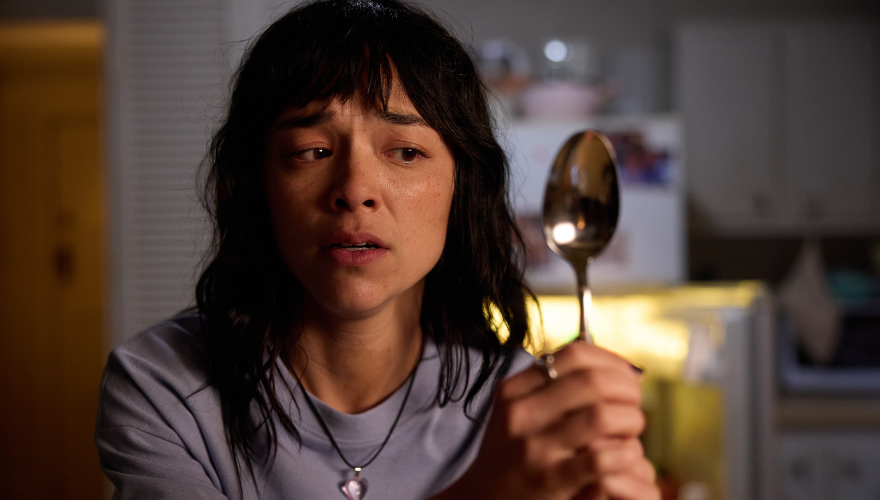
Hedda (2025. Screenplay by Nia DaCosta, based on the play Hedda Gabler by Henrik Ibsen. 107 minutes)
It was an interesting idea. DaCosta takes Ibsen’s 1890 play and sets it in 1950s upper class England. Well, both societies were rather closed off and you can see why a smart woman like Hedda Gabler felt constrained by the rules. She marries George Tesman, a rather bland academic whom she does not love. They live in a big house they cannot afford. George is working on a book that he hopes will give him a good teaching position. Hedda is working behind the scenes to help. She throws a big party which is not seen in the play, but the film combines what in the play are several different scenes from several different times, and puts them during the party. That pretty much works, although occasionally you can feel DaCosta sweating to make it happen.
So who shows up at the party but Hedda’s former lover Eilert, a former colleague of George, who has had one successful book and has now written another. He is also after the position Geroge is up for. Hedda, who was in love with Eilert, figures she can help George. Manuscripts are burned, and in standard theatre theory, the guns we see in the opening scene are fired by the end of the play.
DaCosta has made a very interesting change. Eilert is now Eileen and is still a former lover of Hedda. This gives Nina Hoss a chance to chew a lot of scenery as Eileen.
Hedda Gabler has been played by a long, long list of great female actors. I would give a partial list, but you can look it up for yourself. Taylor Swift has not yet played her, but she’s young yet. DaCosta’s choice (she is also the director) is the terrific actor Tessa Thompson, whom I have liked in a lot of other things. She is a great choice for the part.
The problem with the film is that while the script is good, DaCosta has directed Thompson and all the other actors to play it as stiff, upper class Brits. Everybody loosens up in the later, more emotional scenes, but by then the damage is done; we have just not gotten into the film emotionally.
Three Skinny Guys.
The Thin Man (1934. Screenplay by Albert Hackett and Frances Goodrich, based the novel by Dashiell Hammett. 91 minutes). After the Thin Man (1936. Screenplay by Albert Hackett and Frances Goodrich, from the story by Dashiell Hammett. 112 minutes). The Thin Man Goes Home (1944, Screenplay by Robert Riskin and Dwight Taylor, from an original story by Robert Riskin and Harry Kurnitz, based on the characters created by Dashiell Hammett. 100 minutes.)
At MGM in the thirties, the screenwriting process was focused on writing scripts for specific stars. At 20th Century-Fox, the emphasis was on getting a good story that could be cast with either Tyrone Power or Henry Fonda or Dana Andrews. At MGM if you were writing a script for Garbo it was only for Garbo. If you were writing for Joan Crawford, it was not a script you would put Garbo in. Try to imagine Crawford in Camille (1936) and you see what I mean.
In the 1934 MGM film Manhattan Melodrama starring Clark Gable there is a scene where Gable’s Blackie, a gangster, sends his girl friend Eleanor (played by Myrna Loy, who was not yet a big star) to tell his childhood friend Joe, now a lawyer (William Powell, whom producer David O. Selznick had to fight to get cast in the part because everybody at the studio thought Powell’s career was over) that Blackie will be late for a meeting. Loy gets in the car and she and Powell play a conventional scene.
From the moment she gets in the car, the chemistry between Powell and Loy is instantaneous. The bosses at MGM were smart enough to see it and they quickly put the couple in a low budget adaptation of Dashiell Hammett’s novel The Thin Man.
Probably because the picture was low budget ($231,000) recent newcomers to the studio, the married team of Albert Hackett and Frances Goodrich, were assigned to write the script). The Hammett novel is focused on the mysterious disappearance and murder of a scientist. What Goodrich and Hackett did was develop the relationship of the retired detective Nick Charles and his rich wife Nora. The couple is one of the few happily married couples in films, then and now, and the Hackett/Goodrich dialogue is not only very funny but great character dialogue. And perfect for Powell and Loy.
The director assigned to the film was W.S. Van Dyke, also known as One-Take Van Dyke. He shot the film in anywhere from 15 to 18 days, depending on what source you read. It was rushed into release, was an instant hit, and even before all the money came in the studio was planning a second film. And, thinking like the studio, they kept the band together. The producer was Hunt Stromberg, Van Dyke the director, and Goodrich and Hackett wrote it. And the budget went up to $673,000. It was After the Thin Man.
The sets in the first film were very small and cheap, but the great cinematographer James Wong Howe covered the limitations of the sets with wonderful pre-film-noir film noir cinematography. The sets in the second film are much more typically thirties MGM lavilsh, and Wong Howe was replaced by the adequate Oliver T. Marsh. The picture is also 21 minutes longer, and longer is not better.
This one starts out with a long, way too long, set of New Year’s Eve scenes that have some of the Nick and Nora banter but are overcome by the sets and the extras. There is also a repeated gag with Charles dog, Asta, from the first film. Nick is taking him for a walk and we see the leash stop at each light poll in the first film, and stopping at pillars in a building in the second.
Hackett and Goodrich have added more suspects and more complications to the plot. Both films have a standard finishing sequence where Nick gathers all the suspects together and figures out who the murderer is.
Many people assumed that Hammett’s version of Nick and Nora in the book were based on him and his relationship with author Lillian Hellman, but their relationship was much darker than the Nick and Nora Goodrich and Hackett came up with. They based Nick and Nora in their scripts on their own marriage. When their nephew David L. Goodrich wrote his excellent 2001 biography of the couple, he titled it The Real Nick and Nora: Frances Goodrich and Albert Hackett, Writers of Stage and Screen Classic.
Goodrich and Hackett got tired of writing Nick and Nora very quickly. They found themselves running out of clever dialogue to write for the couple. At the end of After the Thin Man, they wrote a cute scene in which we learn Nora is pregnant. They did that, hoping it would mean the end of the series, or at the least they would not be asked to write a third one. They were and they did and then they were through with Nick and Nora.
Hackett and Goodrich went on to write It’s a Wonderful Life (1946: they hated the material, hated Capra, and hated the film), Easter Parade (1948), Father of the Bride (1950), and Seven Brides of Seven Brothers (1954). And then they wrote the Pulitzer Prize winning stage play The Diary of Anne Frank (1955).
By the time of the fifth film in the series, The Thin Man Goes Home, Hunt Stromberg was no longer the producer, Woody Van Dyke had died (he committed suicide when he learned he had cancer), and they needed new writers.
Fortunately the producer was Everett Riskin, the brother of the author of several of the great Frank Capra movies of the thirties, Robert Riskin. Everett twisted his brother’s arm and brought him onto the project. Robert was not enthused about the project. Partly he felt he could not write the kind of Nick and Nora banter Goodrich and Hackett had done. But by then it was 1942 and World War II had started. Like many people in Hollywood, he wanted to contribute to the war effort, so his heart was not interested in writing a comedy-mystery.
On the surface Robert should have the perfect screenwriter for the story he and Harry Kurnitz came up with. In this film Nick and Nora go back to Nick’s home town to visit his small town parents. Riskin had written, among other films, Mr. Deeds Goes to Town (1936), which makes fun of small town folks and big city folks alike.
The Thin Man Goes Home is not a terrible movie. Riskin’s touch is good at setting up the town, all of whose citizens assume Nick is there on a case. Sycamore Springs, however, is not Cabot Cove and only one murder takes place, although there are, as usual, plenty of suspects.
The acting is good, and Powell and Loy are great as usual, even if Riskin’s work is not at his best.
Tom Stempel is a Professor Emeritus at Los Angeles City College, where he taught film history and screenwriting from 1971 to 2011. He has written six books on film, five of them about screen and television writing. You can learn more about his books here. His 2008 book Understanding Screenwriting: Learning from Good, Not-Quite-So- Good, and Bad Screenplays evolved into this column. The column first appeared in 2008 at the blog The House Next Door, then at Slant, and then Creative Screenwriting before it found its forever home at Script.
In the column he reviews movies and television from the standpoint of screenwriting. He looks at new movies, old movies, and television movies and shows, as well as writing occasional other items, such as appreciations of screenwriters who have passed away, plays based on films, books on screenwriting and screenwriters, and other sundries.
In September 2023 Tom Stempel was awarded the inaugural Lifetime Achievement in the Service of Screenwriting Research by the international organization the Screenwriting Research Network.