

Emotional Payback and Personal Satisfaction with ‘The Paper’ Co-Showrunners and Creators Greg Daniels and Michael Koman
Greg Daniels and Michael Koman explore the state of journalism through mockumentary style filmmaking, focusing on the theme of truthfulness, character development, and hiring writer-performers to enhance the writing process.
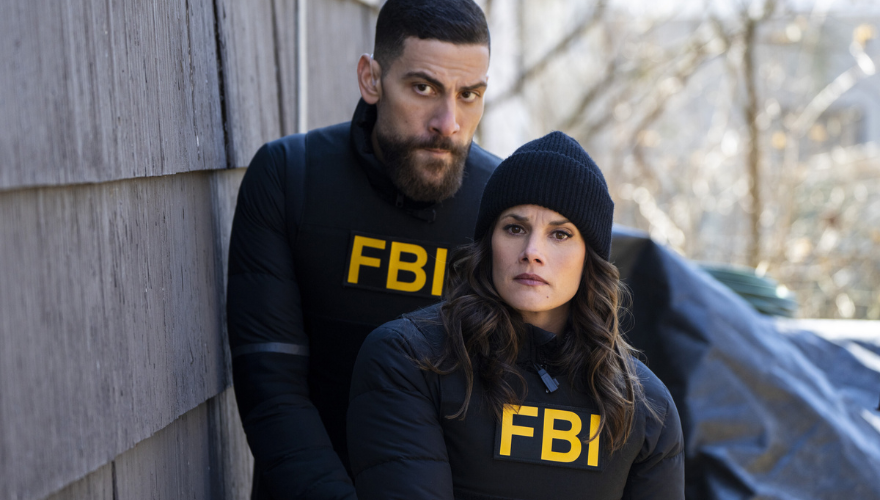
After giving us a behind the scenes look at what happened at Dunder Mifflin in The Office and small-town Pawnee’s Park and Recreation department, our favorite and oh-so dependable documentary crew is back focusing on a new ragtag group of self-made journalists in The Paper. Created in the spirit of its successors, The Paper charges the way unearthing stories and presenting, hopefully, the facts and nothing but the truth. That sentiment also percolates down from the enthusiastic leadership from their new editor Ned Sampson (Domhnall Gleeson), who in spite of given minimal resources, makes a huge impact on the newspaper and on his team.
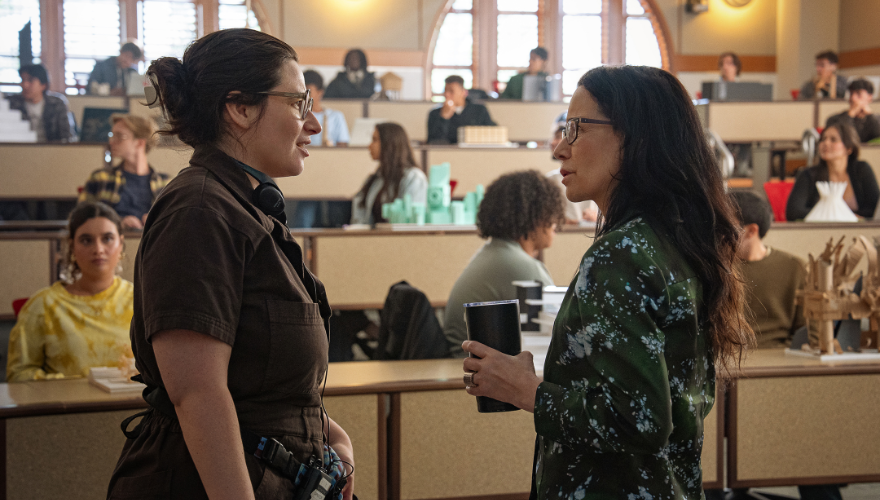
Co-creators and showrunners Greg Daniels (The Office, Parks and Recreation) and Michael Koman (Nathan for You), spoke with Script about how they explore the state of journalism through mockumentary style filmmaking, focusing on the theme of truthfulness, the importance of character development, particularly Esmaralda’s evolution, and the benefit of brining on writer-performers to enhance the show’s writing process.
This interview has been edited for content and clarity.
Sadie Dean: Lets’ start from the beginning - the creation and the development of the show. What came first? Was it characters or the newspaper?
Greg Daniels: My thinking followed some of the same paths that it did in doing Parks and Recreation, which is OK, there already exists a mockumentary about the minutia of office life in The Office, if you were the documentary crew, what would you want to do that wasn't repetitive?
So, the Parks and Recreation documentary crew decided to look at government, because the way government works is different from a private company. And in this instance, the mockumentary crew was pursuing what happens in this paper company of Dunder Mifflin and they discover that it's been bought by a larger company that also has newspapers and toilet paper and other objects made of paper, and they're not very respectful of the newspaper part of the business. And it looks to that documentary crew as, oh, this would be a cool way to talk about journalism and the state of journalism in America.
For us as comedy writers, to have something that feels real and feels interesting, as what the documentary crew is chasing, kind of sets the tone for where our jokes are coming from, what the characters are doing, what kind of people inhabit the world. And so that was the germ of it.
Sadie: Is this documentary crew from The Office?
Greg: Yeah... some of the original camera operators retired or something like that. But I mean, the idea is it's the same sensibility, and it's the same people, and they found a new story.
Sadie: Breaking the first season, was there an overall thematic anchor?
Michael Koman: Well, certainly. It seems almost obvious to say it, but just the concept of truthfulness. And our main character is coming into this with the hope of revitalizing a newspaper that's kind of drifted away from the real mandate of high-quality journalism, like in the search of clicks... to sustain itself in a digital age, and I think he's trying to correct that.
And at the same time, I think it makes you examine his own relationship with the truth and honesty with himself. And I think that that hopefully is true of all the relationships in the show on one level or another. I think if there's one thing that unifies what's happening and what the documentary crew would want to be following, it would be that theme...
Greg: It's really good theme for a doc crew, because one of the most fun parts of a mockumentary is the fact that the characters have an agenda that may be something they don't want out there, whether it's their romantic life or some corner they cut at work or whatever. And the doc crew sees a lot of stuff that... we're not even aware that they're being observed on.
And so, when the doc crew is asking them stuff, and they're lying and the crew can show the B roll of what actually happened, that's a really fun part of it. So, for the characters to be talking about truth professionally all the time, and then maybe hiding some of their own little peccadillos is fun.
Michael: This also relates to your first question, but that to me, is like, when you ask why a documentary style show? What I really like about this style of show is that there's a moment where the documentary crew would notice something and find it interesting and feel there's a story here and why would they pursue that? So that, I think was to me, the exciting thing in the first episode, was feeling like they would genuinely notice that this was here, that there's something about it that's timely and developing, and that they would choose to pursue it.
Greg: Also, there's something about the research that we did in things that are happening in journalism, and how you could possibly turn it around for a newspaper. And the point is made often in journalism textbooks that the activity of journalism is a human need that goes back to the dawn of social living, of like finding out what other people are up to and how it affects you, and stuff like that - that's never going away.
And the business organization of how you make money as a place that and have enough money to do that really thoroughly and responsibly and properly, so that you're not spreading misinformation... you're doing your research - like that's a whole a whole other question. And our characters, for the most part, he doesn't have the money to hire actual reporters, so it's really this story of citizen journalists, which is also supposed to be kind of inspiring, I think, and in the sense that OK, if newspapers do fail, somebody has to take it up and hold people accountable.
Sadie: It’s wholesome and that he just loves his work so much and what he does, but he’s also trying to help, not only his coworkers, but also the community at large.
Greg: That was also partly because, in doing a spin-off of The Office, not wanting to recreate Michael Scott. So, the boss, in this case, is pretty inspirational, actually. Like, if you listen to what he says, he's not sticking his foot in his mouth all the time. I mean, the only problem is he's seriously underpowered to achieve what he's going for. [laughs] So there's a different area for comedy.
Michael: Also, I felt like The Office did such an amazing job of covering a very common kind of work. Just the sense of work that doesn't really pay you back what you put into it, and that you have to find that satisfaction in other areas of your life. And it felt like, well, if that same crew was going to cover another kind of workplace, I think that they would want to find a different type of work, something that does actually give you some sort of emotional payback and provide you with actual personal satisfaction for the hope of it, which is something that exists, [laughs] it's just not as common.
Greg: I've had both types of jobs - jobs where you're just there and you're like, 'Ugh, I'm clocking in.' And then other jobs where you're like, 'Oh, wouldn't it be cool if we did this!' and people are staying late... What's interesting about all the times that we've talked to journalists who are in the middle of the situation, we're also in the middle of the situation a bit in Hollywood, like there's less production now, and everybody's very anxious about AI taking jobs away. And everybody's talking about how does the business model work, and streaming, post streaming, like all these different things and yet, the doing of it is an exciting adventure.
When you start a new TV show and you assemble all these people to work on it, and everybody's excited to get the chance to do what they trained for... there is something in the air that's very inspirational.
Sadie: I'm sure, for both of you as showrunners, being able to pull other people up the ladder with you, and mentor and just make sure everyone's doing their best… makes this show sing.
Greg: Yeah, that was one of the best parts of sort of planting your flag and saying you're doing an Office spin off, is that it did attract a lot of people who love the original show and had a certain spirit to it and wanted to participate.
Michael: One of the things that I genuinely envy about Greg is just how many people have started under him that have then launched their own careers and wonderful careers. And it's true with any staff, just the people who... when you hire someone and you're excited about them, and then getting to watch them develop, and then hopefully start their own projects or do their own thing, and having left more confident than when they arrived is a pretty cool perk of this.
Sadie: That is cool. Greg, I feel like you have like hundreds of children out there that are not biologically yours of course, that you’re very proud of.
Greg: Yeah… it's called the coaching tree. Have you ever heard that?
Sadie: No.
Greg: There was something that just ran online, something about different shows coaching trees. And I guess what that means is... I think they were talking about how Vince Gilligan came from The X Files, they were saying, 'Well, X Files actually produced a whole bunch of great other writers.' And it was an interesting thing. They went through a bunch of different coaching trees. And The Office coaching tree produced a lot of great writers.
Sadie: Your writer's room, which is phenomenal, what kind voices that you were looking for to really round out the show, while also finding writers who are also performers on the show, like the incredibly talented Gbemisola [Ikumelo]?
Greg: I love doing that. And to me, one of the things that was the most influential in my sensibility was Monty Python. And Monty Python are all writer performers. And there is a thing where... and I did that with actually, with King of the Hill, I hired Johnny Hardwick, was my first hire there, who played the voice of Dale and was a stand up and the first hire at The Office was BJ Novak, and I hired him as a writer performer. And you have to say up front that you're going to do that, because SAG is not happy if you just take writers and convert them into performers. So, you have to hire them as writer performers from the get-go.
And a lot of it was just enjoying the fact that it puts your writers into the cast, and they learn everything that the cast is concerned with and bring it back to the writers' room. So, there's less of a big distinction between the two groups, and they kind of work together more.
But everybody was first hired because their spec scripts were insanely funny. Eric Rahill, for instance, insanely funny spec script. And same with Mo [Welch]. And Bemi was somebody who her acting on League of Their Own was so great, and then to find out that she also had created like three shows in the UK on her own was terrific. And so, we hired her for that.
Michael: One thing that's really great about it, I think, on just a practical level, is when you walk to the set and there's this little, tiny divide sometimes when you talk to actors... I'm always a little scared that I'm going to say something that bothers them [laughs]... and with writers, you don't worry about that as much. You're already talking to them all the time, and it's just a little more casual. And the fact that it's even mixed in in the environment, I just feel like, puts everybody on a much more relaxed level where we're all just making something together, we're going to be in the other room, and we're going to be talking about how the scene works. And then now that we're doing it, it's just much more practical, and I love that so much.
Greg: They've heard everything. The writer performers know exactly why everything was pitched, and they heard the alternatives that weren't as successful when we gamed them out. There's so much work done generating way, way, way more than we ever use, and then sort of testing it and going 'that doesn't lead this direction.' They're aware of that. And I'm assuming that if the cast who aren't in the writers' room are like, 'I don't understand this scene' or whatever, that right next to them is somebody who can go, 'oh, well here, this is the deal.' So, I do think it makes it for a better end product.
Sadie: Great characters on this show, but the stand out for me is Sabrina’s [Impacciatore] character, Esmeralda. There are so many directions you could have gone with her and made her a total stereotype, but at the core, she is such a lovable character. Once you brought Sabrina on board, how much did she help inform those character decisions?
Michael: Well, that's certainly a character that just evolved a lot from the original script to having cast Sabrina and seeing how she performed the character, and feeling like, 'that's the character now.' She had a huge part in just sort of defining what that character is. And I think with certain people, you're trying to write in a way that allows them to perform the way that they are able to. You want the part to be interesting for the actor when they're really dynamic. And she has a real gift for, I think, for improvising, and also, she just has this fantastic instinct to want to take things to extremes where, like she doesn't care how she looks... she's never concerned like, 'that people will think that I, Sabrina, am not a nice person, or that this isn't an attractive thing to do.' I don't think she ever thinks about that. She just wants to perform something in a way that is the maximum.
That instinct in her, I think, kind of then drifts into the character and how the character behaves, and it becomes this combination that to me, it makes her very fun to write for. And in a way, it's a little scary, because I get scared sometimes taking scripts to Sabrina, because my biggest fear is that she'll say it's boring... she never says no to something because it's insane, or that it makes the character seem not super attractive, or something like, that's never a problem. She just wants to do something new and interesting and big, in the sense of a choice - she wants the character to make strong choices. To me, it's still a character that I don't think has been nearly fully explored in terms of her life and what's going on in her head.
Greg: Yeah, we're doing a lot more in season two to explore her backstory. But she did show up and be an entire person and be so funny that it changed the character. And part of what is a concern for her is the innocence of the character. And so, we started off with the character's role in the play, which is to resist what the more noble lead is proposing.
And so, she was like a source of conflict, and she really wanted to probably because of an instinct of being the lead in a lot of other things that she had in the past, but she was like, 'I want to make sure that this person is not an evil person. This is a person who has a strong survival instinct. And when pushed, just reflexively lashes out.'
She had all these interesting rules as to how to preserve her innocence. And I think that as we wrote more and more, she got to play a lot of different colors. I don't think people look at her as the antagonist so much now - she's just a really interesting person.
Michael: I would say one of the biggest changes was that originally, I think she probably was thought of as more of a somebody who schemes and plans ahead and the way Sabrina is, and I think the way she approached the character, which I hadn't thought of, is like, 'Oh, she doesn't really make long range plans. She does spontaneously what she thinks of in that moment.' And if it's not working, she just immediately makes a right turn and does something else and forgets about that and has no shame about what she was trying to do a second ago. And now it's another thing. It was a nice, like childish quality, where it has much more to do with a kind of instant response to fear and desire and whatever makes her happy. I like the character more that way.
Greg: It's interesting, also, when you're in a writers' room, you have to kind of bring your conception of the character and then explain it verbally, so the other writers go, 'Well, who is this person?' We have a writer, Amanda [Rosenberg], she identified Esmeralda as being like her mom and so did another writer, Ben [Philippe] - they both kind of glommed on to the sort of immigrant mom vibe. And then they would also talk about internalized misogyny. There was certain things that were going through their heads. They were grappling, trying to figure out, how is this person funny?
And then, Sabrina comes in, and I don't know what she's using as a person from where she is and her age and everything, but she just inhabited a very lighter, funnier version of absorbing all of the negativity of the character and just turning it into sort of forgivable quirks of a larger character that was more human, and that was a good add.
The Paper Season One is now streaming on Peacock.