

‘The Drama’ Review
Love, Lies, and the Thin Line Between Knowing and Not Knowing
It is difficult to talk about The Drama without circling around its central revelation, not because the film is built on shock value, but because everything that follows matters far more than the event itself. Kristoffer Borgli understands that relationships are not undone by a single moment, but by the way that moment reshapes perception. What we think we know about someone. What we choose to ignore. What we cannot unsee once it is spoken out loud.
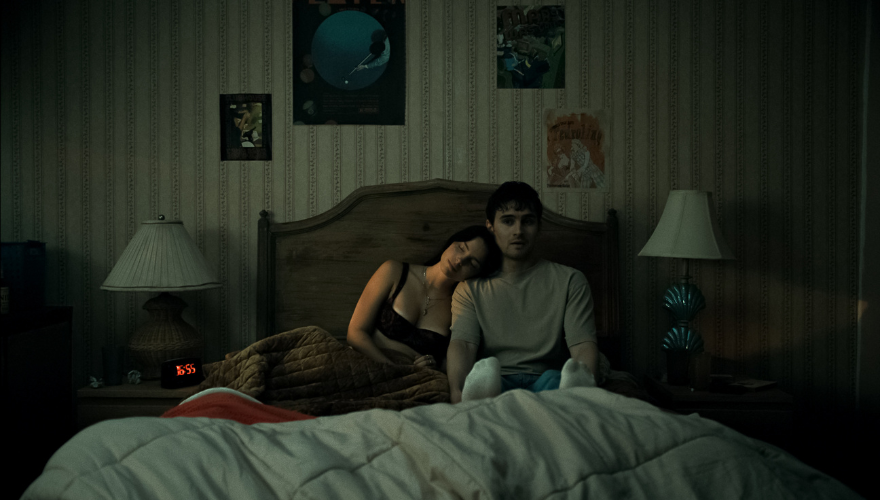
At its core, this is a film about a relationship imploding in real time. Messy, painful, and at moments almost unbearable to sit through. Borgli takes a seemingly familiar setup, a happily engaged couple in the final stretch before their wedding, and slowly pushes it toward something far more unsettling. The shift is not abrupt so much as inevitable. A casual conversation, a simple question asked among friends, and suddenly the ground beneath these characters begins to give way.
From that point on, the film lives in a space of sustained discomfort. It asks primal questions that feel almost too intimate to confront directly. What are you thinking. How are you feeling. What have we done to each other. What will we do next. These are not questions that the film answers neatly. Instead, it lets them linger, creating a tension that builds scene by scene.
Zendaya and Robert Pattinson carry the film with performances that feel raw and fully exposed. There is no safety net here. Every reaction, every hesitation, every shift in tone lands with weight. Zendaya in particular is extraordinary, navigating a character who is forced to process something that cannot be easily categorized or dismissed. Pattinson matches her intensity, bringing a mix of vulnerability and defensiveness that keeps the dynamic between them constantly in motion. Watching the two of them share the screen becomes the film’s central engine. It is not just about what is said, but about what is left unsaid, what is implied, and what is quietly breaking beneath the surface.
Borgli has always been drawn to discomfort, but here he pushes it further than before. The film begins in a place of almost exaggerated normalcy. There is humor, warmth, even a slightly heightened sense of romantic idealism. Then, almost without warning, that tone begins to fracture. What follows is a progression of unease that feels both controlled and unpredictable. The film moves between drama and dark comedy with a precision that keeps the audience off balance. One moment invites laughter, the next leaves you squirming in your seat.
What makes this tonal balancing act work is Borgli’s refusal to simplify his characters. No one here exists in a purely sympathetic or condemnable space. Instead, the film operates in a moral gray area that forces the audience to constantly reassess their own reactions. You may find yourself empathizing with a character in one moment, only to question that empathy in the next. That instability is very much the point. The Drama is not interested in telling you how to feel. It is interested in making you aware of how quickly those feelings can change.
The film’s exploration of perception is what ultimately sets it apart. It is less about the truth of what happened and more about how that truth is received. How much does the past define a person. Can someone grow beyond their worst moment. And perhaps most importantly, do we even want to know the full truth about the people we love. These questions hang over every interaction, creating a sense of unease that never fully dissipates.
There is a particular kind of secondhand discomfort that the film leans into with remarkable effectiveness. Conversations stretch just a little too long. Silences feel just a little too heavy. You can sense the characters searching for the right words and failing to find them. It creates an experience that feels uncomfortably real, as though you are witnessing something private that you were never meant to see.
Visually, the film is striking in a way that feels both deliberate and unobtrusive. Borgli’s control over the frame is evident in every scene. The compositions are clean but never sterile, often placing characters in spaces that subtly reinforce their emotional isolation. Even in moments of apparent intimacy, there is a sense of distance that lingers. The cinematography works in tandem with the performances, amplifying the tension without drawing attention away from it.
The editing and sound design further enhance this atmosphere. The pacing is measured, allowing scenes to breathe just enough for the discomfort to take hold. There is no rush to move past awkward moments or emotional confrontations. Instead, the film sits with them, letting the weight of each interaction settle. The sound design is equally precise, using subtle cues to heighten tension without ever feeling intrusive. Together, these elements create a viewing experience that feels immersive and at times almost suffocating.
What is particularly compelling is how the film refuses to offer easy resolution. There is no clear moral conclusion, no definitive statement about right or wrong. The ambiguity is intentional, and it lingers long after the film ends. You are left to sit with your own interpretation, to decide how you would respond in a similar situation. It is a bold choice, one that will undoubtedly divide audiences. Some will appreciate the openness, while others may find it frustrating.
That divisiveness feels almost inevitable. This is not a film designed to comfort. It is designed to provoke, to challenge, and at times to unsettle. There are moments that push the boundaries of what feels acceptable, both emotionally and thematically. Yet even at its most disturbing, the film never feels gratuitous. The discomfort serves a purpose, forcing the audience to engage with questions that are often easier to avoid.
There is also a surprising amount of humor woven throughout, though it is rarely the kind that invites easy laughter. Instead, it emerges from the absurdity of the situation and the awkwardness of human behavior. Borgli has a sharp eye for the small, uncomfortable details that define social interactions, and he uses them to create moments that are both funny and deeply unsettling. It is a delicate balance, but one that the film maintains with confidence.
If there is a criticism to be made, it lies in how relentless the experience can feel. The film rarely offers a moment of relief, and for some viewers, that intensity may become exhausting. There are points where the narrative seems less interested in progression and more focused on sustaining a particular emotional state. While that approach is effective, it can also make the film feel slightly overextended.
Still, it is difficult not to admire the sheer audacity of what Borgli has created. This is a filmmaker who is clearly uninterested in playing it safe. The Drama takes a familiar premise and pushes it into territory that feels both uncomfortable and necessary. It is a film that trusts its audience to engage with complexity, to sit with ambiguity, and to grapple with questions that do not have easy answers.
Zendaya and Pattinson elevate the material at every turn, delivering performances that are as compelling as they are emotionally draining. Their chemistry grounds the film even as it ventures into darker territory, providing a sense of continuity amid the chaos. It is the kind of acting that draws you in completely, making it impossible to look away even when you might want to.
In the end, The Drama lives up to its title in the most uncompromising way. It is brutal, beautifully crafted, and emotionally exhausting. More than that, it is the kind of film that invites conversation. Not just about its story, but about the ideas it raises and the reactions it provokes.
How well do you really know someone. Do you want to know everything about them. And if you did, would it change how you feel.
Borgli does not answer these questions. He simply asks them, and lets them echo long after the screen goes dark.
The A24 release, The Drama, hits Theaters on April 3, 2026.