

Oliver Laxe’s Sirāt is a film that I walked into completely blind. No trailers. No advance knowledge. No expectations. I let it take over, and for stretches of its runtime, it absolutely did. It pulled me into its rhythm, its soundscape, its sense of danger, and its strange spiritual energy. At its best, it feels otherworldly. At its worst, it feels hollow and ethically confused. What stayed with me most was not a story so much as a physical sensation of being shaken, disoriented, and left unsure of what I had just been asked to feel.
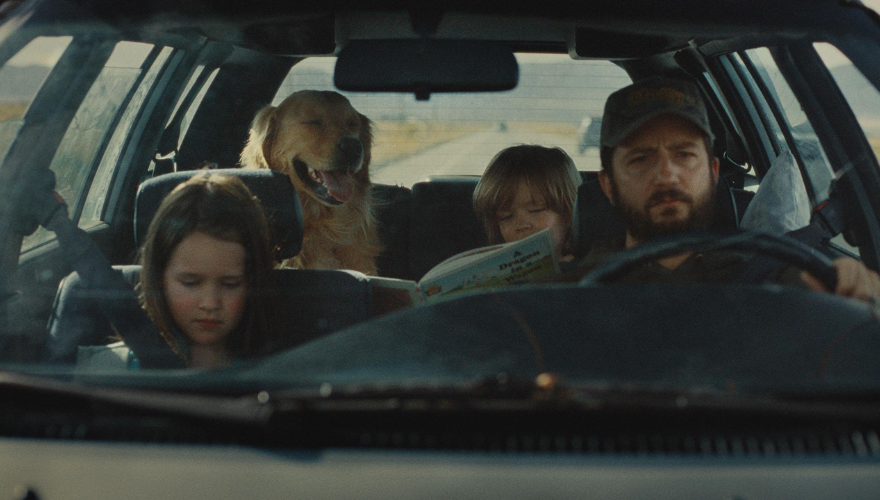
The central setup is deceptively simple. A father and son arrive at a rave in the mountains of Morocco while searching for their missing daughter and sister. They decide to follow a group of ravers toward another gathering deeper in the desert. That is the spine of the film, but what grows around it is far stranger. I was engaged and invested in these characters despite their minimal development, and the aesthetic use of EDM music is unlike anything I have seen in a film. It leans into the trance like and spiritually evocative character that rave culture values so deeply. These are people who go into the desert, take drugs, and dance to the vibrating pulse of a drum for hours in search of an ecstatic loss of self. The film quietly asks what happens if that loss begins to become real.
There are very bold choices here. Choices that will absolutely alienate many viewers. And yet, this film crushed a small part of my heart at unexpected moments. It transported me somewhere that felt genuinely new. It repeatedly made surprising choices. Then it pulled me back down to earth with a final image that feels cold, detached, and strangely moralizing. If anyone plans to see this film, it must be in a theater with a serious sound system. The music is not a background element. It is the bloodstream of the film.
Visually, the night sequences are breathtaking. The trucks moving through the darkness feel like submarines sinking into deep water, reinforcing the sense that the characters are fragile bodies drifting into something vast and indifferent. The foot thumping electronic music turns the desert into a battlefield of sound and rhythm. At times it felt like a warped cousin of Mad Max: Fury Road, not in spectacle but in momentum. The camera and the sound design take you for a ride that feels physical rather than intellectual.
This is where my admiration begins to fracture. I knew very little about the Western Saharan conflict before watching the film. The movie itself offers almost no real context, and that absence pushed me into a research spiral afterward. Reading, watching, and learning more made the setting feel less daring and more deeply troubling. The way the Sahara is treated here feels like a sensationalist and Eurocentric canvas. By placing its story inside such a politically fraught region and refusing to meaningfully engage with that reality, the film creates a strange moral vacuum.
The Western Saharan conflict exists in the real world as something painful, urgent, and unresolved, yet the film treats the land as if it were an empty stage designed purely for mood and danger. We hear vague references to borders, distant war, radio chatter, and global unrest, but none of it is given shape, history, or consequence. This refusal to contextualize a real conflict makes the desert feel like a stylistic prop instead of a lived space. The danger becomes abstract. The history disappears.
That choice feels deliberate, and it becomes one of the most unsettling aspects of the film. It is difficult to ignore how the absence of context flattens real human suffering into background texture. A place of genuine political pain is transformed into an aesthetic backdrop for a story about ravers. If a story could take place anywhere, yet is placed inside a conflict zone without engaging with that conflict, it begins to feel like a colonial exercise. There are references to borders, distant war, and a vague global collapse, but they feel intentionally obscured. The desert becomes a sandbox rather than a reality.
The casting of marginalized and disabled actors is something I genuinely respect. These are faces and bodies we rarely see in cinema. But I kept asking myself what the film actually does with them. Are they fully realized people, or are they symbols, textures, images? It often felt like the latter. Vulnerable characters are not given dignity or depth. They feel used for impact rather than honored with complexity. I love that Laxe gave these actors space on screen. I just wish he had given them more humanity on the page.
I do not mind a film that hurts me. I can sit with discomfort. I can sit with cruelty. But there has to be meaning behind it. Here, I often felt that the film hurt me simply because it could. Not because it had something coherent to express. It felt like provocation for its own sake. A stylish act of emotional violence without the philosophical backbone to justify it.
And yet, I cannot dismiss the experience. The dance sequences are extraordinary. The sound design is breathtaking. Some scenes hit me in the chest. It felt less like watching and more like living alongside these characters at certain points. The desert has rarely felt so alive on screen. There is evil energy here, undeniable and potent.
By the end, I was left conflicted. There is a version of this film that feels like a genuine political and spiritual reckoning. What we get instead feels like an aesthetic triumph trapped inside a morally confused shell. It fascinated me. It angered me. It haunted me for a few days. And now, strangely, it is already starting to fade.
I respect the ambition. I admire the craft. I question the soul. That, in itself, might be the most honest reaction I can have to Sirāt.