

Rebellion from the Tragedy: A Conversation with ‘Sorry, Baby’ Filmmaker Eva Victor
Eva Victor discusses their non-linear writing process, rewriting process, and the emotional impact the film had on them creatively and personally.
Something bad happened to Agnes. But life goes on... for everyone around her, at least. When a beloved friend visits on the brink of a major milestone, Agnes starts to realize just how stuck she’s been, and begins to work through how to move forward.
The films that feel the most silent, tend be the ones that are the loudest. Eva Victor’s Sorry, Baby is a quiet, gentle ride dealing with such an incredibly emotionally turbulent subject matter. And I think that’s one of the many qualities of the film that gives it so much power. It’s not overly talkie, it’s not trying to be clever with the camera – it’s allowing the space and the silence in between hold its own. Kind of how we get lost in our own thoughts – either it be daydreaming or recounting an event or what someone said to us over, and over, and over again.
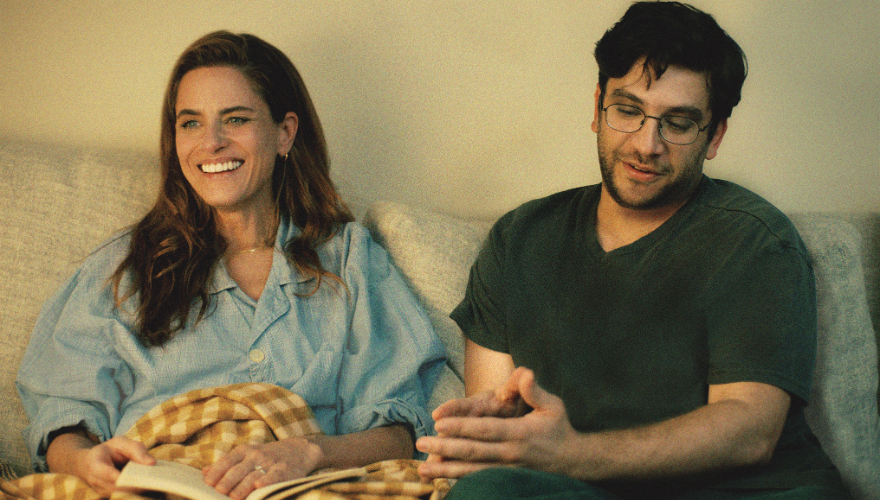
Which brings me to another point – you can rewatch this film and pick up or out something that was subtle that also, once again, carries so much power. Be it a glance between best friends Agnes and Lydie or a gentle touch of the hand for reassurance (and countless many other instances that, hey, just go watch the film to experience for yourself).
For budding filmmakers and screenwriters, there are many lessons to be learned from Eva Victor’s approach. For instance, the opening shot – it’s an invitation. It sets the tone. The mood. The loneliness. The stillness. To her writing approach of not showing, but telling, and the profound impact of that.
Eva Victor, who both wrote, directed and stars in the film discussed with Script their non-linear writing process, the opening shot of the film’s impact, she describes her rewriting process, the rewards of writing and the emotional impact the film had on them creatively and personally.
This interview has been edited for content and clarity.
Sadie Dean: That opening shot of the house in the movie perfectly sets the tone, the isolation of it all. For me, that composition was chef's kiss.
Eva Victor: Thank you so much. It was hard to convince people, not everyone, but it was hard to convince people that that was the opening shot of the film, because... before the score came in, it kind of leaned horror. And I was OK with that. I thought the length of the shot was a way to invite people into a film with a certain pace, and it felt like the appropriate metaphor for what Agnes is going through. And I think Lia's [Ouyang Rusli] score was something that kind of bridged the gap, and... the score kind of took it from horror to a little bit more whimsical. But thank you, I'm proud of the shot, and I am glad it's the opening shot of the film, and it always was in my head. It just took some convincing.
Sadie: It works. The writing process, what initially came first to you? Was it this character, this experience?
Eva: I wrote a short story for my eyes only, because I'm not a short story writer about Agnes and Lydie and their friendship and the depth of that, and the love in that. And that was, I think the reason I wanted to write the film was this really deep friendship that sort of waxes and wanes, but is the good force in a hard time. So that relationship was always the main relationship of the film, and was the reason I wanted to go into it, into writing about this experience.
I felt the idea was a little skittish - if I came at it really hard, maybe it would run away, or it would disappoint me so much that I would run away from it or something. And so, it took some time really thinking about how the film wanted to live, how I wanted it to feel, how I wanted it to look and be, and what scenes were in the film before I actually sat down to write.
And I think it was breaking the structure of the film, like the chapters, and starting in the present, then going back in time, that allowed me to sort of open in my mind to what the film wanted to be, and the container of the film, which was these five years. So, once I did that, writing each chapter felt less daunting, and that was sort of what took me from idea to actually being able to write was understanding how the structure supported wanting to talk about a friendship and loneliness and not about violence itself.
Sadie: When you were writing out the chapters, were you doing it in that in a nonlinear fashion, or were you writing it linearly?
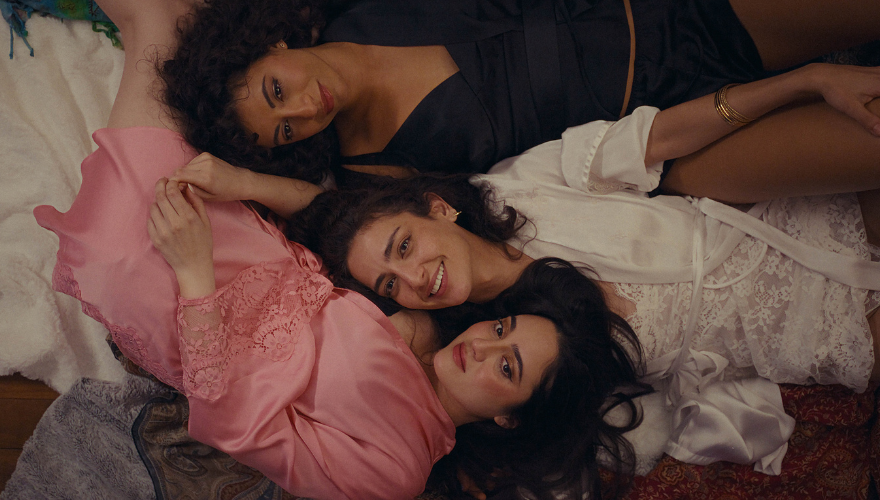
Eva: I think the first thing I wrote was Agnes telling Lydie what happened in the bathtub. That was the first scene I wrote. Then I was like, 'Whoa' [laughs] and then walked away from it for a little bit. I think I did after that, write in the order of the film, not the chronological order. I think the next thing I wrote was Lydie’s arrival, and their weekend together. Because I did want the film to start with a burst of joy, and after writing this really sad scene, like a very dramatic scene in the tub, it's like, well, what's the counterbalance to this? Where's their joy? Where's their rebellion from the tragedy? And that is their relationship and their love for each other and the closeness they have and the support.
So, I think I wrote everything in the order of what I outlined, which is not chronological, but I think I wrote the baby scene last too. But I knew it was coming. I had thought about it a lot. It was just like sitting down to write things could only happen once I understood what was before it.
But then again you rewrite... I think my rewriting process on that script was not so linear, It wasn't like, 'OK, that's a draft now we're doing a rewrite.' It was constantly combing, constantly trying to figure out what to take out, to put in. It was much more of a collecting and uncovering than, like, 'OK draft four,' you know. I was all by myself. It was just me constantly checking in about what felt true, what didn't serve the greater purpose of the project. And then coming out of that being like, what do I have? What do I have left? [laughs]
Sadie: The writing process. It's a thing, and it takes up your life, but hopefully it's all worth it at the end of the day.
Eva: [laughs] It's a wild ride. It's like you're deciding to look at your soul and see everything that you hate about it. [laughs] It's totally scary and it's totally fucked up. [laughs] It's really wild to write something. You meet so many people who have ideas, and it's like, 'Yeah, of course you have ideas. That's not the scary part.' The scary part is trying to make the idea into something that is real and is there in front of you. And that's the devastating part, because your dream of it doesn't match what you create, at least at first. And that's the pain.
And then the reward is on the other side of the pain, which is getting to make the thing you want to make, but it takes so much. It's always interesting. I feel like I'm often in conversations with men who want to write but haven't even started, and I'm like, 'I don't know how to help you. That's your fucking private life with your soul. I can't be the one. It's you!'
Sadie: Yeah, it's not your job.
Eva: No, it's not. But it makes me mad, it makes me like, 'Come on!' Like, I just want to shake people sometimes. But then again, I have a lot of trouble writing. So, what are you going to do? [laughs]
Sadie: [laughs] What are you going to do? Another element that specifically stood out to me that I really enjoyed was your choice in not showing the assault, and instead are telling us about it. There’s that screenwriting rule of show don’t tell, but in this case, this decision felt so much more powerful, and showing the aftermath of it.
Eva: I feel like show, don't tell is so true. But in the telling, you can show something different than what you show if you show the violence. Like I'm showing the care, not the violence, but telling about the violence. It's an interesting question, 'Show, don't tell.' Everyone always says that specific is more universal. But then that sentiment itself has become so vague. It's so interesting what we say. [laughs]
Sadie: Was there ever any pushback from other collaborators of not showing the assault?
Eva: Luckily, that part of the film, I didn't get pushed back on because I feel like if people liked the film, they liked that I didn't show that. If you understood the script, you understood why that part of the film exists. I had an experience where my editor, the first time he read it, he read one version, and then a second version, and he was like, 'You took out the part where we go inside.' And I was like, 'Well, no, that was never written.' And he was like, 'Whoa, I'm so, so sorry.' And I was like, 'No, that's fine.’ That's very interesting, how we can paint images in our head very clearly. Thankfully, everyone who made the film understood why we weren't going inside of the house. And I was always adamant about that being an important moment in the film.
Sadie: The emotional journey these characters are going on, more so Agnes and when she reports what happened to her. There's two scenes specifically, where she has the consultation with the doctor, and then the women at the school, and I couldn’t help but think, how does this character restrain herself from not just decking these people? There is something so great about that restraint though. And then there’s that catharsis in the jury duty scene where she’s finally heard, seen, and understood.
Eva: It's interesting, because... there were moments in my writing process where I had to check in, is that true to at least my experience? I feel like... there is this real desire... you kind of want her to fucking deck the women, or whatever. [laughs] And I really understand that. And have I ever done anything like that? No. Have I internalized everything anyone's ever told me? Yes. So, it's like, OK, well, what's true?
Sadly, in a different film, I think also, it's tonally different if we're in like a revenge fantasy, or if we're in like a more wish fulfillment world, or if we're in a more connected to reality and disappointing world, which is what I chose to do. And there was a moment in my writing process where she goes and gets lighter fluid, and she goes to his office and lights it on fire - there was a draft like that. And obviously the fire was meek, and she doesn't know the light of fire. So that part wasn't never going to be this blazing thing.
But I remember waking up the next day after writing that and being like, 'Yeah, fucking right. You would never fucking light someone's office on fire, like you'd see that in a movie.' It would be amazing. It would feel probably amazing... But then I was like, you never get resolution like that. And is that what you crave? No, what you crave, ultimately, is what she says when she's at jury duty, which is, 'I don't want him to go to jail, because he'd just be a guy who does that, who's now in jail.'
Resolution and peace comes for her from the idea of rehabilitation, from the idea of accountability. And our world is really not set up to give space for someone to rehabilitate, for someone to be accountable and then not be destroyed. So, these scenes are actually meant to sort of like show Agnes' attempt at finding community, finding a path to healing through the institutional systems that are offered to us, and then the obvious failure of those systems. And that part of the movie is of a run of a few scenes that are disappointing, because we have to get them out of the way, because systems have always failed us, institutions have always protected themselves, not us.
So, the film, ultimately, isn't about institutional failure, of course it is. But it's about the people who do hold you, who are not set up through business and capitalism, basically. So those things are disappointing and that's not where care lives ultimately.
Sadie: As a a multi-hyphenate: writer, director, actor - what was maybe the biggest challenge, or maybe the biggest happy surprise that you encountered during this journey?
Eva: Totally. Things are really difficult in just the making of something, but the thing that sticks with you is the most difficult, the stuff that's been most emotionally difficult. And I did have an experience in the edit - in production, you have so much adrenaline, you're so excited and scared, but you're excited to get to do the thing you've been planning for so long. And I came in really prepared and really excited to do just this.
And so, it was only once I got to the edit, which started a week after we ended the shoot. When you shoot something, you see, like, individual setups, and you do a take, and things are split up. And so, your job as an actor is to understand how they're going to piece together and not lose the energy in between things.
But from an emotional standpoint, you only have to do things in a chunk. And so once I got to the edit and saw everything strung together, I had this really intense experience of, like, ego death, I want to say [laughs] just feeling really confused about how my body was up there, how I was sitting here right now, how sad the story was, how vulnerable I felt being someone who shared that. And it took a couple of weeks for me to process that that wasn't me, and that that was a character that I created, because while I was doing it, I felt like someone else. So that was emotionally difficult.
Luckily, the beautiful thing about the edit is you're surrounded by genius math nerds who are interested in puzzle making. And you have time, and you're in a dark room, so it's good for processing. And I think the thing I was the most excited slash relieved by, was I really loved directing the film and acting in the film. I never directed before, and I never directed in anything with this much to do or as the main role. And I was so happy that I thought the two actually went really well together. I was talking Paul Rudd, and he was like, 'Directing and acting is the same. It's the same thing you’re just doing something kind of different.' And I was like, ‘Exactly!’ I feel like I haven't been able to vocalize that, which is that my job as a director was to tell Agnes' a story as efficiently and thoughtfully as possible, and my job as an actor was to do that too. I'm using a different part of my brain to see something, but I am advocating for the same person no matter what my job is, and I felt really supported. And obviously, if I'm doing three jobs, someone else is doing more jobs than what they're meant to do. So, it really is this community effort, particularly from my producers and my DP Mia [Cioffi Henry].
I feel very glad that past me who had less confidence took the leap into doing something that was scary to me, but I kind of knew in my bones I had to do. That's just hard, though. [laughs] It's all fucking hard. It's still it's hard for me to process of what was a script for so long is now a film in its own right. And now when people see the film, they're not reading the script to imagine the film. They're seeing the film that was made. So, I'm reeling in that.
Sorry, Baby is now streaming on HBO Max.