

TRUE INDIE: Are Film Festivals Still Worth It?
Five solid reasons why a festival run is still important to your filmmaking career, and worth the financial investment.
I totally get it. Money’s tight. Everything’s expensive: Gas. Food. Rent. Your paycheck doesn’t stretch nearly as far as it used to. You’ve invested many thousands of your hard-earned dollars—or someone else’s—into your indie film. The last thing you wanna do is spend hundreds or thousands more on festival submission fees, without any guarantee that you’ll get chosen.
If that’s the case, do you really need to submit to film festivals at all? Can’t you just throw your film up on YouTube or Prime Video Direct for free and be done with it?
Of course you can. As a filmmaker, it’s important to build an online fan base. But before you do that, I’ll argue that there’s still a lot of merit in a festival run beforehand. While some festivals allow films that have already been exhibited online—mainly short films—the vast majority still want at least a regional premiere. Many festivals, especially top-tier ones, want a U.S., European, International, or World Premiere, which means if it’s already on YouTube, you’re outta luck.
I’ll give you five solid reasons why a festival run is still important to your filmmaking career, and worth the financial investment.
If you’re looking for traditional distribution, distributors still attend film festivals.
Distributors still scout for films at festivals worldwide, so you don’t want to miss your chance at a distribution deal by prematurely posting your film online. I surveyed several independent film distributors, including Abramorama, Cohen Media Group, Dark Sky Films, XYZ Films, Shorts International, and Juno Films about which festivals they attend, particularly ones outside of the obvious “Big 5” (Sundance, Cannes, TIFF, Venice, and Berlin). You might be surprised at the smaller and more genre-specific festivals that still catch a distributor’s eye. Check out the list HERE.
You never know where a chance in-person meeting will lead.
Interesting story: when my feature film, CLOUDY WITH A CHANCE OF SUNSHINE, was on the festival circuit, we were hoping for a traditional distribution deal. We just didn’t know the best way to go about getting one. (Or any way to go about getting one, to be honest.)
At a festival event after one of our screenings at the Breckenridge Film Festival, I bellied up to the bar to wait for our food and drinks. Who came up next to me but an independent distributor, also waiting for her food. We struck up a conversation, and she told me that she had seen our film and loved it. I asked if we could stay in touch, and she gave me her card. Not long after, my producing partner and I were sitting with her business partner at a cafe in Santa Monica, signing a distribution deal.
Would that have happened had I not been at the festival in person? Doubtful. I wouldn’t have even known that particular distributor was there, and I wouldn’t have had her contact info to follow up.
We also wouldn’t have struck up a natural conversation that didn’t feel forced or “salesy.” You just simply can’t recreate those magical, random moments online in the same way.
You get to connect directly with your audiences.
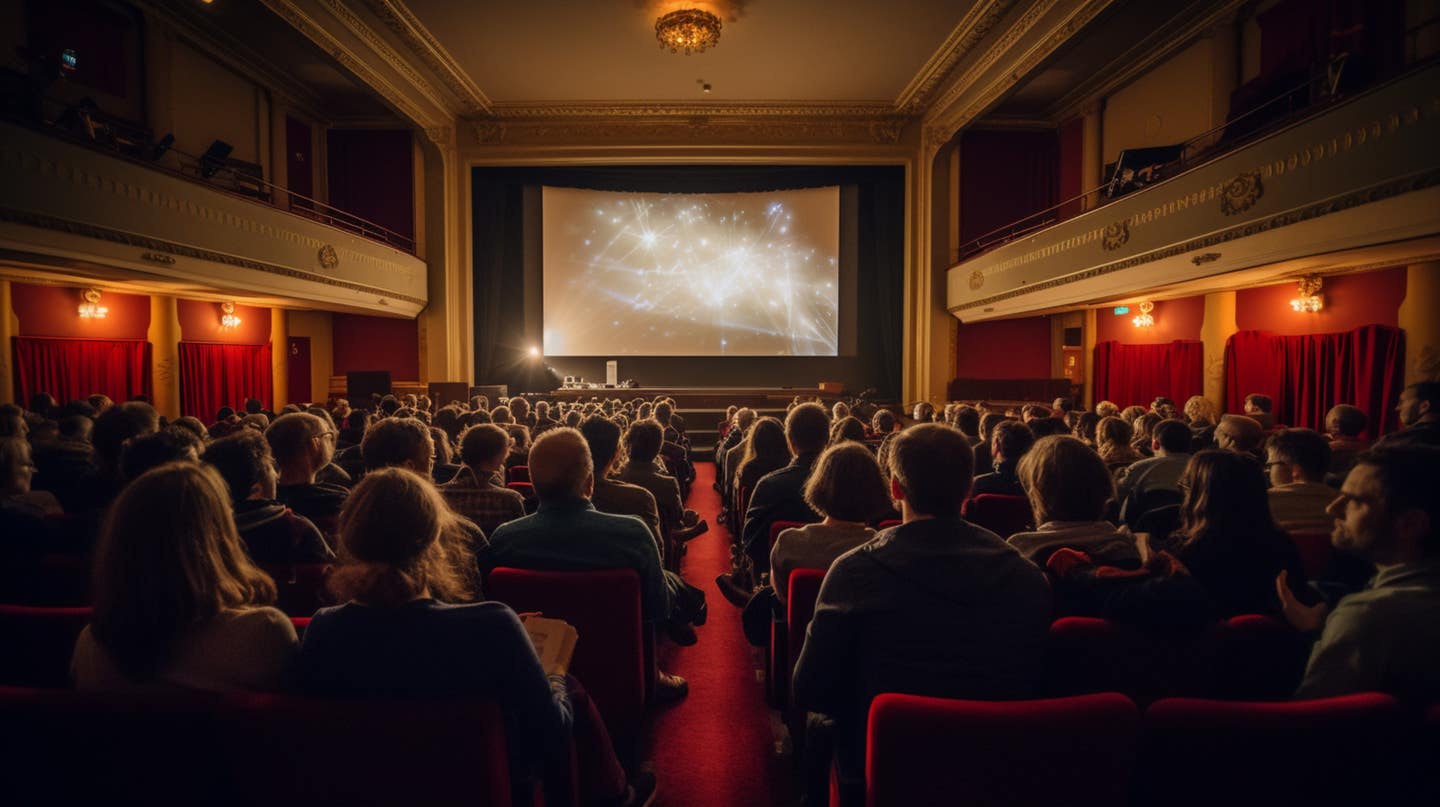
There’s nothing like sitting in the back of a packed theater, watching a live audience react to your art. When they laugh, gasp, or cry at all the right parts, it’s a true joy. You aren’t going to feel that human connection from YouTube or Vimeo unless you count the comment section as “connection.”
Another advantage to connecting with live audiences is the ability to ask for their contact info to build your email list and social media following. On the festival circuit, you will often have the chance for a Q&A after your screenings. You can also ask to be placed on a filmmaker panel. Answering people’s questions and providing behind-the-scenes stories and anecdotes are fantastic opportunities to connect with your audiences in-person, and then later again online after posting your Q&A on social media.
You have the chance to win awards and recognition that lead to more work.
Unless your film ends up amassing millions of views, the likelihood of getting much recognition amongst the billions of videos online is slim. And if you want to build a career rather than have a one-off project, it’s vital that you create a path toward getting your next job, investor, or grant.
Getting selected to respected festivals, and winning awards like Best Screenplay, Best Director, or Best Film gives potential producing partners, collaborators, and investors confidence in knowing you can produce quality work. It also provides pitch points when you, or your agent, is pitching you for that next project. “She just won Best Director at so-and-so film festival” sounds a lot better than “She has 325 views of her feature on YouTube.” Again, not to say that there’s anything wrong with putting your film online... down the line. But giving yourself a chance to be recognized for your work can help lead to a long-lasting career.
You can meet collaborators for future projects.
The reason you see filmmakers use the same crews and talent over and over again is simple: trust. They know that their trusted circle is going to do quality work, be easy to collaborate with, and bring great ideas to the table on every project.
Festivals are a great way to get an idea of people’s work, and to make connections with them so you have a trusted talent base for your next film. Meet directors, writers, actors. Gaffers, grips, costume designers. Make a point to build a community who you can call on—and who can call on you—for years to come. As they say, it’s not only “who you know,” but also, “who knows you.”
All that being said, you don’t want to submit to hundreds of random festivals without a plan. That’s not a great use of your money or time. You can increase your chances of being accepted by researching festivals that accept your exact genre. (If you’ve got a rom-com, submitting to a horror festival is not going to serve you. You’d be surprised how many people do this.) Submitting to festivals that feature your genre and that you have a personal connection to can definitely increase your chances of acceptance.
Outside of the Big 5 festivals, also research smaller, regional festivals that are relatively easy and affordable for you attend. Unless the entry is free and you have money to burn, submitting to a festival halfway across the globe might not be the best use of your funds. Check out my article on free and low-cost entry fees HERE.
Another interesting story: last year, I submitted our latest comedic short film I AM THE WARRIOR to one of the no-fee festivals I had researched. The festival, CineVet, located in New York City, solely featured work by military veteran filmmakers. As luck would have it, not only is my co-producer/director a veteran, he also has a strong connection to NYC. Our film got in, and ended up screening at Lincoln Center! Not bad for our no-budget, tiny short film. You never know where a festival submission might take you—especially when you fit exactly what that festival is looking for.
Wishing you a successful festival run!

Rebecca Norris Resnick is a screenwriter, filmmaker, instructor for Writer’s Digest University, and columnist for Script Magazine. Distributed features include Cloudy With a Chance of Sunshine (Indie Rights and House Lights Media) and short films On Becoming a Man (Shorts International) and Toasted, which won the Canadian Film Centre’s ShortsNonStop competition. Rebecca’s films have screened in festivals worldwide including Cannes, Dances With Films, Hollyshorts, Manhattan Film Festival, Breckenridge Film Festival, and the Julien Dubuque Film Festival, and have won and been nominated for numerous awards. Rebecca is also an alumna of the ABC/Disney Television Discovers program, where her script Misfortune Cookies was performed in both New York and Los Angeles. When not working on her newest project, Rebecca stays on her toes chasing both her adorable daughter and her tuxedo cat, Sox.
Learn more about Rebecca at rebeccanorrisresnick.com.